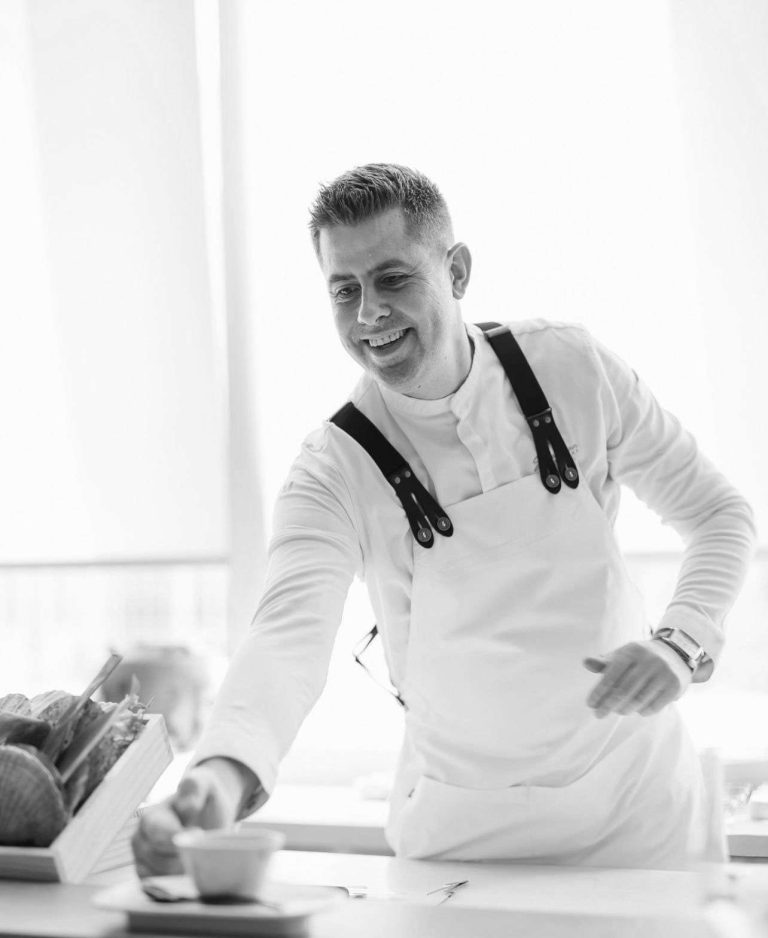
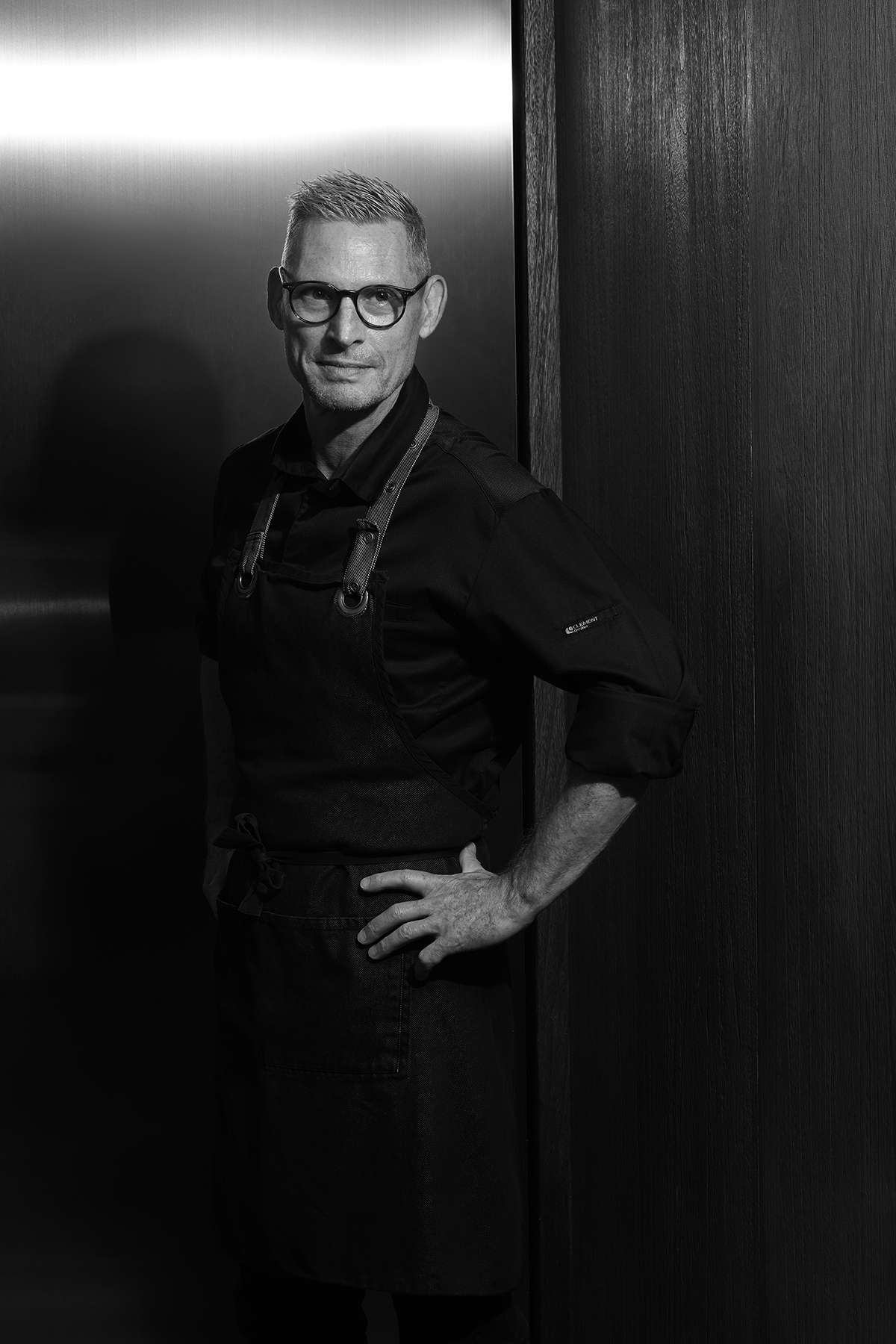
Emmanuel Stroobant
Chef Owner·Saint Pierre ✱✱ & Shoukouwa ✱✱·Singapore
Twenty-five years in Singapore, two restaurants with two Michelin stars each, and a Zen circle at the heart of the kitchen.
By Chefs MAG Editorial Team · 7 min read
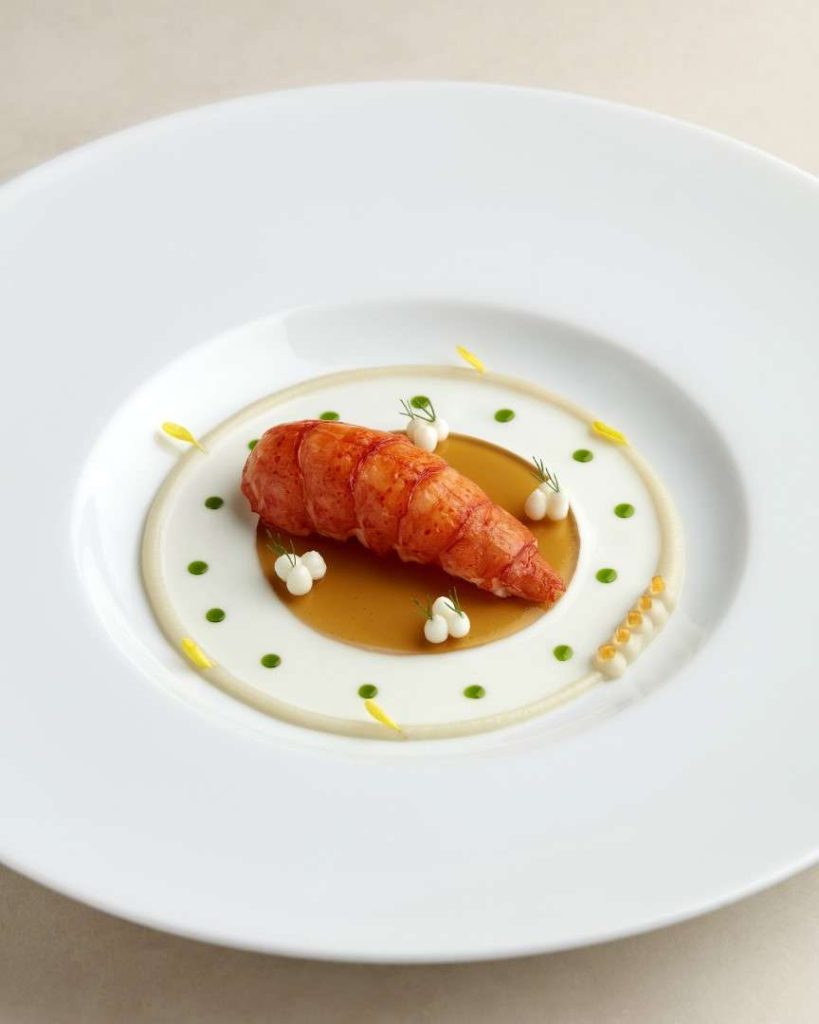
In the high-velocity world of Singaporean gastronomy, 25 years is an eternity. Since 1999, Chef Emmanuel Stroobant has evolved from a classical Belgian talent into a cornerstone of Asian hospitality. As chef-owner of Saint Pierre and Shoukouwa, holding four Michelin stars between them, he is woven into the culinary identity of the city-state. With his strategic partner and wife, Edina Hong, he launched Saint Pierre in 2000, a pioneer that introduced “Contemporary French with an Asian Soul” to a young Singapore.
His reach today goes well beyond fine dining. He founded Mycelium Catering, which brings simple, healthy home-cooked meals to school canteens, and Star Chef Academy, a holiday cooking camp for children. His work with Alexandra Hospital is redefining clinical gastronomy, and his latest venture, Saki at the JW Marriott Tokyo, brings his Japanese-influenced philosophy home to Japan itself.
A partnership of values
You founded Saint Pierre in December 2000. In an industry that celebrates the new, how do you stay sharp and relevant in the same market for 25 years without losing the soul of the original vision?
Someone once told me: if you want to go fast, go alone. If you want to go far, build the right team. In this business, nothing meaningful happens if you work alone. Restaurants are not solo performances, they are orchestras. We started small, grew slowly and organically, and stayed focused on what we do. If I had to reduce it to a few words: be adaptable, be patient, and above everything else, be consistent.
You have called Saint Pierre a “partnership of values” with your wife, Edina Hong. After a quarter of a century, how has the division between strategic vision and culinary craft evolved?
You can own the best car in the world, but without a driver it goes nowhere. In our case, Edina has always been both compass and engine. She carries the vision, but also the discipline required to keep a business alive: the structure, the consistency, the relentless attention to quality demanded by operations.
I’m different. I’m the craftsman, the artist, the technician who turns ideas into something real on a plate. Underneath our arguments and late-night conversations is respect for each other’s expertise, and that balance matters more than people think. Very few brilliant chefs are also good with business; we are blessed to have the best of both worlds in our team.
If you want to go fast, go alone. If you want to go far, build the right team.
Emmanuel Stroobant
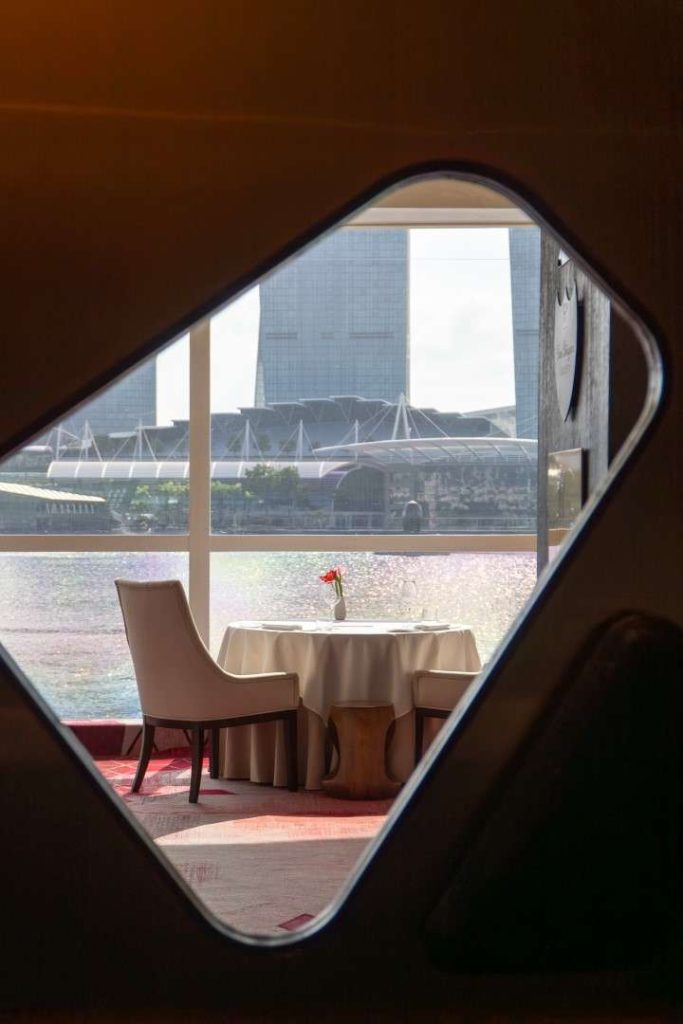
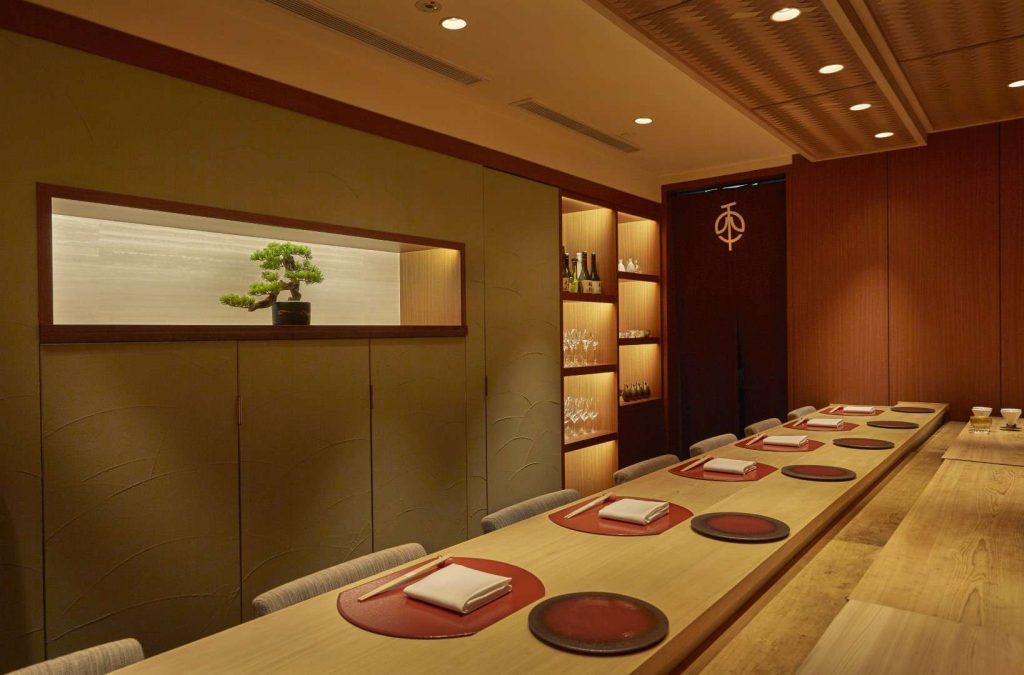
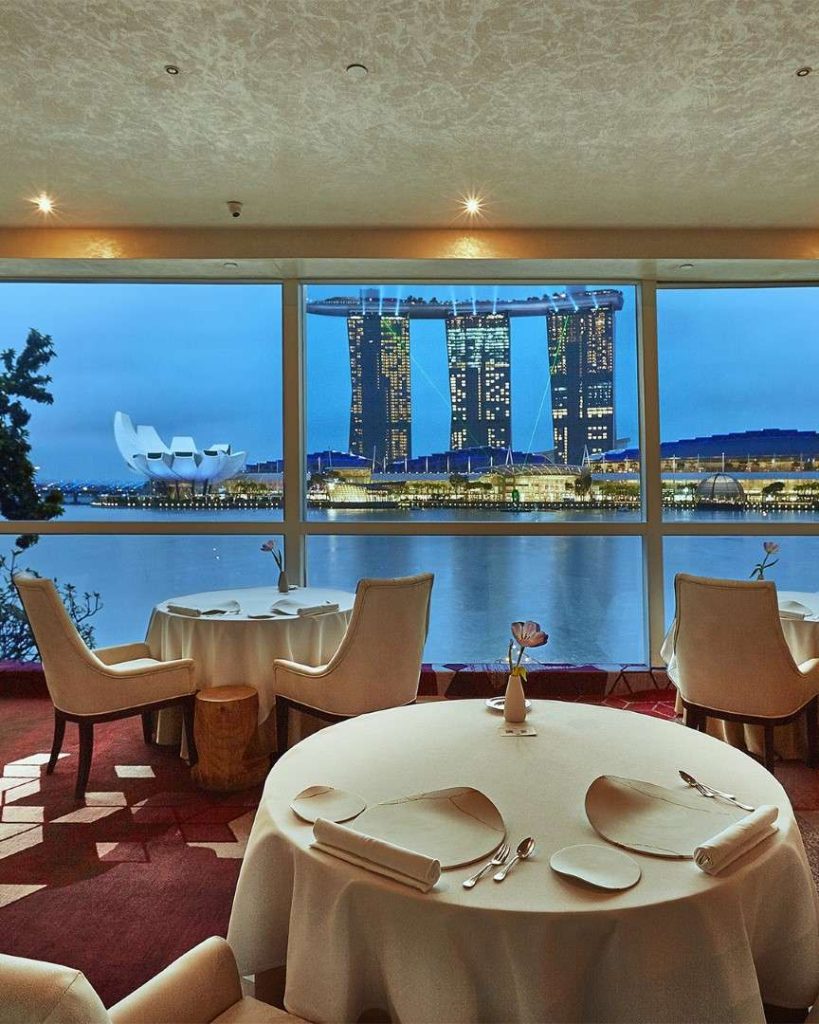
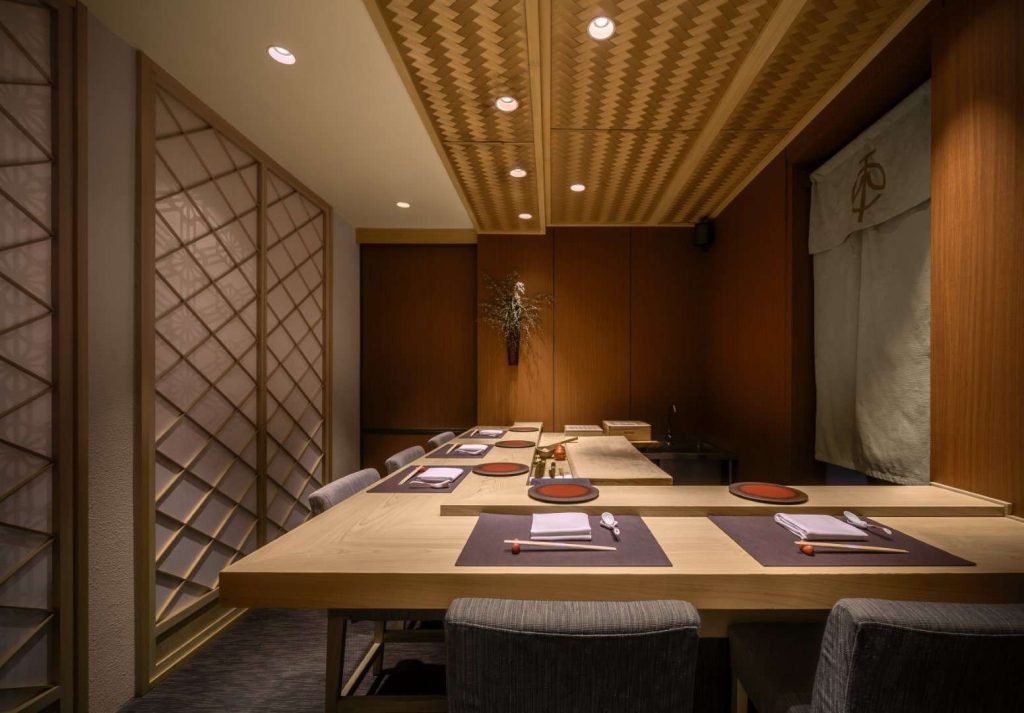
Photographs courtesy of Saint Pierre and Shoukouwa
The Ensō philosophy
Your menu is inspired by the Ensō, the Zen circle. For readers who see the beauty but not the struggle, what does mindful gastronomy look like during a high-pressure Friday night service?
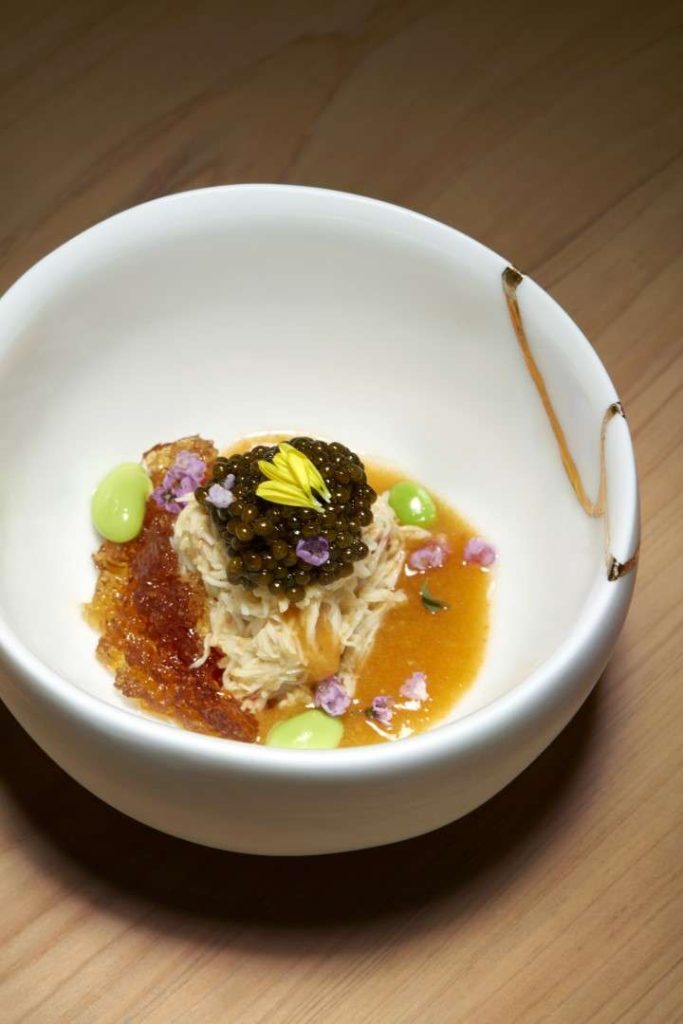
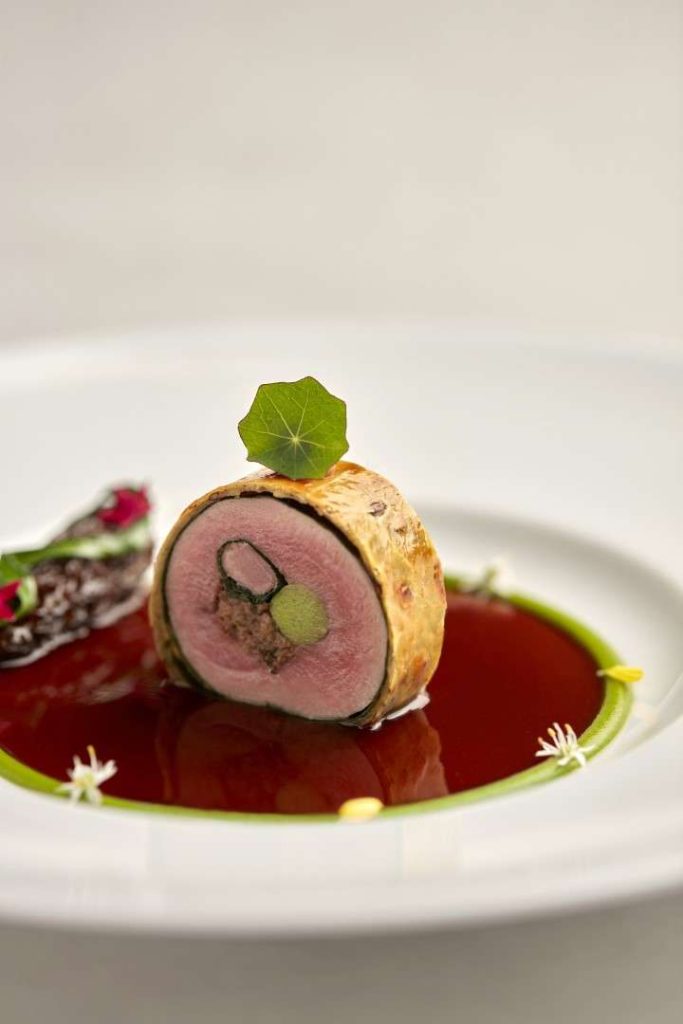
Ensō has long resonated with me because it represents both discipline and freedom, two forces that define us at Saint Pierre. Well before it became a familiar visual language in modern plating, I began using the circle to express this philosophy on the plate, not only as a visual signature, but as a deliberate expression of balance and harmony. It continues to shape how each menu is conceived, from the structure of each composition to the way flavours move across the palate.
Mindful gastronomy during a busy Friday night service is far less abstract than it sounds. For me it’s about remaining fully present, even when the pace is intense. Pressure is always a constant in service, but mindfulness allows precision to remain. Discipline gives us the consistency and composure to deliver elegance in every aspect of service, while freedom allows us to respond intuitively, whether accommodating a last-minute change or adjusting to dietary restrictions.
The clinical frontier
Your Featured Chef Menu at Alexandra Hospital is being called a revolution in therapeutic nutrition. How do you translate a technique like kombujime into a public hospital, where the goal is recovery, not luxury?
The challenge is mostly technical. Dietitians give nutritional directions while cooks execute recipes, and they speak different languages. Instead of starting with what we could use, we began with what we could not: salt, more precisely, sodium chloride. We studied what salt does to our perception of flavour and what can replace that sensation when it is removed.
We started with cooking: slow reductions, roasting, fermentation, layering natural glutamates. Little by little we rebuilt familiar dishes with a deeper level of technique hidden underneath.
As a long-time vegetarian and yoga practitioner, does that distance from the ingredient allow a more architectural approach to flavour?
I became vegetarian for health reasons, which pulled other parts of my life along with it. But the real transformation happened in the kitchen. I moved from quantity to quality, from abundance to restraint, realising that less really is more. Instead of building layers until the dish becomes a crowd, I ask the opposite questions: what is the best ingredient I can use right now? What can I remove that adds nothing? Simplicity is brutally complicated.
Simplicity is brutally complicated.
Emmanuel Stroobant
Tokyo, and the next generation
You recently opened Saki at the JW Marriott Tokyo, an intimate eight-seat counter. What cultural bridge did you have to build, and why return to such a small format?
In Tokyo, we share the same intention with the JW Marriott team: to create something new and exciting, but still approachable, so eating at Saki doesn’t feel foreign. On a chef’s level, Tokyo requires you to understand, accept and respect the culture, keeping in mind that losing your temper isn’t passion, it’s weakness.
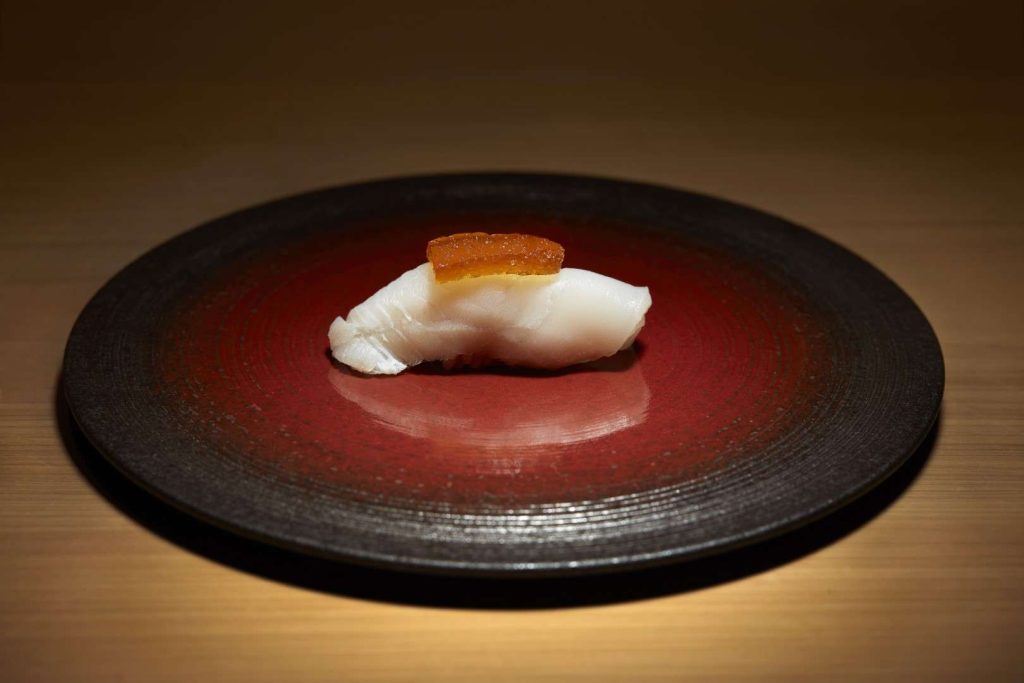
As for the format, we’ve run Shoukouwa for ten years, so an eight-seat counter isn’t new. If I were starting from scratch in 2026, an eight-seat counter would be my first choice: smaller space, less rent, fewer staff, and profitability becomes crystal clear.
Losing your temper isn’t passion, it’s weakness.
Emmanuel Stroobant
With so many young chefs focused on followers, how are you rewriting the Escoffier code for the next generation?
William Butler Yeats once said, “Education is not the filling of a pail, but the lighting of a fire.” I saw that fire burn in young Singaporean chefs who trained with an intensity that pushed us, their mentors, to dig deeper. When you pour in every ounce of energy, passion and love, anything is possible. But remember: dreams without action are just wishes.
The legacy of a conscious artisan
Emmanuel Stroobant’s journey is more than a timeline of openings and star counts. It is a masterclass in professional sustainability. By anchoring classical French rigour to a deeply personal Zen philosophy, he has stayed at the vanguard of the industry for over a quarter of a century.
Whether he is plating a Hokkaido scallop at Saint Pierre, shaping the kappo experience at Saki in Tokyo, or changing the recovery journey of patients at Alexandra Hospital, he builds bridges: between East and West, between luxury and health, and between the master and the student. The Ensō is complete; the search for refined simplicity never ends.