
The global wine market is under pressure, but the restaurant opportunity is more nuanced than a decline narrative. Guests are drinking with more intention, asking for value, discovery and smaller commitments rather than abandoning wine altogether. This article explains how modern wine lists are being rebuilt around by-the-glass breadth, selective premium cues, better staff language, sharper delisting and clearer links between wine, food and guest behaviour. The strongest list in 2026 is not necessarily longer or cheaper. It is easier to enter, more disciplined to buy and more confident about what deserves space.
Highlights
- OIV data shows softer global wine consumption and trade, but restaurant lists need local interpretation.
- By-the-glass breadth reduces guest risk and supports premium discovery.
- Value and premium must work as a ladder, not as opposing philosophies.
- Delisting should be based on role, movement, margin and staff confidence.
- The best lists make drinking less feel like choosing better.
The wine list is not shrinking; it is becoming more selective
A softer global wine market does not mean wine has stopped mattering in restaurants. It means the old list logic is being tested. Guests are more intentional, more value-aware and less willing to buy a bottle simply because the list expects them to. For sommeliers, the challenge is not to defend a nostalgic drinking culture. It is to rebuild the restaurant wine list around how people actually choose now.
The macro picture is difficult. OIV says global wine consumption fell 2.7% in 2025 to 208 million hectolitres, while export volume dropped 4.7% [Cellar-13] [Cellar-14]. Those figures matter because they describe the pressure around the category, but they do not tell the whole on-trade story. A restaurant list is not the global wine market in miniature. It is a curated set of decisions shaped by food, guests, service rhythm, cash tied up in stock and the amount of confidence the team can create at the table.
That is why “restaurant wine list trends” should not be read as a search phrase about novelty. It is a management phrase. The best lists in 2026 are likely to become more flexible, more by-the-glass, more transparent about value and more selective about premium cues. They will ask less of the guest upfront and give more reason to explore.
What softer demand really means on premise
Softer demand first exposes lazy list architecture. Bottles that once sold because the room was full and the guest was drinking more may now sit longer. Expensive inventory becomes harder to justify when turns are slower or when guests prefer a glass, a half bottle, a pairing or a more moderate spend. This is not an argument for lowering ambition. It is an argument for making every position on the list work harder.
The Drinks Business has reported that restaurant wine sales are under pressure while some growth pockets remain in value-led, white and sparkling categories [Cellar-15]. That combination should interest buyers. It suggests guests have not abandoned wine; they are rebalancing risk. They may still want discovery, but they need the entry point to feel fair. They may still want premium, but not always in the form of a full bottle commitment.
The sommelier’s task is to translate that behaviour into list design. Which wines create confidence quickly? Which bottles require too much explanation for too little conversion? Which categories are overrepresented because the buyer loves them, not because guests understand them? Which price bands are thin exactly where the guest wants choice? These questions are not a betrayal of wine. They are how wine stays present in a dining room whose habits have changed.
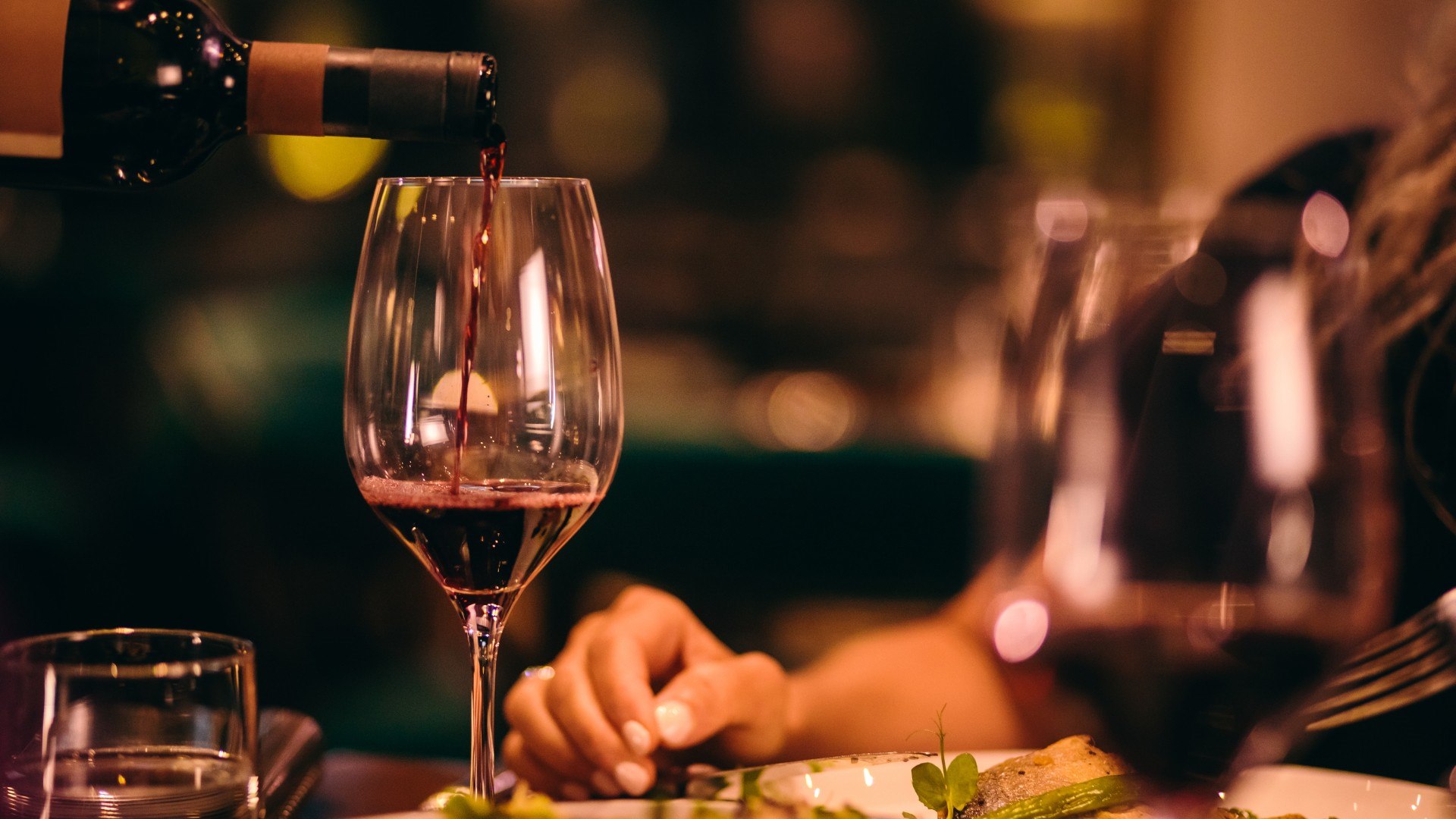
Image source: CHEFS MAG archive — original credit not recorded.
Why by-the-glass breadth is winning
By-the-glass breadth is one of the clearest responses because it reduces commitment without reducing sophistication. A guest who would not order a full bottle of a premium white, an older red, an English sparkling or a skin-contact wine may accept a glass if the service makes the decision feel safe. That is where preservation systems, smaller formats, curated flights and more dynamic glass rotations become commercially useful.
Coravin continues to position by-the-glass culture around the idea that guests are drinking less but better [Cellar-17] [Cellar-18]. Whether a restaurant uses a specific preservation system or not, the behavioural insight is useful. Smaller commitments can increase exploration. They can also protect premium categories from becoming museum pieces that appear on the list but rarely enter the room.
Coravin, smaller formats, curated flights and dynamic BTG
The strongest by-the-glass strategy is not simply a longer glass list. It is a better edited one. A restaurant might offer one local sparkling, one serious white with food, one value red, one premium discovery pour and one low/no wine option. Another might build a rotating flight around one producer, region or seasonal menu. The important point is that each glass should have a purpose.
A dynamic BTG programme also gives the sommelier better data. Which pour converts to a bottle? Which glass produces a reorder? Which description increases trust? Which category performs only when paired with food? These signals are more useful than abstract trend talk because they come from the restaurant’s own guests.
How value and premium can coexist
Value and premium are often treated as opposites, but on a modern list they need to work together. Value gives the guest permission to participate. Premium gives the programme identity. If a list has only safe value, it loses authority. If it has only prestige, it narrows the room. The best lists create a ladder: confident entry points, credible discovery, selective prestige and a few bottles that carry ceremony.
Liberty Wines’ 2026 premium on-trade report argues that operators need broader choice and better experience to encourage higher spend per bottle [Cellar-16]. The phrase “better experience” is important. Higher spend is easier to earn when the guest receives better guidance, more useful descriptions, stronger food pairing and a sense that the sommelier is not simply steering upward.
Restaurants should also think carefully about how premium is signalled. A high price is not enough. Premium may mean rare producer, maturity, ideal glassware, tableside explanation, a pairing that changes the dish, or access to a bottle the guest would not buy at retail. The more intentional the signal, the less the list has to rely on prestige by label alone.
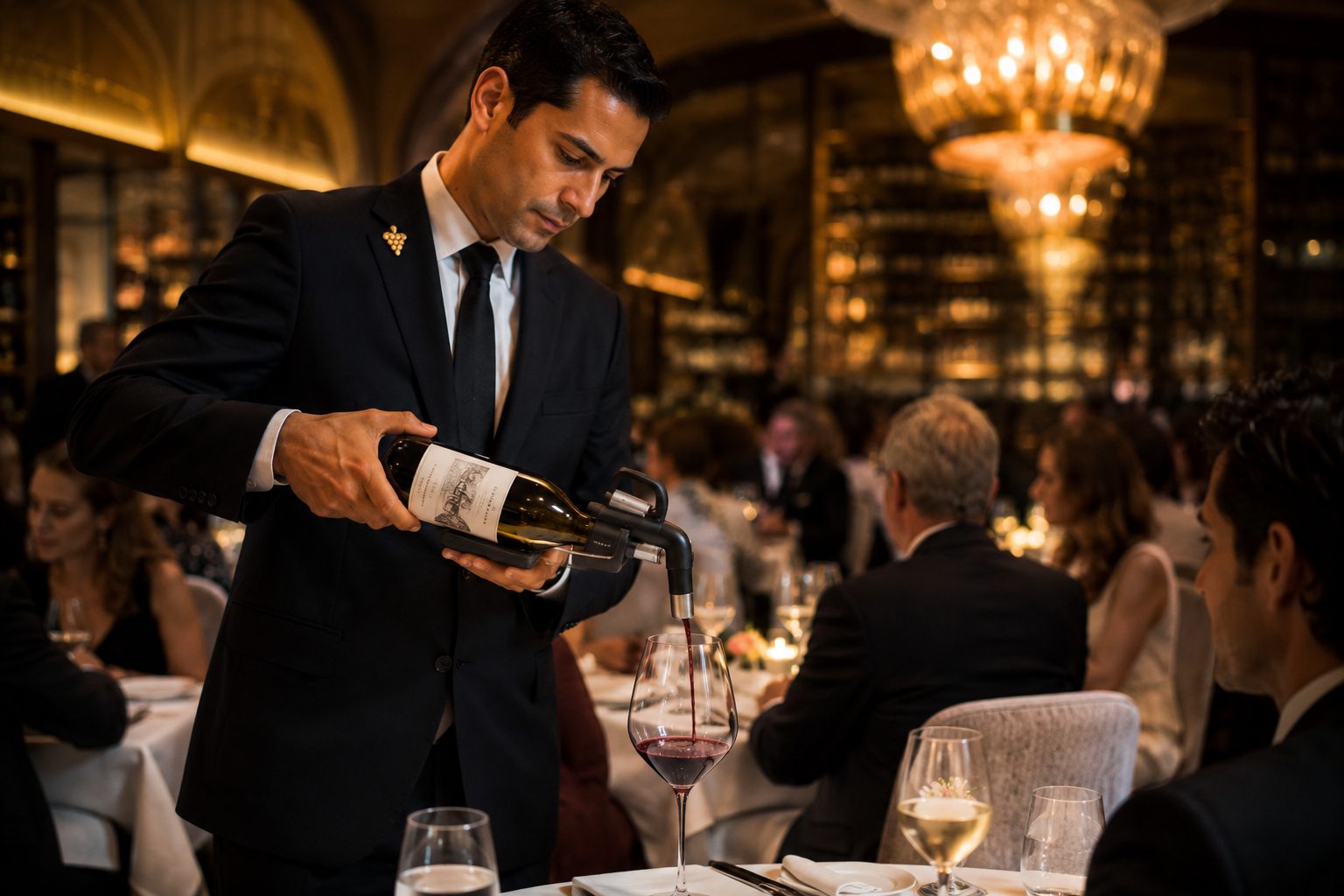
Image source: CHEFS MAG archive — original credit not recorded.
What to delist, deepen and watch
The first wines to question are not necessarily the cheapest or the most expensive. They are the silent bottles: those that occupy space, tie up cash, confuse the team and rarely create guest trust. Delisting should be based on movement, margin, service confidence and strategic role. A wine that sells slowly but defines the restaurant may still belong. A wine that sells slowly and explains nothing should go.
Deepening should be equally deliberate. If sparkling and white categories are showing resilience in trade reporting [Cellar-15], a restaurant might deepen there, but only where the food and guest base support it. If English sparkling has new momentum, it may deserve one glass and one bottle, not an entire page. If premium reds are slower, the answer may be better access by the glass rather than total retreat.
The list should also watch moderation and low/no rules closely. Alcohol-free wine is gaining clearer regulatory language in Europe and could become a more credible part of the programme when quality and labelling improve. That does not mean replacing wine; it means giving the list another way to serve guests whose drinking habits are changing.
A practical 2026 list audit
A 2026 audit can be short. Does each wine have a role? Is the by-the-glass offer strong enough to invite discovery? Are value and premium connected by a logical ladder? Are dead bottles tying up cash? Can the team explain every category in plain language? Does the list match the menu, or does it reflect an older version of the restaurant?
The wine list reset is not a retreat from seriousness. It is seriousness expressed differently. A modern list must make drinking less feel like choosing better, not choosing smaller. The best programmes will remain ambitious, but they will be easier to enter, cleaner to explain and more honest about how guests now decide.
How the reset should feel to the guest
The guest should not feel that the restaurant is retreating from wine. They should feel that the list has become easier to trust. That difference is decisive. A shorter list can feel more generous if it is better explained. A by-the-glass page can feel more luxurious if it contains real discovery. A value-led bottle can feel premium if the sommelier makes its place in the meal clear. A premium bottle can feel fair if the service gives the guest a reason to understand the price.
This is why list design and floor training must move together. The menu can offer the right wines, but the room still has to translate them. Staff should know which glass to recommend for hesitation, which bottle carries the best value, which premium pour has the strongest story and which pairing changes the food most clearly. Without that language, the reset becomes inventory management rather than hospitality.
The best restaurants will use the softer market as permission to remove clutter. They will not strip away personality. They will keep the bottles that say something, deepen the categories guests are ready to explore and use by-the-glass as the bridge between caution and curiosity. That is how wine remains alive in a more selective drinking culture.
The audit should also include the physical list. Layout changes behaviour. If the most useful glasses are buried, guests default to the familiar. If premium pours are framed clearly, they become easier to choose. If value bottles are hidden under vague headings, they feel cheap. Good list architecture guides without pushing; it makes the confident choice feel natural.
That is the commercial discipline.
A modern list must make drinking less feel like choosing better, not choosing smaller.
Why It Matters
For sommeliers and operators, this piece turns softer wine demand into a practical list audit: what to pour by the glass, what to delist, where to deepen and how to connect value with premium without weakening the programme.
What To Watch Next
Watch for more premium by-the-glass pours, smaller-format discovery, tighter wine-list editing and programmes that use actual guest behaviour to decide what remains on the list.
Sources & Further Reading
- [Cellar-13] OIV state of the world wine sector in 2025
- [Cellar-14] OIV state of the world wine sector PDF
- [Cellar-15] The Drinks Business on restaurant wine sales
- [Cellar-16] Liberty Wines Premium On-Trade Wine Report 2026 PDF
- [Cellar-17] Coravin on the future of by-the-glass
- [Cellar-18] The Coravin Guide introduction