
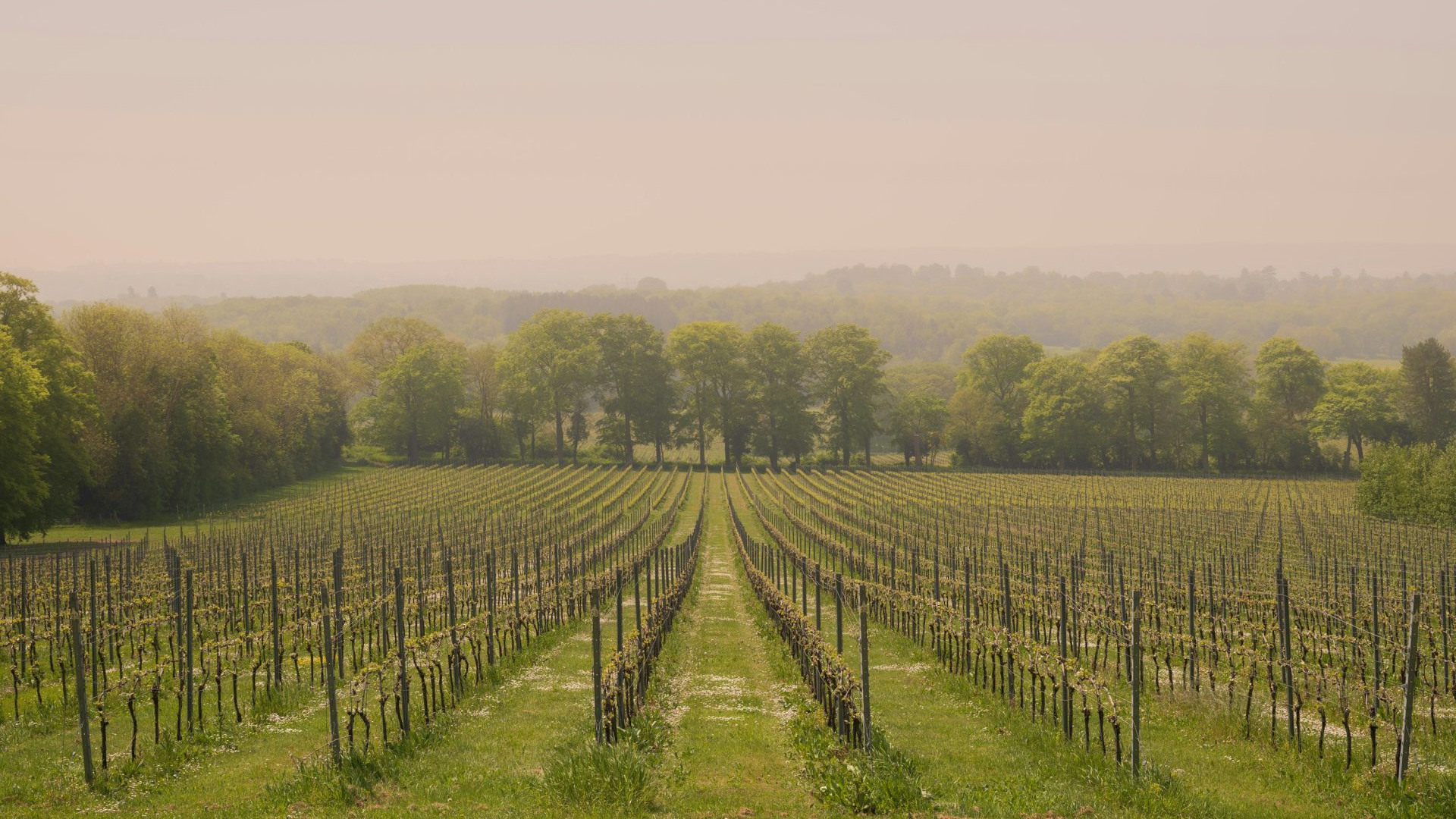
English sparkling is no longer a novelty listing or a polite local gesture. After a strong 2025 harvest, broader sector growth and a stronger quality signal from international judging, the category now deserves a disciplined restaurant conversation. This article explains how sommeliers and buyers should think about English sparkling in 2026: not as a replacement for Champagne, but as a local, high-acid, food-friendly category with clear roles across aperitif service, tasting pairings, private dining and destination-led hospitality. The practical question is not whether to list it, but where it earns its place.
Highlights
- WineGB reported a strong 2025 harvest and more than 16.5 million bottles produced.
- English wine’s 2026 medal performance gives sommeliers a stronger hand-sell.
- By-the-glass placement can turn English sparkling into a discovery tool.
- The category should be listed for function and quality, not patriotism.
- London, Sussex, Kent and Hampshire form the clearest restaurant opportunity map.
English sparkling is no longer a courtesy listing
There was a time when English sparkling wine could sit on a list as a gesture. It signalled locality, confidence or patriotic curiosity, but it did not always have to carry the full weight of a programme decision. That moment has passed. For London restaurants, destination hotels and buyers working with British produce, English sparkling now needs to be judged by the same criteria as any serious category: supply, quality, margin, food compatibility, producer reputation and the way the team can tell the story.
The timing is unusually strong. WineGB reported that the 2025 UK harvest rose 39% year on year and produced more than 16.5 million bottles, supported by favourable ripening conditions [Cellar-07] [Cellar-09]. Its current sector figures also point to a category with more than a thousand vineyards and nearly 260 wineries [Cellar-08]. Those numbers do not mean every bottle deserves a place. They do mean buyers can no longer treat the category as too small or too immature to consider with discipline.
For a restaurant, the question is not whether English sparkling has improved in some abstract national sense. The question is where it belongs. Is it an aperitif? A tasting-menu pairing? A private dining pour? A hotel-room welcome? A local luxury cue for international guests? The answer will vary, but the category now has enough scale and recognition to demand a proper buying conversation.
What the 2025 harvest tells buyers
A bumper harvest is useful only if it creates commercial options. The 2025 figures give buyers more room to think about breadth, continuity and price architecture [Cellar-07] [Cellar-09]. A restaurant cannot build a category around a bottle it can only pour once. It needs supply reliability, vintage context, producer support and enough stylistic range to avoid a list that feels repetitive.
That is where English sparkling becomes more interesting. The category is no longer only a narrow comparison with Champagne. It can work as a proximity story, a climate story, a food-pairing story and a tourism story. Sussex, Kent and Hampshire are not just addresses on the back label. For London and destination-led restaurants, they are part of the guest’s sense of place.
The risk is to overstate the point. English sparkling should not be listed because it is English. It should be listed because the wine earns its role in the programme. The discipline is the same as with any other sparkling category: identify the style, understand acidity and dosage, know the producer’s consistency, place the wine at the right price, and train the team to describe it without sounding defensive.

Quality recognition changes the conversation
Volume without recognition would not be enough. The quality signal matters because it gives sommeliers and F&B directors more confidence when introducing the category to guests who still think in older hierarchies. Reporting around the 2026 International Wine Challenge noted that English wine won a record 25 gold medals, up from 10 the previous year [Cellar-10]. Awards alone should not write a wine list, but they can make the hand-sell easier.
This is particularly important in hospitality environments where guests are open but time is short. In a busy dining room, the sommelier may have one sentence to move a guest from curiosity to confidence. “A local sparkling from Sussex” is a start. “A serious English sparkling after a strong harvest and a record medal year, poured because its acidity works with the first courses” is better. It links place, timing and function.
For international guests, the category can also do something Champagne cannot: it can make the restaurant feel more specific to Britain. In a London hotel, that matters. A global luxury property often risks becoming beautifully anonymous. A well-chosen English sparkling gives the beverage programme a local accent without forcing the food into cliché.
Where English sparkling belongs on modern lists
The most obvious place is the aperitif. English sparkling often has the freshness, acidity and shape to open a meal cleanly, especially when the kitchen is working with seafood, raw preparations, herbs, young vegetables or lighter canapés. But limiting it to the first pour undersells the category. It can also work inside tasting pairings, private dining menus and seasonal menus built around British produce.
A by-the-glass placement is often the most useful test. If the wine is only available by the bottle, it remains a statement for confident guests. By the glass, it becomes a discovery tool. It allows the restaurant to show belief without asking for too large a commitment. It also lets the team learn how guests respond: which dishes create the best conversions, which descriptions work, which price points feel comfortable and where the bottle competes.
Aperitif, pairing, local luxury and restraint
The language needs restraint. English sparkling does not need to be described as “the new Champagne”; that frame keeps it subordinate. It is stronger to explain what it does: a precise opening pour, a local high-acid pairing, a closer relationship between the wine list and the food. The best lists will place it with confidence rather than noise.
For tasting menus, the category can carry one of the most valuable roles in the sequence: establishing tone. A glass of English sparkling at the beginning of service can tell the guest that the programme is local-aware, modern and not trapped by inherited prestige. But that only works if the pour is good, cold, correctly served and connected to the plate rather than introduced as a novelty.
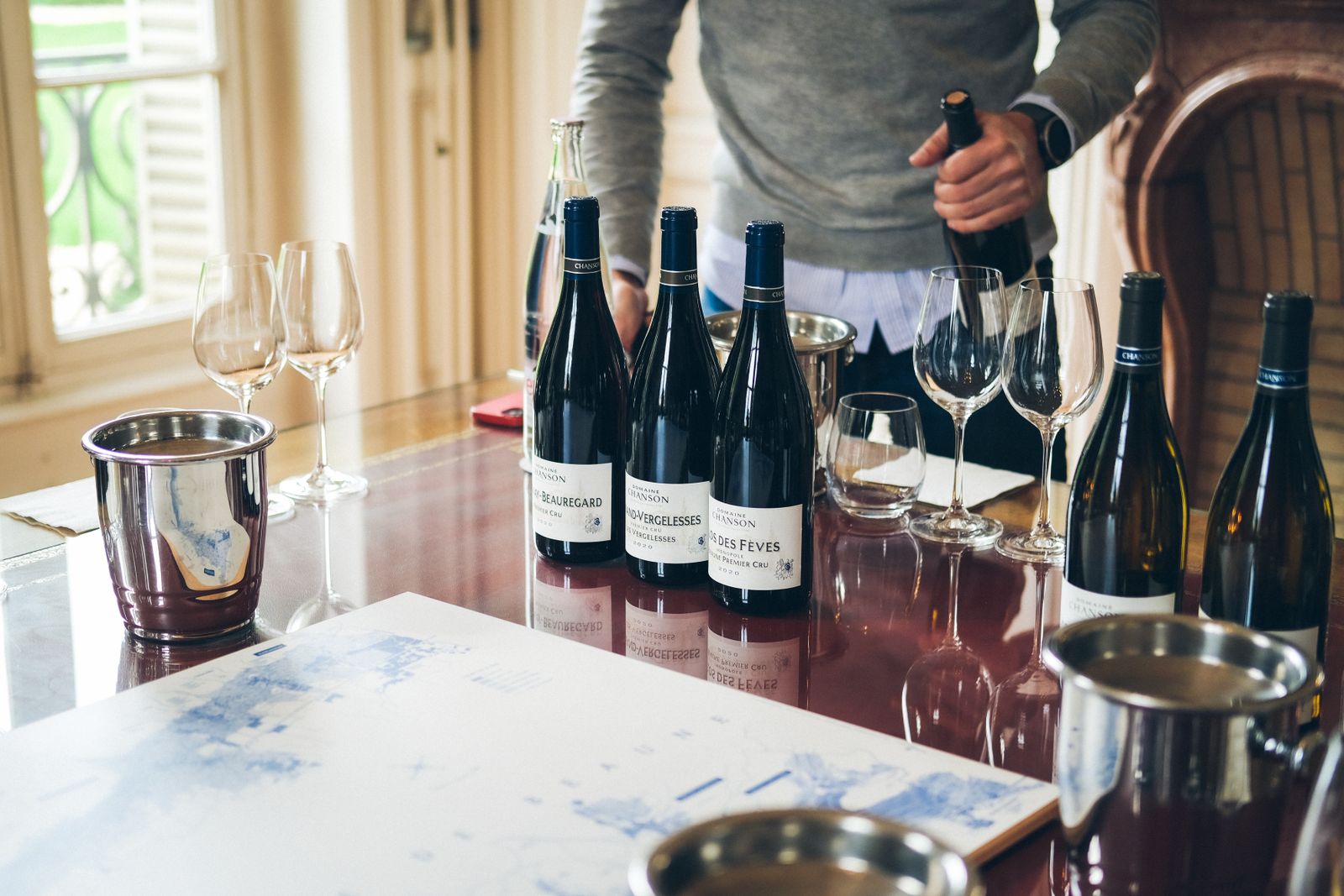
Photo: Tim Durand.
Buying and margin implications for 2026
A stronger category creates better options, but it also requires better buying. Restaurants should not add English sparkling as a decorative extra if it will sit too long in stock. The buyer should decide whether the wine has a by-the-glass role, a pairing role, a premium bottle role or a private dining role. Each use has a different margin logic.
There is also a training question. English sparkling can be easy to list and hard to sell if the team lacks confidence. Staff need a concise explanation of region, producer, style and food match. They do not need a lecture. They need enough to make the guest feel safe trying something less automatic than Champagne or Prosecco.
WineGB’s broader sector development and earlier vineyard-growth context show a category still expanding its footprint [Cellar-08] [Cellar-12]. That growth does not remove the need for selectivity. It increases it. As more bottles appear, buyers need to distinguish between wines that belong in serious restaurant service and wines that are better suited to retail, tourism or casual discovery.
GEO watch: Sussex, Kent, Hampshire and London
The strongest restaurant opportunity sits close to the producing regions and to London. Sussex, Kent and Hampshire give the list regional specificity. London gives the category stage, international visibility and a dining public used to premium sparkling. The relationship between them is useful: vineyards create the origin story; London restaurants create the repeated service moment.
For Chefs MAG readers, the practical takeaway is not to list English sparkling because the category is fashionable. It is to treat it like a serious programme decision. Buy with purpose. Pour where the wine works. Train the team to explain it cleanly. Price it so the guest can participate. English sparkling now belongs in the buying conversation not as a patriotic gesture, but as a disciplined part of modern list architecture.
How to avoid the novelty trap
The novelty trap appears when English sparkling is introduced as a talking point rather than a working wine. Guests may enjoy the idea once, but a category only becomes part of the programme when it performs repeatedly: with canapés, with shellfish, with vegetarian courses, in private dining and as a confident aperitif at the beginning of service. The buyer should therefore taste for use, not only for admiration.
The strongest restaurant approach is to choose a small number of positions and make them work. One by-the-glass English sparkling can do more for the programme than a scattered page of bottles the team cannot explain. A second, more premium bottle can serve private dining or destination guests. A third may belong in a pairing if it carries the right acidity and texture. Beyond that, the list must earn its expansion.
Language should also stay clean. English sparkling does not need inflated national rhetoric. It needs precise service language: producer, region, style, dosage where relevant, food match and reason for placement. If the team can say why the wine opens the menu better than a safer imported option, the category has earned the pour. If the only argument is that it is local, the buying decision is not strong enough yet.
The same discipline applies to supplier relationships. Restaurants should ask how allocations, vintages, delivery, staff education and producer support will work across a full season. A bottle may taste convincing in isolation, but the programme needs continuity. The better buyer thinks beyond one successful tasting and asks whether the wine can support service after the first wave of attention has passed.
That is the commercial discipline.
English sparkling now belongs in the buying conversation as a programme decision, not a patriotic gesture.
Why It Matters
For sommeliers, hotels and destination restaurants, English sparkling now has enough supply, recognition and local story value to be treated as a serious list category, but only when buying and pricing are disciplined.
What To Watch Next
Watch for more by-the-glass English sparkling placements, stronger regional storytelling in London dining rooms and tasting menus that use English sparkling as a local opening signal rather than a novelty pour.
Sources & Further Reading
- [Cellar-07] WineGB 2025 harvest and 2026 Green Book release
- [Cellar-08] WineGB homepage and sector statistics
- [Cellar-09] WineGB 2025 Harvest Report PDF
- [Cellar-10] Guardian on English wine medals at IWC 2026
- [Cellar-11] The Drinks Business on bumper 2025 UK harvest
- [Cellar-12] WineGB vineyard milestone and sales growth context