Audio Editorial · English · 2 Minutes
From Michelin to Fire
Listen to Mattia Stanchieri’s story — from Geranium and VIBE to the question of what kind of table still feels alive.
Mattia Stanchieri’s story has changed tense. VIBE, his Michelin-recommended restaurant in Lisbon’s Chiado, closed its doors after final service on March 28, 2026 — not a retreat, but a deliberate turn toward a way of cooking built less on performance and more on origin, appetite and the ritual of the table.
The restaurant after the restaurant
Mattia Stanchieri’s story cannot now be told as if VIBE were still waiting for the next guest to descend into Chiado. The restaurant remains visible in several public listings, including Michelin’s online guide, which describes VIBE by Mattia Stanchieri at Rua da Horta Seca 5B in Lisbon, but the chef’s own public announcement changed the tense of the story: VIBE was closing, with final service set for March 28, 2026 [Mattia-03] [Mattia-04].
That matters editorially. A restaurant profile would be out of date before it began. The more honest article is a profile of a chef after the room: a moment in which the address, the menu and the recognition have become part of the background, while the question of what a chef actually wants to cook becomes the centre of the story.
Stanchieri’s own answer is unusually direct. During the final menu at VIBE, he sat at one of his own tables and experienced the food as a guest. What he found there was not satisfaction, but distance. He says he realised the food no longer reflected what he, as Mattia, actually loved to eat [Mattia-01]. For a chef whose career had passed through some of Europe’s most demanding kitchens, it was a severe form of clarity.
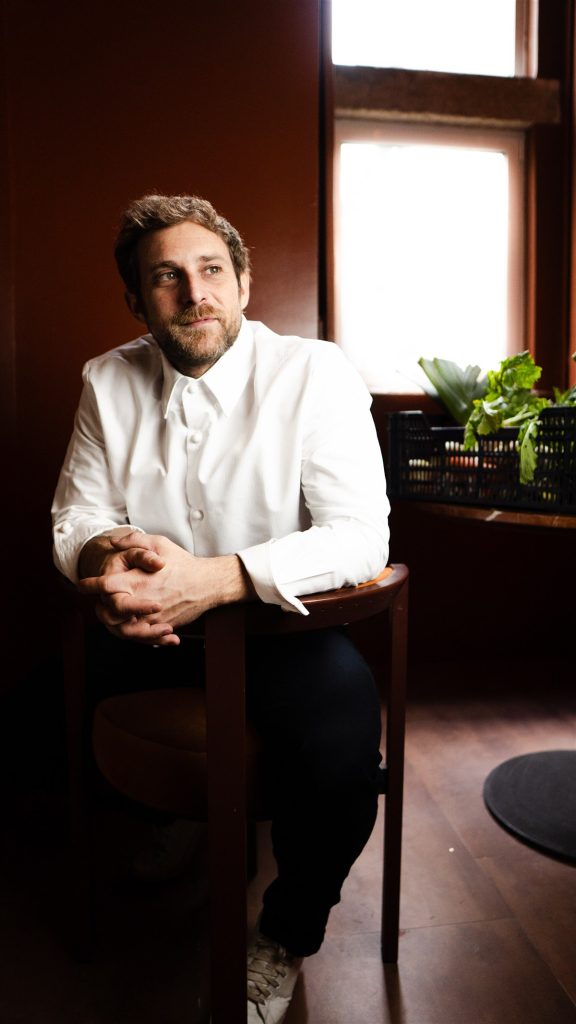
The Journey: A Passport to Memory
The original shape of Stanchieri’s career explains why the pivot carries weight. He is Italian-born and has presented his biography through kitchens that include Da Vittorio in Italy, Geranium in Copenhagen and Belcanto in Lisbon [Mattia-02]. Portugal Confidential also places his early formation in Monza and describes a career that moved through Michelin-level kitchens before his first solo project in Lisbon [Mattia-07].
Geranium is not a casual reference in that biography. The World’s 50 Best Restaurants lists Geranium as The World’s Best Restaurant 2022, and describes its work in Copenhagen through nature, seasonality and technical precision [Mattia-06]. For Stanchieri, however, the important inheritance from Geranium is not the spectacle of ranking. In his own words, the real philosophy is nature and transparency: ingredients pure enough that they do not need anything to hide behind [Mattia-01].
That thread helps reframe his next chapter. It is not a rejection of discipline. It is a refusal to let discipline harden into performance. The young chef who left Italy to collect techniques, countries and stories is now less interested in displaying how much he can do, and more interested in recognising what still feels necessary.
VIBE: The Closed Chapter
VIBE was built around travel, narrative and controlled intimacy. Its own website called it the first project of Chef Mattia Stanchieri in Chiado, Lisbon, and described a seasonal format in which each menu explored a different cuisine of the world while remaining rooted in Portuguese produce [Mattia-02]. Portugal Confidential described the restaurant as globally inspired and locally sourced, with seasonal menus that moved through different culinary references [Mattia-07].
The old draft called VIBE a sanctuary of stories, and that remains the right phrase, provided it is now written in the past tense. It was not simply a place to eat. It was a room designed around chapters, details and symbols: a restaurant in which the guest was asked to follow the chef’s memory across places, cultures and techniques. Michelin’s listing also captured the restaurant’s distinctive character, placing it within Lisbon’s dining landscape at its Chiado address [Mattia-04].
But closure changes the meaning of all that narrative work. VIBE should not be presented as a current destination. It should be treated as a completed chapter: ambitious, personal, recognised, and now deliberately left behind. The dignity of the story sits in that completion. Stanchieri is not trying to stretch a restaurant beyond its emotional usefulness. He is allowing its final service to become a line of separation.
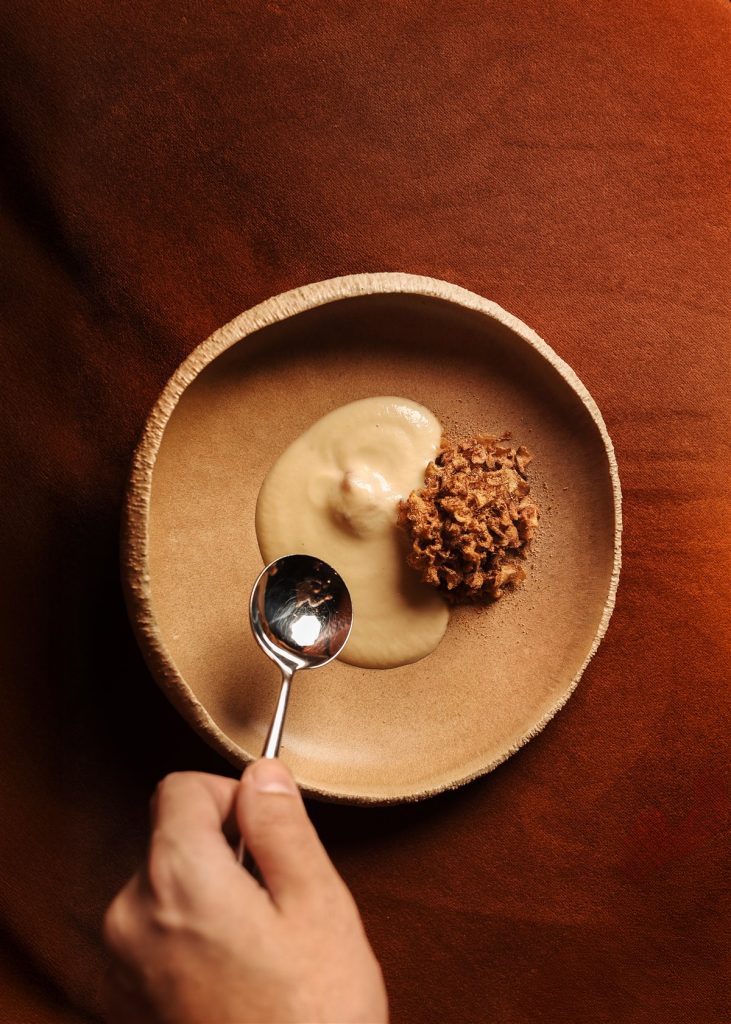
The Turning Point
The turning point is not an award, review or public announcement. It is the private discomfort of a chef sitting at his own table and realising he would rather be eating something else. That moment is more revealing than another paragraph of biography. It turns the story from career summary into human architecture.
Stanchieri is careful not to make the shift sound like false rebellion. He says it would be hypocritical to pretend that Michelin stars never mattered to him. The dream of recognition was real [Mattia-01]. What has changed is not his respect for fine dining, but the way he understands responsibility. “We are not just chefs; we must be imprenditori as well,” he writes, placing the decision in the world of business as much as feeling [Mattia-01].
That sentence should sit at the centre of the piece. It protects the story from romanticising closure. Restaurants do not survive on longing. They survive through rent, payroll, energy, suppliers, bookings, mood, attention and stamina. A chef may need intuition to write a menu, but an entrepreneur needs the honesty to know when a concept has reached its limit.
The Philosophy: Beyond Fire
The easiest version of this article would be “from Michelin to fire”. The more accurate version is quieter. Fire is present, but it is not the label Stanchieri wants to carry alone. He says his connection with fire has grown through his wife, Camila, who is from Uruguay, and through the country’s relationship with the flame [Mattia-01]. But he also says fire is not the main focus of the next project, and that he does not want to be defined as an ancestral chef [Mattia-01].
That distinction matters. Fire can become another costume if journalism lets it. Stanchieri’s actual movement is broader: away from the conceptual and toward the flavours of origin, timeless dishes, informal generosity and the raw excitement he felt when he began cooking as a teenager [Mattia-01].
He calls true simplicity the new avant-garde. That is not the language of retreat. It is the language of edit. After the chaptered structure of VIBE, the next question is whether a plate can carry memory without explanatory armour, whether a room can feel designed without feeling tense, and whether a chef can serve generous food without losing precision.
Close-Up: Mattia Stanchieri in Transition
What did VIBE teach you at the end? That the guest’s experience can reveal what the chef has stopped admitting. During the final menu, Stanchieri sat down as a diner and realised that the food no longer matched what he loved to eat [Mattia-01]. The lesson was not that fine dining was wrong. It was that his relationship with it had changed.
What does luxury mean now? For Stanchieri, luxury has moved away from status and choreography. He describes it as freedom and soul: the ability to sit in a beautiful, unpretentious space and exhale [Mattia-01]. The room he imagines is closer to a hearth than a temple, with generous food, music, interesting people and service that feels like being welcomed home.
What does fire mean in this next phase? Fire is part of his personal life and part of the vocabulary he has absorbed through Uruguay, but not the entire concept. He describes it as a tool, one vector among many [Mattia-01]. The next project is not about becoming the fire chef. It is about finding a more truthful way to cook.
What does being Italian mean beyond the old burger line? The phrase “I’m Italian, I don’t make burgers” once worked as marketing, and Stanchieri knows that. But he now treats Italian identity as something larger than refusal. It is curiosity, passion and a way of bringing feeling to different mediums rather than a fixed list of things he will not cook [Mattia-01].
What comes next? The details remain unannounced. What is clear is the direction: a broader project in which cooking, writing, Lisbon, design, music, recipes and digital storytelling can sit together [Mattia-01]. In his recent public recipe language, the plates are already crossing Portugal and Italy again: alheira, São Jorge, sardines, bread, memory, street ritual, domestic testing and the kind of food that can be explained without being diminished.
What Remains After Performance
The most interesting chefs are not always those who move upward. Sometimes they are the ones who move inward at the right time. Stanchieri’s closure of VIBE is not the disappearance of ambition. It is a reallocation of it.
The old article’s title still works because it contains the tension: from Michelin to fire. But the article underneath must now be more precise. Michelin is not the villain, and fire is not the whole answer. The real subject is a chef refusing to confuse external validation with appetite, and refusing to let a successful room become a cage.
For Chefs MAG, that is why the story belongs in Voices. It is a career journey, but also a question many serious chefs eventually face: after the menus, the symbols, the recommendations and the pressure, what kind of table still feels alive?
“The real subject is a chef refusing to confuse external validation with appetite, and refusing to let a successful room become a cage.”
Sources & Further Reading
- [Mattia-01] Interview with Mattia Stanchieri, conducted by Chefs MAG, May 2026
- [Mattia-02] VIBE official website, about chef and restaurant background
- [Mattia-03] Mattia Stanchieri Instagram reel announcing VIBE closing and final service on March 28
- [Mattia-04] Michelin Guide listing for VIBE by Mattia Stanchieri, Lisbon
- [Mattia-05] Mattia Stanchieri Instagram post after final service
- [Mattia-06] The World’s 50 Best Restaurants, Geranium Best of the Best profile
- [Mattia-07] Portugal Confidential profile of VIBE by Chef Mattia Stanchieri