Commercial kitchen electrification is no longer only a climate position. It is becoming a procurement, design and operations decision. Guidance from the Global Cooksafe Coalition and the Sustainable Restaurant Association frames the possible gains in energy use, running cost and working conditions, while California and Victoria signals give the topic regulatory weight. Chefs still have practical concerns: heat control, retrofit cost, menu execution, training and service reliability. Those concerns are legitimate. The question is no longer whether every kitchen should switch at once. It is which sites and equipment categories now have a strong enough business case to start.
Highlights
- Electrification is moving from advocacy into procurement and kitchen design.
- The strongest cases combine energy use, heat load, cleaning, safety and regulatory readiness.
- Induction is not one decision; it is a station-by-station design question.
- Retrofits need a different business case from new-build kitchens.
- Chefs should test performance against their menu, not against generic claims.
Electrification has entered the buying conversation
For years, the all-electric commercial kitchen was presented mainly as a sustainability ambition. That framing still matters, but it is no longer enough. Chefs and operators do not buy a new line because a concept sounds responsible. They buy it because it can cook, clean, ventilate, staff, insure and pay back in a real building with real service pressure.
That is why the electric commercial kitchen has become one of the more serious procurement questions in hospitality. It sits at the intersection of energy cost, climate regulation, staff comfort, ventilation, capex, maintenance and chef confidence. Those variables do not point to one simple answer. They do make the old assumption — that gas is always the default professional standard — less secure.
The Global Cooksafe Coalition has framed commercial electrification in cost and energy terms, including analysis that says UK restaurants could reduce energy costs and energy use materially through electric kitchens, with Australian modelling also pointing to significant savings potential [Lab-19]. The Sustainable Restaurant Association’s guide summary adds a more operator-facing layer, referencing case modelling across different UK restaurant formats [Lab-20]. These are not universal guarantees. They are signals that the business case is becoming specific enough to test.
Induction changes more than the flame
The chef’s first question is usually performance. That is fair. A cooking line is not a policy statement. It is a production environment. If the equipment cannot deliver heat, control, recovery, pan compatibility and speed for the menu, the rest of the argument is irrelevant.
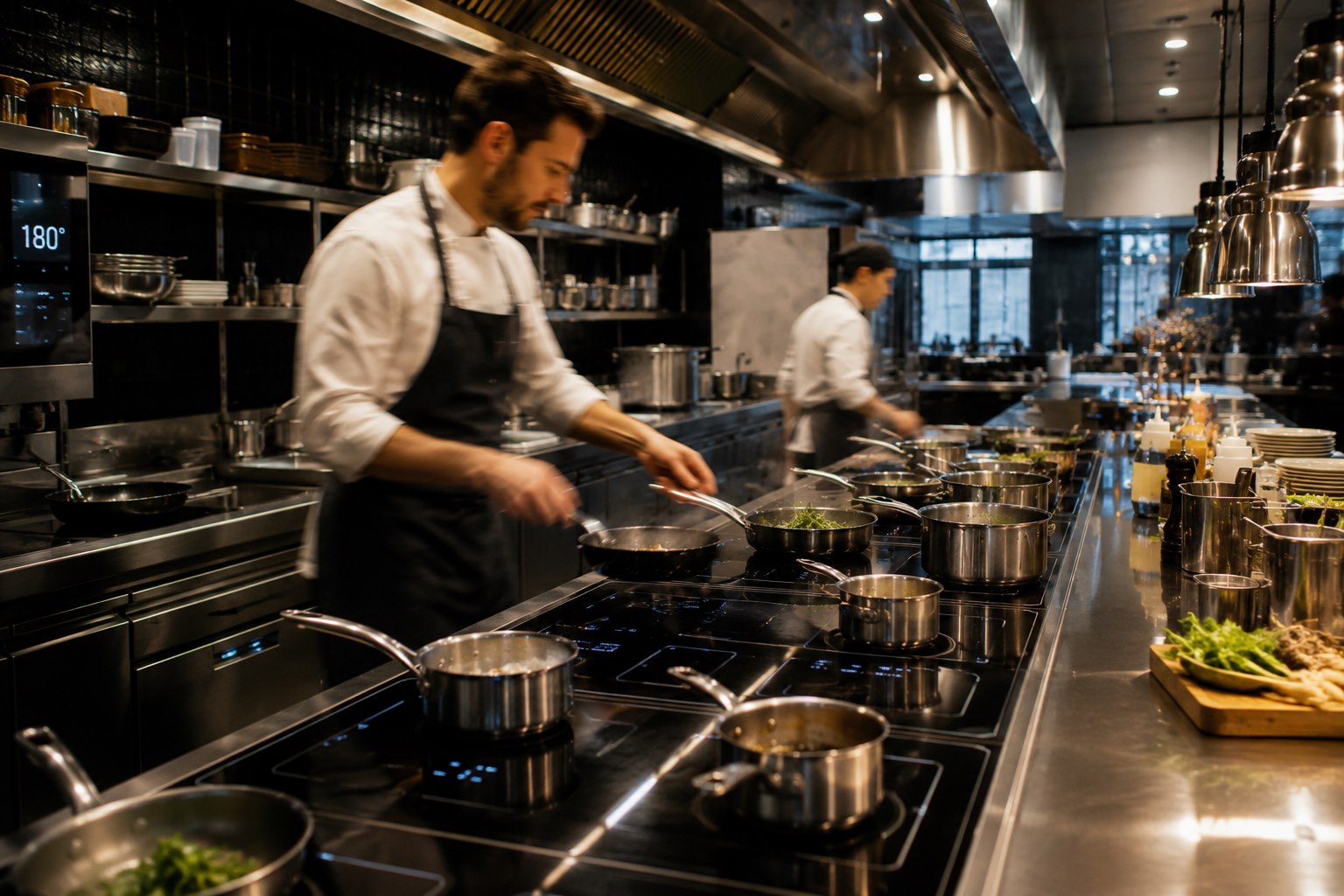
Induction has become more credible because it can deliver rapid response, precise control and reduced ambient heat in the kitchen. For some tasks, it can improve comfort and cleaning. For others, especially where flame contact, wok hei, char or visible fire are part of the culinary identity, the question becomes more complex. The honest approach is not to pretend every technique transfers unchanged. It is to ask which stations benefit, which require redesign and which should not be forced.
This is why electrification should be treated station by station. Pastry, sauces, prep, banqueting, breakfast, finishing, holding, steaming and some à la carte work may have different cases from grill, wok, live fire or certain high-heat traditions. A serious operator does not choose ideology over menu. They test the menu against the equipment.
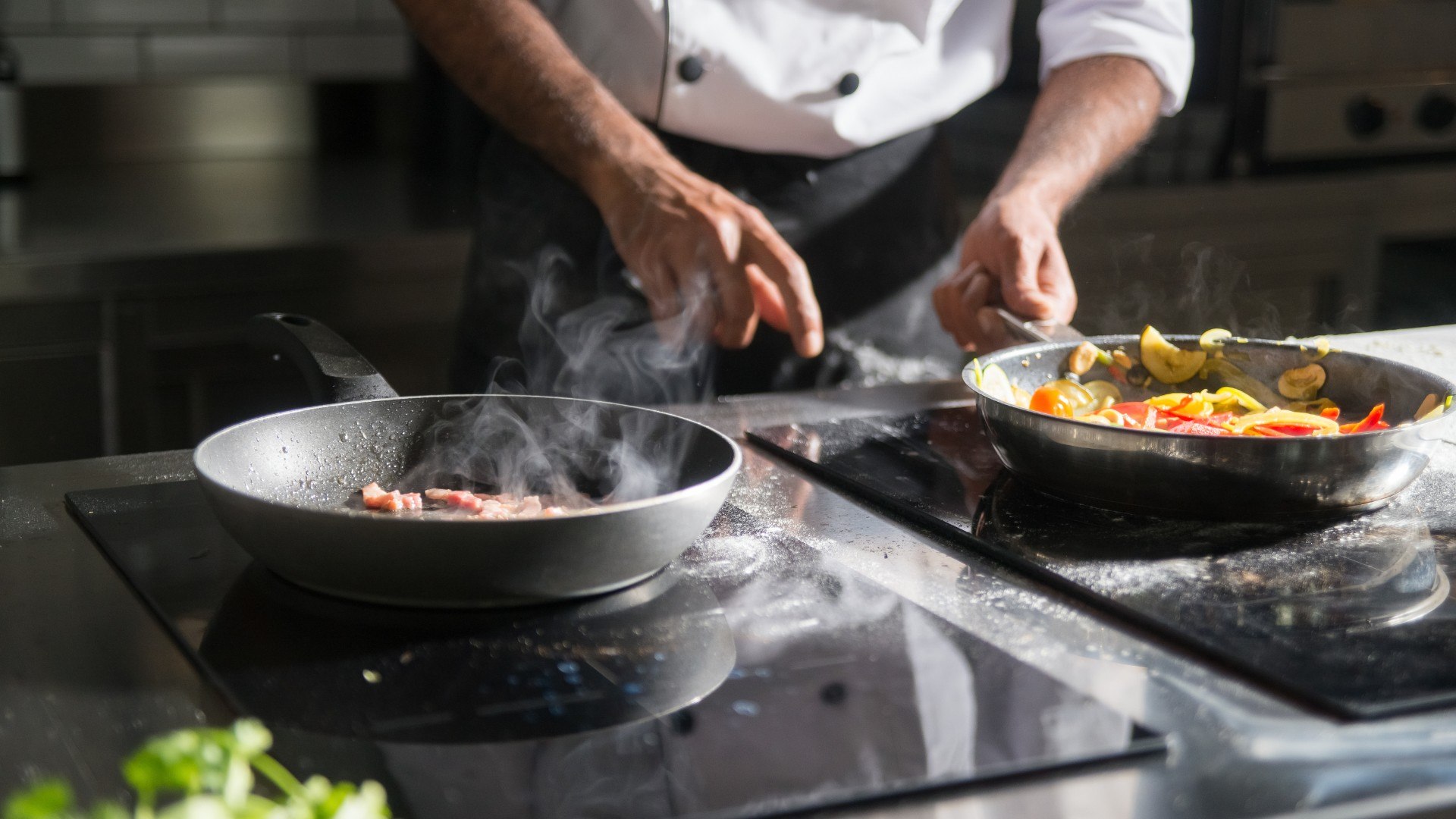
Image source: CHEFS MAG archive — original credit not recorded.
Cost modelling is becoming more practical
The Sustainable Restaurant Association’s electrification work is useful because it moves away from vague virtue and toward case modelling [Lab-20]. Operators need that level of specificity. They need to know the likely equipment cost, electrical upgrade requirement, energy use, ventilation effect, cleaning time, staff comfort, maintenance profile and possible incentive or compliance context.
Energy savings alone may not justify every project. But energy is not the only variable. A cooler kitchen can affect staff comfort and retention. Easier cleaning can reduce labour time. Lower heat load can affect ventilation design. Reduced combustion indoors can change the health and safety conversation. Future regulation can alter the risk profile of fitting out a gas-heavy site today.
California’s commercial-kitchen electrification readiness work gives the topic one form of regulatory and code-level seriousness [Lab-21]. British Safety’s coverage of induction connects the subject to safer and more sustainable kitchen futures [Lab-22]. In Victoria, coverage of all-electric requirements for new commercial buildings from 2027 adds a further market signal, even if operators should verify local rules before making investment decisions [Lab-24]. The direction is clear enough to monitor closely.
New builds and retrofits are different problems
The all-electric question is simplest in a new build. The kitchen can be designed around the electrical load, ventilation system, workflow, equipment mix and menu from the beginning. Procurement, architecture and operations can speak to one another before mistakes become expensive.
Retrofit is harder. Existing buildings may have limited electrical capacity, awkward ventilation, legacy equipment and a team trained around gas. The capex may be more difficult to absorb. Service disruption may be real. A restaurant with low margins cannot treat electrification as a design trend. It needs a phased plan.
That plan might begin with one station, one prep area or one replacement cycle. A restaurant could electrify pastry or sauce work before touching the main line. A hotel could test electric banqueting equipment before redesigning a flagship restaurant. A group could run one site as a learning kitchen and then build the evidence for future procurement.
The important point is sequencing. A weak retrofit can make good technology look bad. A careful pilot can reveal where the case is strong.
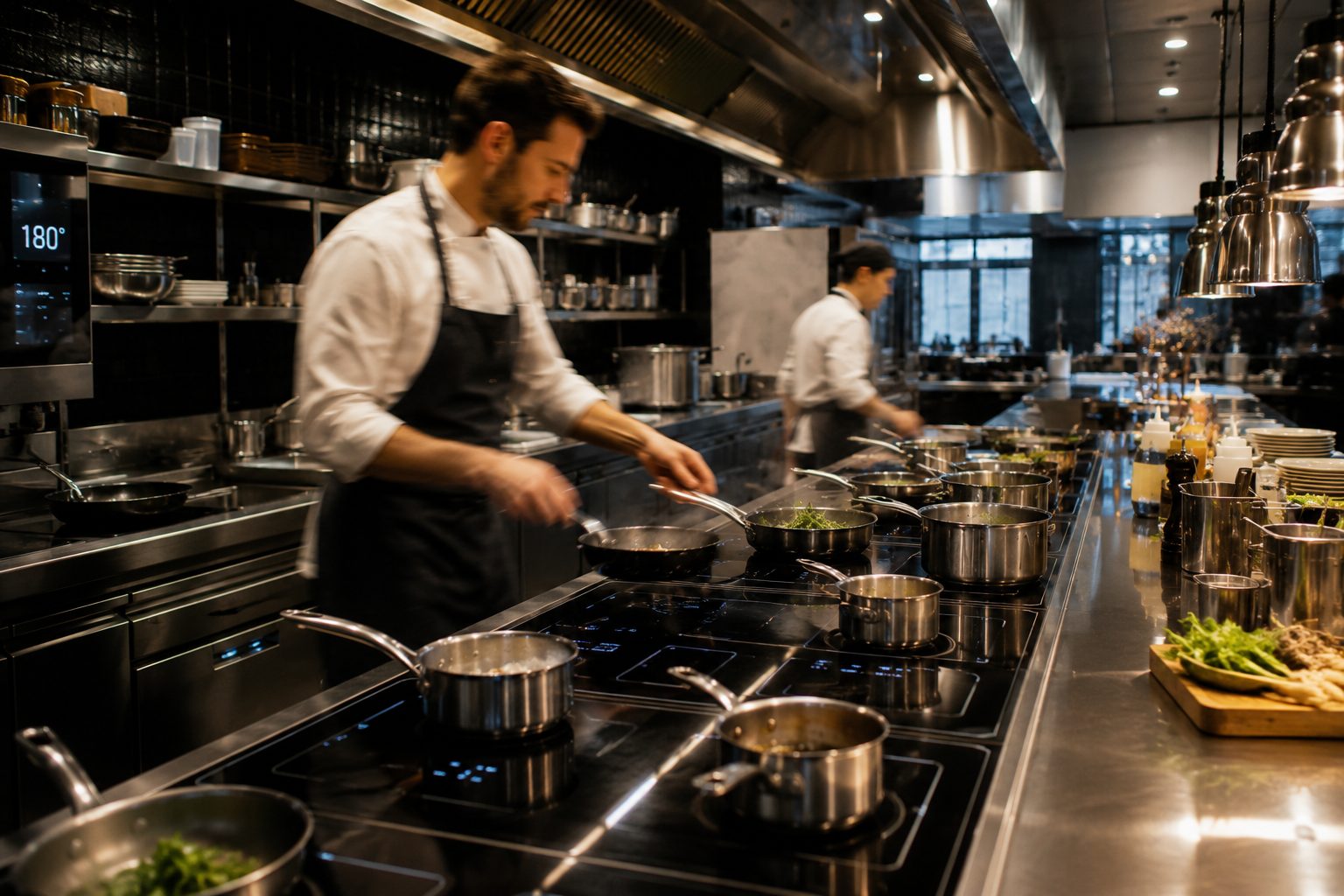
Image source: CHEFS MAG archive — original credit not recorded.
What chefs worry about, and why it matters
Chefs worry about more than nostalgia. They worry about heat, responsiveness, pan feel, durability, repair, power failure, menu identity and whether the equipment will behave under pressure. Those concerns should not be dismissed. They should be turned into tests.
Can the induction line recover fast enough during peak? Does the sauce section gain precision? Can the grill programme be maintained or should that menu language change? How does the equipment perform after six months, not only in a demo? Who repairs it? Are the pans compatible? Does the team need retraining? Does the cleaning routine actually get faster?
The word “electric” is too broad to answer those questions. The purchasing decision has to be equipment-specific, station-specific and menu-specific. A kitchen may become partly electric before it becomes all-electric. That is not failure. It may be the commercially intelligent route.
The procurement case is now wider than energy
The strongest procurement case will combine several benefits rather than depend on one. Energy use may improve. Heat load may fall. Cleaning may become easier. Staff comfort may improve. Compliance risk may reduce. Ventilation design may change. Brand credibility around sustainability may strengthen. Insurance, safety or landlord conversations may also shift in some markets.
OpenTable’s broader writing on AI and operations is not specifically an electrification source, but it reinforces a wider point about operational technology: tools matter when they reduce busywork and give staff more capacity for hospitality [Lab-23]. Electrification should be held to the same standard. It should not be bought because it is modern. It should be bought where it improves the kitchen as a working system.
This is also where margin and sustainability meet. A restaurant that lowers energy use, improves staff conditions and reduces cleaning time may strengthen both its environmental story and its operating model. But claims should stay local. The case for a London restaurant, a Melbourne new build, a Californian campus kitchen and a Nordic hotel will not be identical.
Who should move first
The best early movers are likely to be new-build restaurants, hotel groups, universities, corporate dining, multi-site operators, high-volume prep kitchens and venues already facing ventilation or heat-load constraints. They have the scale, procurement discipline or design opportunity to test the case properly.
Small independents should not feel pressured into expensive conversion without evidence. They should, however, begin mapping replacement cycles. When a range, fryer, combi, holding unit or ventilation component reaches end of life, the question should be asked seriously: does the electric alternative now make sense for this station?
Commercial kitchen electrification is not a single yes or no. It is a procurement discipline. The operators who handle it well will not announce that gas is dead. They will identify where electric equipment improves performance, comfort, cost or compliance, and where the menu still demands another solution. Electrification is entering procurement because it now speaks the language of heat, labour and running cost.
The menu decides the sequence
The most sensible electrification plans start with the menu. A restaurant built around open fire, charcoal, wok intensity or certain forms of visible heat will not evaluate the question in the same way as a hotel breakfast kitchen, pastry kitchen, banqueting operation or sauce-led fine dining room. This is not a weakness in electrification. It is a reminder that technology must serve the culinary model.
Operators should therefore create a station matrix before they create a procurement list. Which stations require flame? Which require control? Which create the most heat load? Which are hardest to clean? Which equipment is approaching replacement? Which stations cause staff discomfort or safety concern? Which areas could switch without the guest noticing any loss? That matrix will usually reveal that partial electrification is more credible than an all-at-once statement.
Finance should also be present early. The cost of electrical upgrades, equipment, downtime, staff training, ventilation redesign and maintenance has to sit beside possible savings. If the numbers do not work for one station now, they may work at the next replacement cycle. If the numbers work strongly in another station, the operator can begin there. Electrification is strongest when it behaves like disciplined procurement, not a moral announcement.
There is also a people issue. A cooler, cleaner line may matter to recruitment and retention in ways that are difficult to capture in a single energy calculation. Kitchens under labour pressure should not ignore working conditions as part of the business case. If equipment reduces heat stress, cleaning burden or end-of-shift fatigue, that belongs in the procurement conversation alongside utility bills and capex.
Electrification is entering procurement because it now speaks the language of heat, labour and running cost.
Why It Matters
Electrification affects kitchen design, chef confidence, staff comfort, energy use and future compliance. This article helps operators move beyond ideology and evaluate electric equipment through performance, station logic and procurement reality.
What To Watch Next
Watch new-build hotel kitchens, regulatory changes, induction performance data, SRA-style case modelling and partial electrification pilots. The decisive question will be which equipment categories prove a business case first.
Sources & Further Reading
- [Lab-19] Global Cooksafe Coalition news
- [Lab-20] Sustainable Restaurant Association electrification guide summary
- [Lab-21] California Energy Commission commercial kitchens proposal PDF
- [Lab-22] British Safety on induction’s safer future
- [Lab-23] OpenTable AI and operations article
- [Lab-24] Victoria all-electric commercial buildings coverage