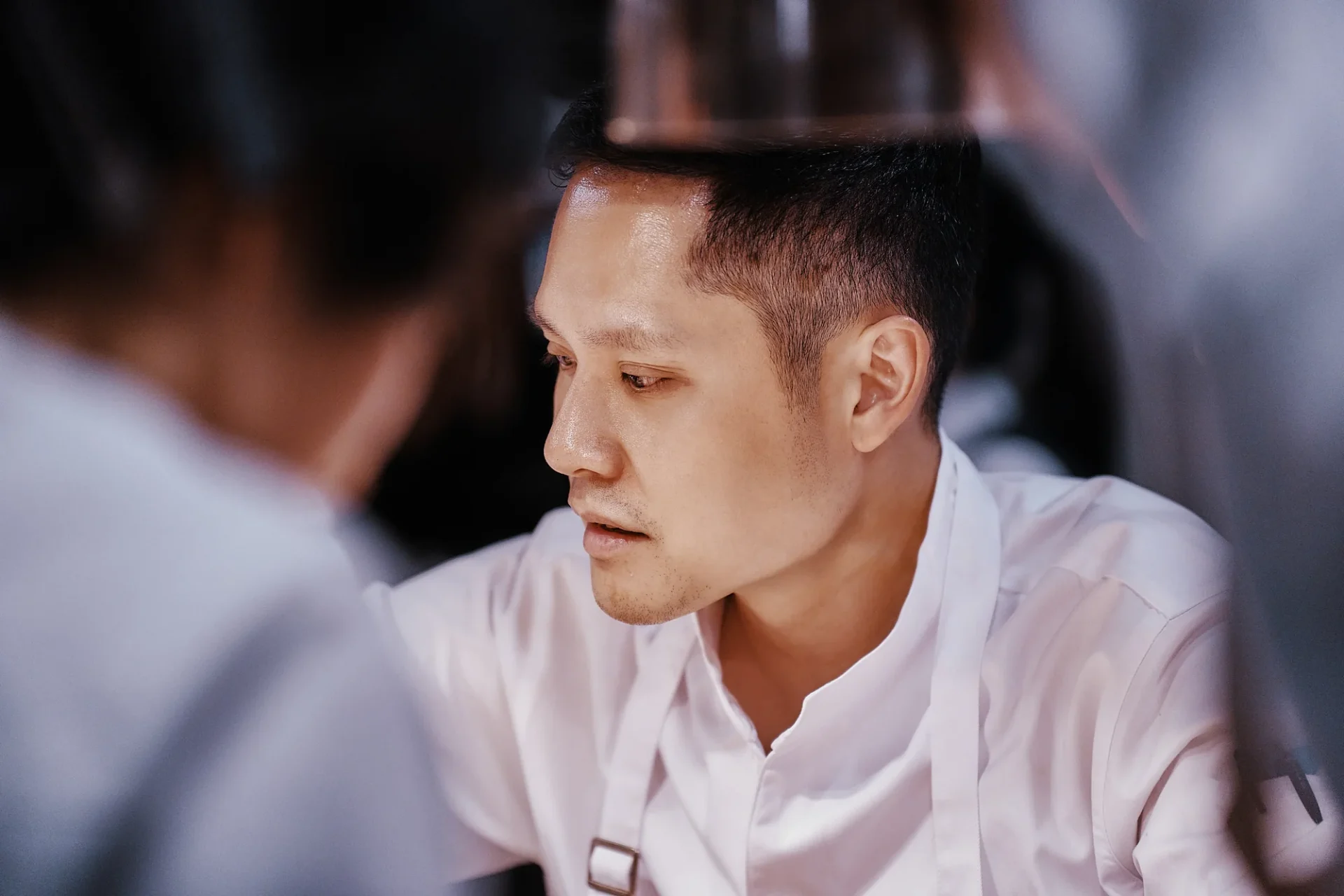
Allen Suh at Restaurant Allen. Courtesy of Restaurant Allen / The Forks & Spoons. Photo source
What does a chef carry into another kitchen? For the first Masters Series at Cristal Room by Anne-Sophie Pic, Executive Chef Marc Mantovani welcomes Allen Suh of Seoul’s Restaurant Allen: two kitchens that speak French technique with different accents. Pic’s aromatic Suffusion meets Suh’s Le Goût du Terroir, first in Hong Kong, then in Seoul. Chefs MAG reads the menu for what it reveals about collaboration: how a shared language leaves room for two identities.
Highlights
- Two kitchens, one language: French technique connects Pic’s aromatic world with Suh’s Korean seasons.
- Les Berlingots ASP carry Comté and a lavender and smoked vanilla consommé; Suh’s lobster meets Korean rice and cheese sabayon.
- The pairing moves between wine and sake, following the plate rather than one tradition.
- The story continues in Seoul, where the host becomes the guest.
What travels with a chef?
A visiting chef brings more than dishes. The useful question is what remains recognisable when those dishes enter another kitchen: a relationship with ingredients, a way of building a sauce, an instinct about where flavour should begin. A collaboration becomes interesting when those habits meet a host’s equally defined point of view.
Cristal Room by Anne-Sophie Pic will open its Masters Series on 22 October with Allen Suh of Seoul’s Restaurant Allen. Executive Chef Marc Mantovani will host the Hong Kong dinner, then travel to Seoul for a second chapter on 14 November. Both restaurants hold two MICHELIN stars, but the culinary connection is more specific than their standing in the Guide.
The two kitchens work through French technique while looking towards different sources of inspiration. At Cristal Room, Mantovani gives expression to Pic’s aromatic ideas in Hong Kong. Suh’s cooking places Korean seasonal produce within a contemporary French framework. That common technical ground gives them a way to work together while retaining the distinctions that make the meeting worthwhile.

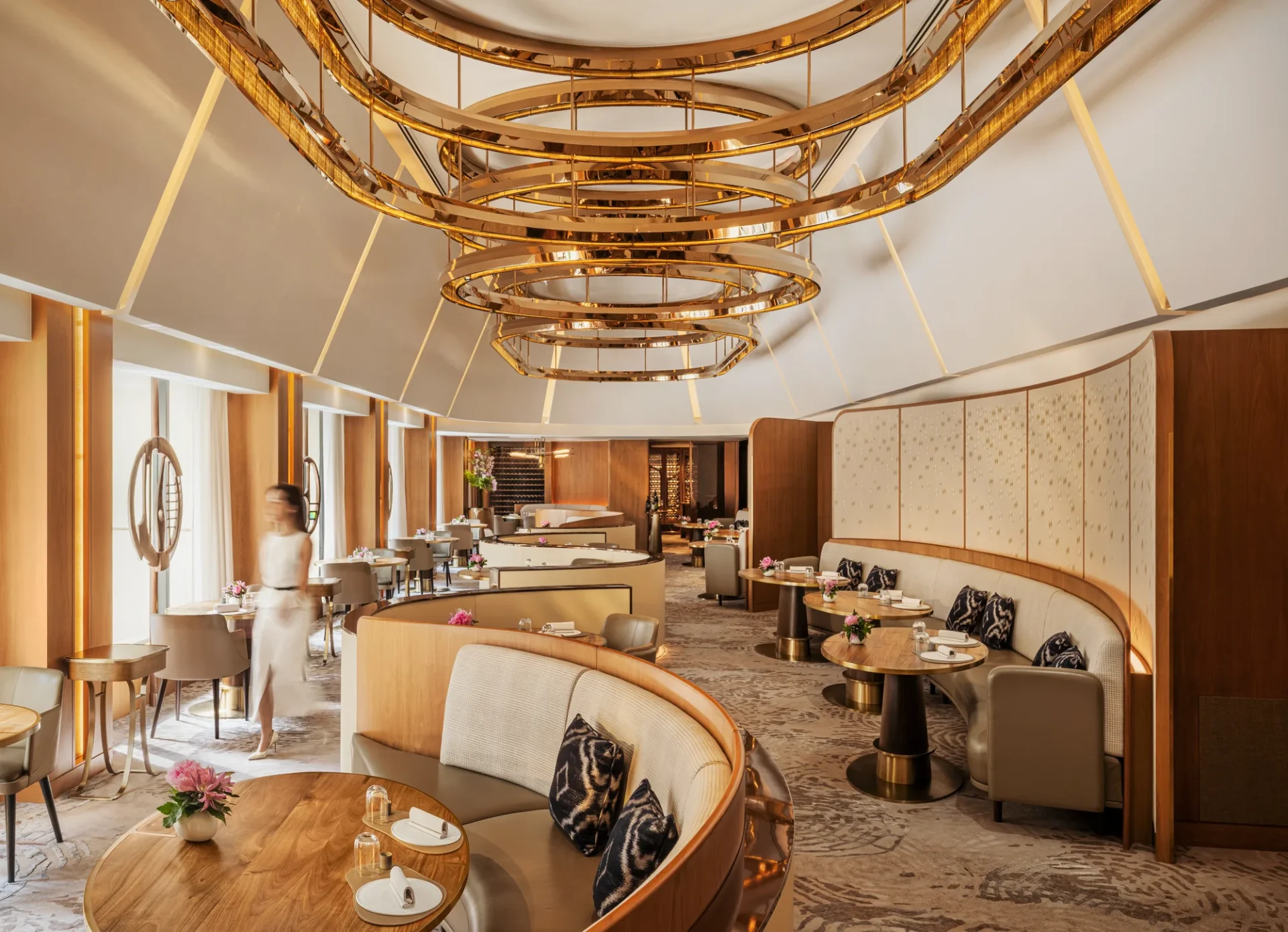
Cristal Room by Anne-Sophie Pic. Executive Chef Marc Mantovani. Courtesy of Cristal Room / The Forks & Spoons. Photo source
Aroma as a way of composing
Pic’s concept of Suffusion concerns the movement of aromas through a preparation, using methods such as infusion, marination and smoking. It invites attention to how an aromatic ingredient reaches the dish and how its presence changes within a sauce, filling or broth. Technique becomes a means of organising those relationships.
The berlingots on the Hong Kong menu make that approach tangible. The pasta parcels contain a fondue of 24-month Comté and are served with onion consommé flavoured with lavender and smoked vanilla. The cheese gives the composition a clear centre; the consommé offers a separate route through its aromas.
There is precision in that separation. The diner meets the pasta’s filling within a surrounding liquid whose aromatic direction is deliberately specified. How the combination balances on the plate remains for the kitchen to demonstrate. It shows how a signature form can carry a particular set of relationships rather than remain tied to a single garnish.
A signature can develop through that kind of adjustment. The shape supplies recognition, while the filling and surrounding aromas determine what the dish says on this occasion. In a visiting-chef menu, it gives the host kitchen a distinct presence without demanding that its contribution remain unchanged.

Les Berlingots ASP at Cristal Room by Anne-Sophie Pic. Archive image, not the Hong Kong collaboration version. Courtesy of Cristal Room / The Forks & Spoons.

Archive dishes at Restaurant Allen. Chef Allen Suh. Courtesy of Restaurant Allen / The Forks & Spoons. Not a photograph of the announced Hong Kong menu. Photo: csKim. Photo source
Korean produce within a familiar grammar
Suh describes his approach through Le Goût du Terroir, with Korean ingredients and their season guiding the cooking. Suh uses French methods to develop the ingredient’s flavour and texture. That gives his contribution a clear point of entry into Pic’s culinary world.
His lobster course pairs the shellfish with Korean local rice risotto and cheese sabayon. Rice places the dish within his ingredient landscape; risotto and sabayon provide familiar technical structures through which to express it. The interest is in that relationship, rather than in treating the Korean element as a decorative addition to a French dish.
Smoked mackerel with shrimp, beancurd and tofu sauce raises a different set of questions about the dish’s centre and supporting textures. Later, Korean galbi with kimchi salad and radish gives Suh’s contribution another register. These choices make the Hong Kong menu legible as a meeting between kitchens, without requiring every course to carry both signatures equally.
For a host chef, that is a useful compositional principle. Collaboration does not depend on merging every idea within every plate. A menu can leave space for a guest’s distinct contribution and create its connections through sequence, sauce, service and beverage choices. The chefs’ identities remain available for the diner to recognise.

Archive dishes at Restaurant Allen. Courtesy of Restaurant Allen / The Forks & Spoons. Not a photograph of the announced Hong Kong menu. Photo source
The pairing follows the conversation
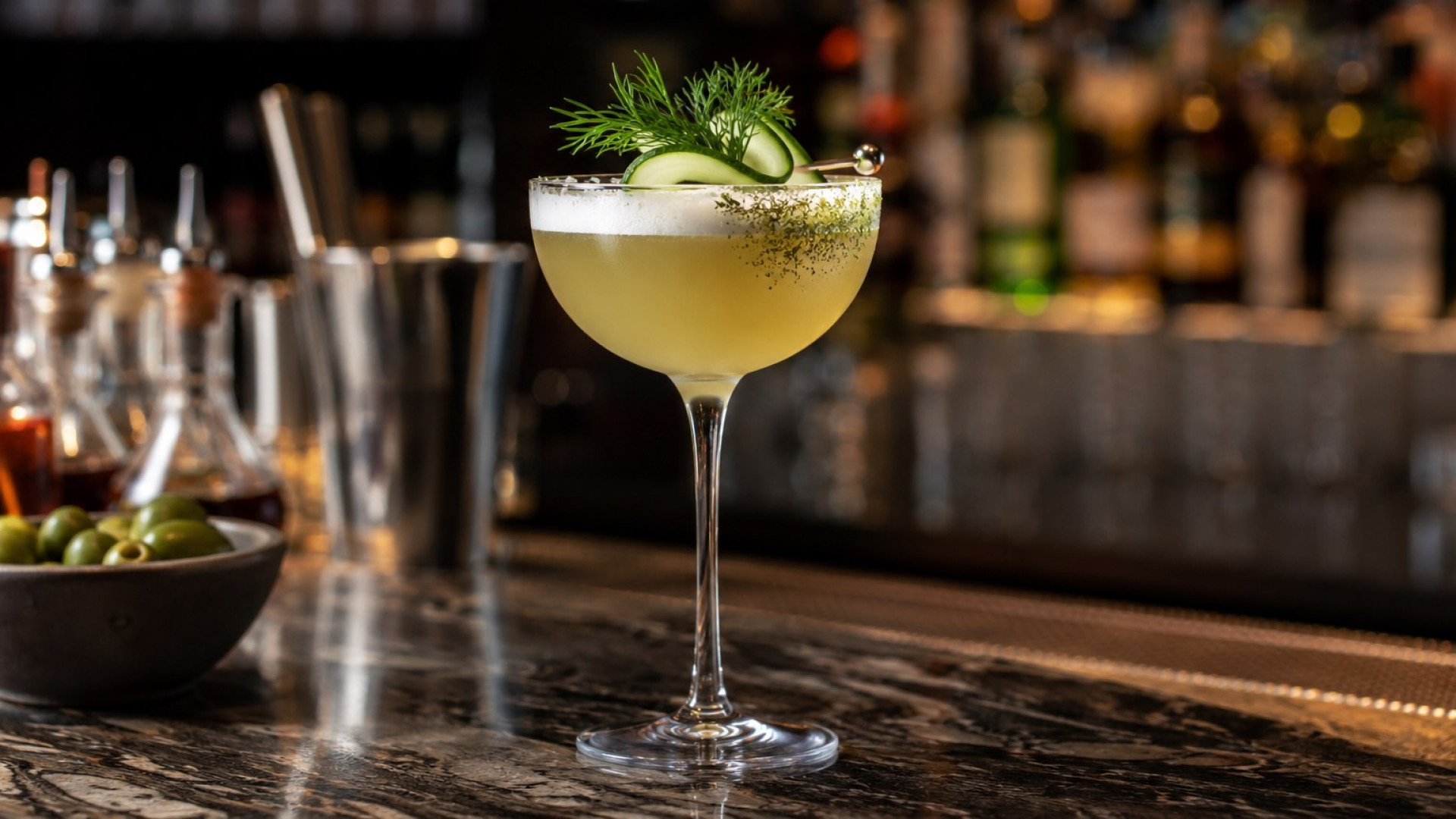
The optional beverage programme extends that reading. The optional pairing moves between wine and sake, chosen course by course. For the mackerel, it proposes Jura Savagnin or an aged Loire Sauvignon Blanc; for lobster and Korean rice, it turns towards Dassai sake. The galbi is accompanied by a Rhône direction, naming Syrah or Grenache.
What matters is the freedom to choose within different beverage traditions according to the plate. A menu drawing on Korean produce and French methods need not force its drinks into one national frame.
That approach also gives the service team a clear story to tell. The pairing can explain a choice through the dish’s flavour and texture, allowing the guest to follow its logic across wine and sake. Confidence comes from making the relationship understandable, with the bottle serving the conversation.
A second table, a different context
The return dinner in Seoul gives the collaboration scope to develop beyond a single guest appearance. Mantovani will travel into Suh’s restaurant on 14 November. That menu is still to be revealed.
What changes when the host becomes the guest is worth watching. Access to produce, the dining room’s habits and the kitchen’s working rhythm can all shape how a visiting chef expresses an idea. The two-city format creates the possibility of seeing those adjustments, rather than simply repeating a Hong Kong event elsewhere.
For chefs planning their own collaborations, the strongest lesson is to establish the culinary connection before arranging the spectacle. Here, shared technical ground provides a foundation, while different ingredient and aromatic interests supply the reason to meet. The next test is how clearly that relationship reaches the table.

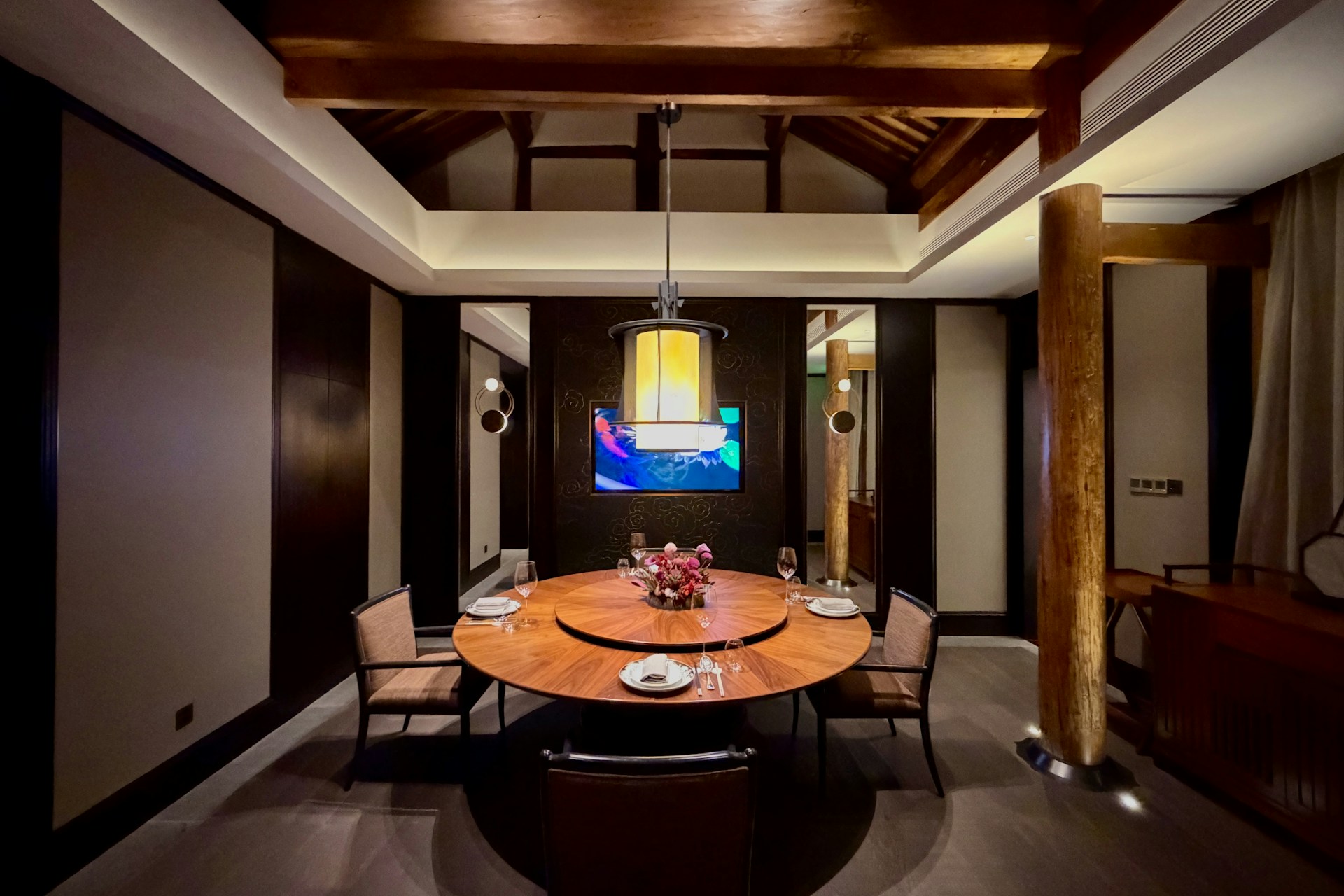
The dining room and open kitchen at Restaurant Allen, Seoul. Courtesy of Restaurant Allen / The Forks & Spoons. Photo source

Cristal Room by Anne-Sophie Pic, Hong Kong, at night. Courtesy of Cristal Room / The Forks & Spoons.
The first chapter
The first chapter is written at Cristal Room on 22 October, high above Victoria Harbour; the second follows at Restaurant Allen in Seoul on 14 November.