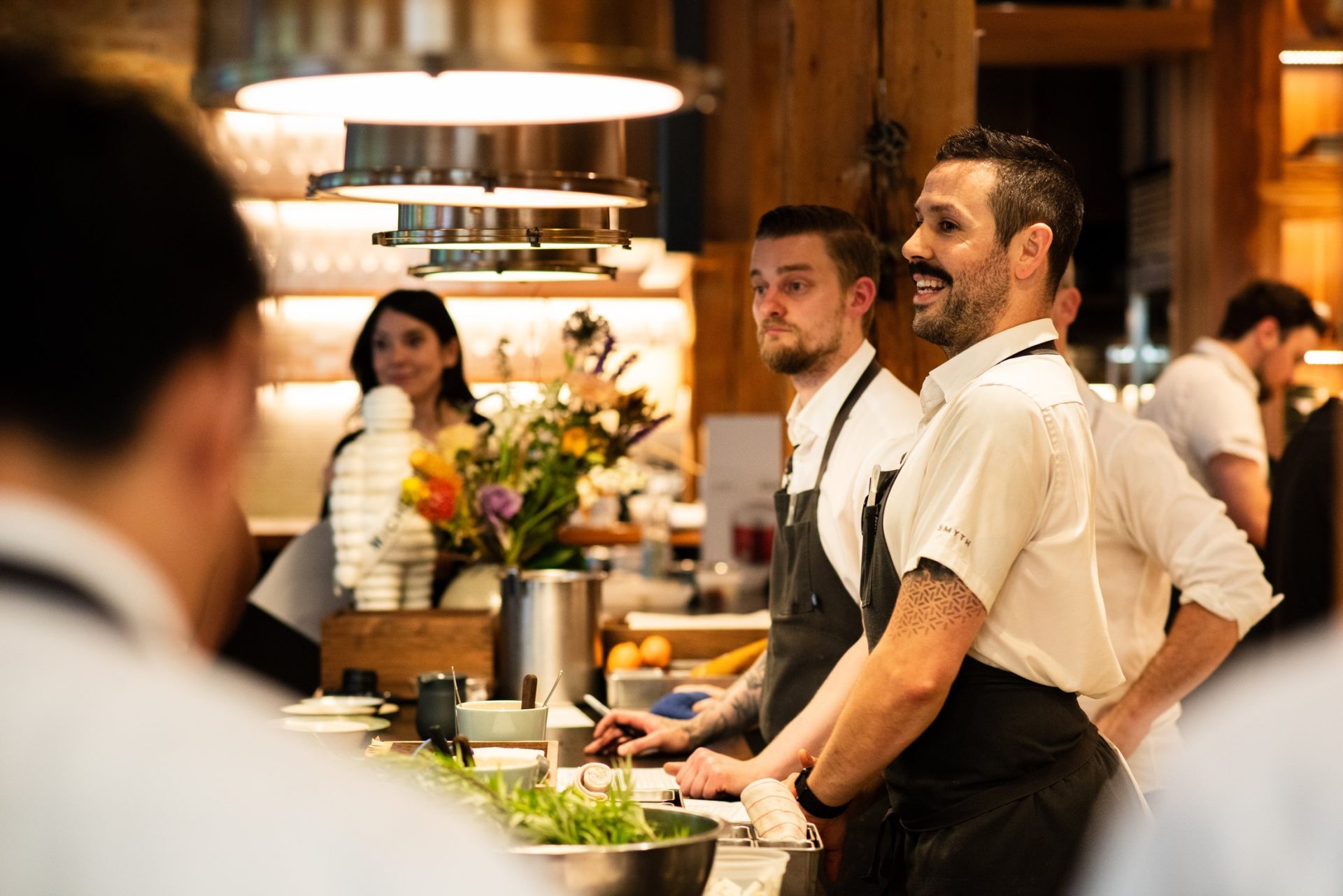
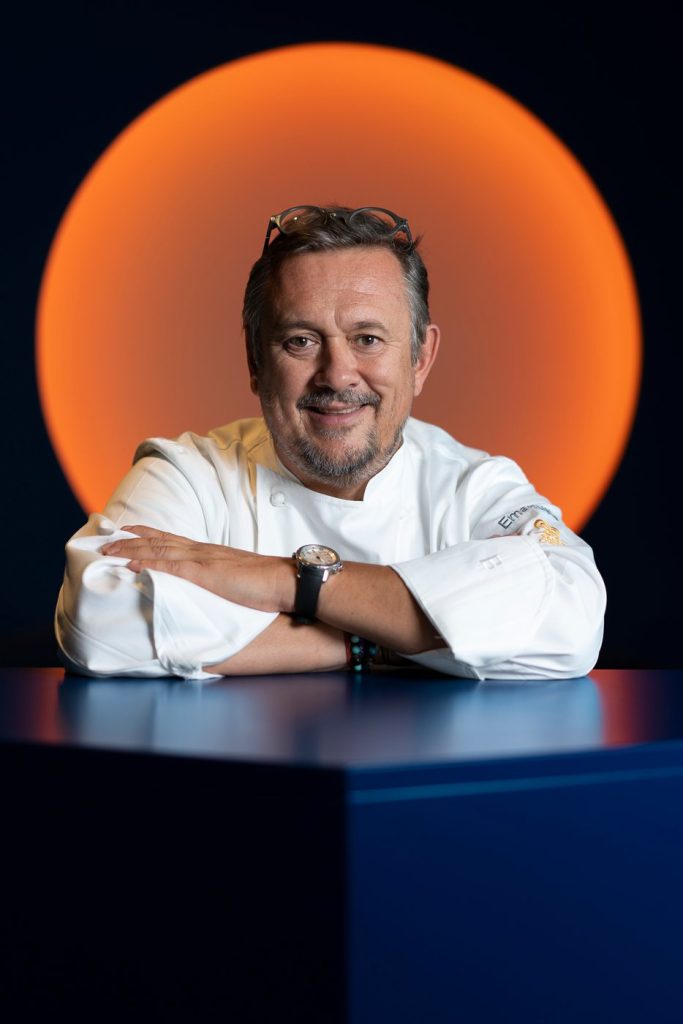
Agli Amici, chef Emanuele Scarello. Photo: Roberto Pedi.
Autumn Flavours 2026: What the Season Asks of a Chef
All4Chefs has invited chefs to share the inspiration behind their autumn cooking. Chefs MAG looks at the ideas taking shape, ahead of a collection of individual stories and a dedicated digital edition.
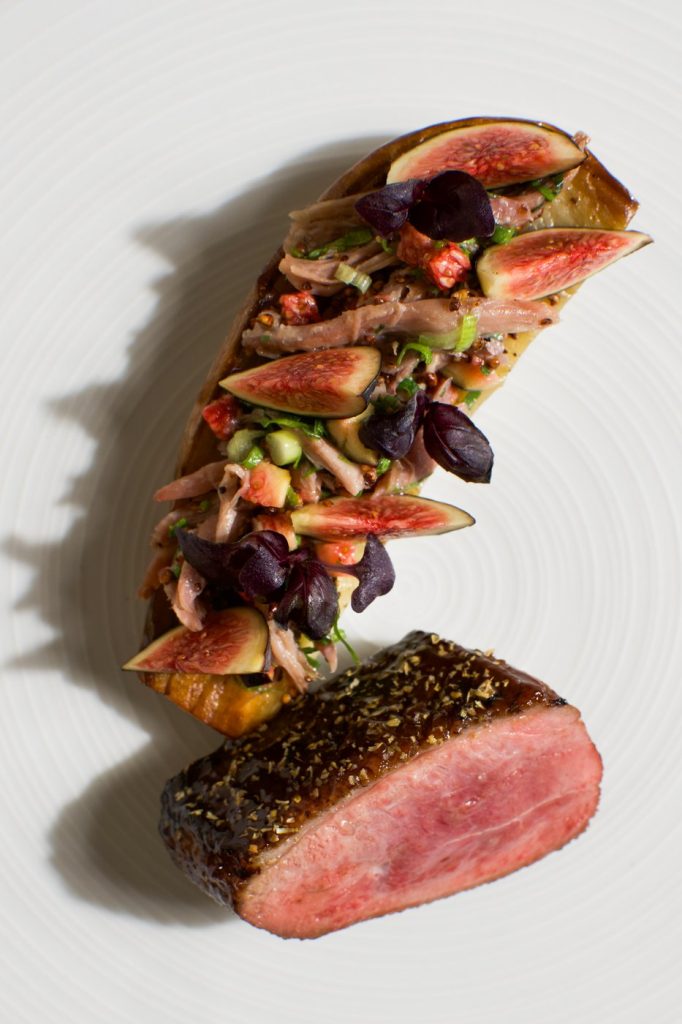
At Le Baudelaire in Paris, Mylo Levin uses fig leaves to smoke duck. The leaf carries the season into the kitchen through its perfume, extending the life of an ingredient beyond the fruit. It is a small decision, but an eloquent one: a chef finding a way to express autumn through aroma and technique.
That is the kind of thinking All4Chefs has been asking chefs to share for Autumn Flavours Collection 2026. The invitation reaches behind the finished plate, into the memories, landscapes and relationships that shape a menu. What makes a kitchen turn towards smoke? Why does a familiar dish return? How does a chef recognise the moment when the season has truly changed?
For Chefs MAG, the fascination lies in the different answers. From Sorrento and Godia to London, Tokyo and Vancouver, these kitchens approach autumn with distinct culinary histories. Following their stories together offers something a single menu cannot: a view of how chefs think through the same season, in places where it arrives very differently.
Smoke, memory and the changing light
Levin’s inspiration begins with the first fires of colder weather: wood smoke, hot chestnuts and the comfort of sitting beside a hearth. Hay and fig leaves become ways of carrying those associations into his cooking. Black cardamom brings a naturally smoky register to the harissa accompanying red mullet. The interest is in how one idea can travel through several preparations without requiring every dish to repeat the same technique. Pastry chef Léandre Vivier continues the conversation through fig and caramelised puff pastry, allowing the fruit to connect the savoury kitchen with dessert.
In Provence, Sylvestre Wahid approaches autumn through the changing light and the scent of the earth at Le Sylvestre, Mas de l’Amarine. His inspiration holds the Mediterranean close while making room for roots, patient cooking and spices connected to his own memories. Warmth here has several meanings: the texture achieved through cooking, the character of a spice, the recollection of a meal. There is a delicate judgement involved in deepening a menu while preserving the freshness that belongs to its setting. At Chez Jeannette, Commanderie de Peyrassol, Benjamin Le Balch’s close relationship with the estate’s kitchen garden brings another Provençal voice into the collection, attentive to the possibilities of vegetables and the setting in which they grow.
Gennaro Esposito offers a coastal perspective at La Torre del Saracino in Sorrento. An unusually warm year has prolonged summer, delaying the kitchen’s full turn towards autumn. That matters. A seasonal menu depends on recognising what the weather and produce are actually doing. Esposito’s story invites us to follow the transition itself, with the Bay of Naples setting a different pace from kitchens further north.
Giuseppe Mancino at Il Piccolo Principe in Viareggio brings another point of view to this Italian conversation. His cooking draws together Tuscan land and sea, a Campanian background and influences gathered through travel. His perspective makes personal history a useful lens through which to read the season: the landscape may be Tuscan, but the decisions belong to a chef whose culinary references extend well beyond it.
The forest, seen from London and Bangkok
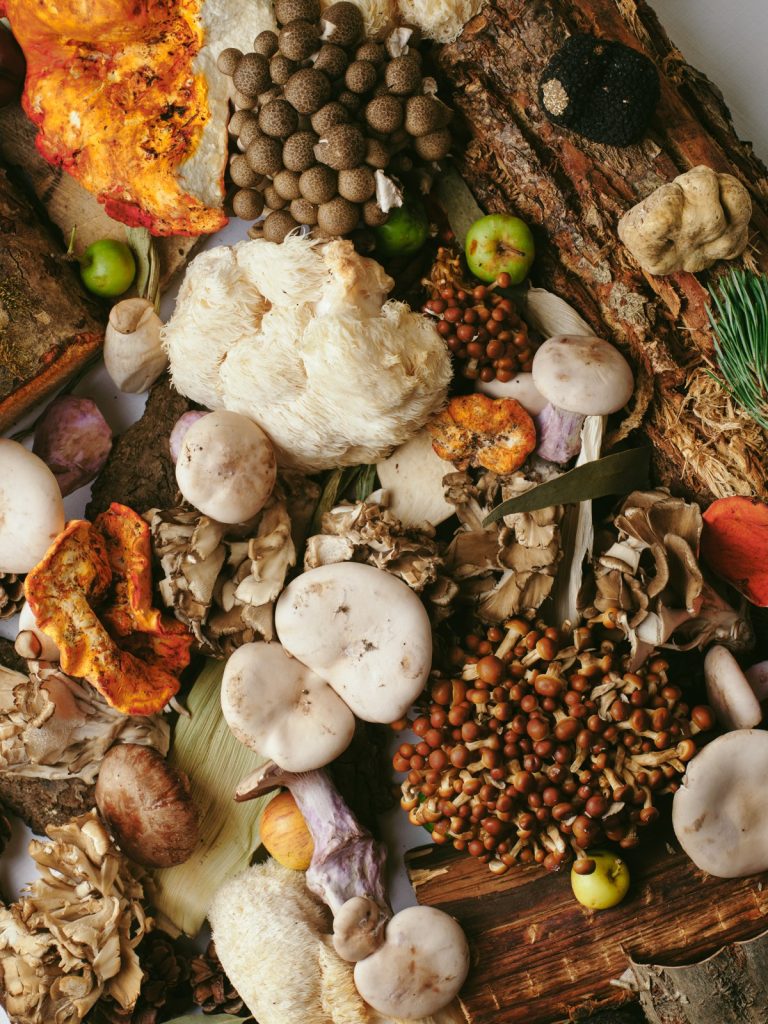
At Mauro Colagreco’s restaurant at Raffles London at The OWO, the Forest Menu begins with an idea of the landscape as a living, interconnected world. With head chef Grigoris Thanasis leading the kitchen, mushrooms, conifer aromas, nuts and game give that idea a culinary form. A menu that makes Douglas fir the subject of a course asks the diner to pay attention to a tree as closely as to the shellfish beside it. The forest becomes a source of flavour and a way of directing attention.
This is where Colagreco’s interest in biodiversity becomes particularly compelling for a food writer. The familiar hierarchy of luxury ingredients shifts when leaves, roots and trees become the starting points of dishes. The London chapter will explore that way of looking, and the work of Thanasis and the team in translating it into dinner.
In Bangkok, Davide Garavaglia’s autumn at Côte by Mauro Colagreco carries a related philosophy into a different setting. His experience at Mirazur underpins a Riviera culinary language now expressed beside the Chao Phraya. In Fall in Flavours, a deer pithivier brings the structure of classical French cooking to game and woodland fruit. Blueberry and elderberry place a sharp, fruity counterpoint beside the richness implied by the pastry-enclosed preparation. Earlier, mustard ice cream introduces a colder, more provocative expression of the season.
Those choices make the menu worth exploring beyond its ingredients. Garavaglia is composing changes of temperature, weight and intensity within an autumn vocabulary. Alongside London’s Forest Menu, his chapter opens a question that runs through the collection: how far can a culinary philosophy travel while retaining the individuality of the chef and kitchen interpreting it?
The people within the landscape
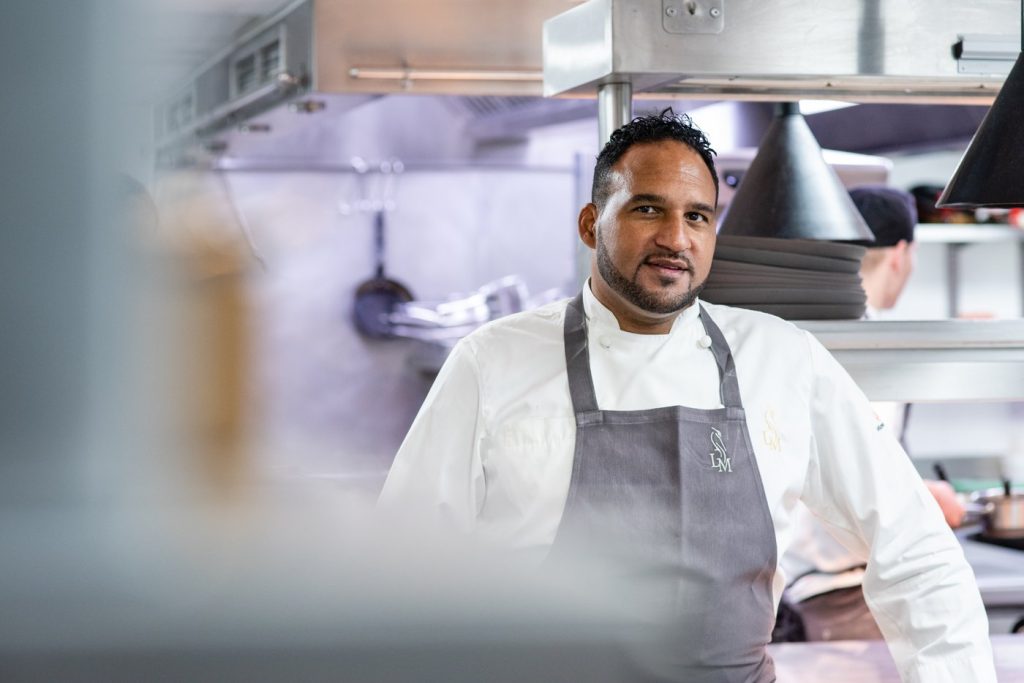
Michael Caines’s Terroir Cuisine at Lympstone Manor gives autumn a distinctly Devon frame. Coast, countryside and orchard belong to the same culinary landscape. Quince beside partridge and fig beside venison make fruit part of the savoury argument, while honey from the estate gives provenance an intimate scale. The appeal is in following how those relationships hold a menu together.
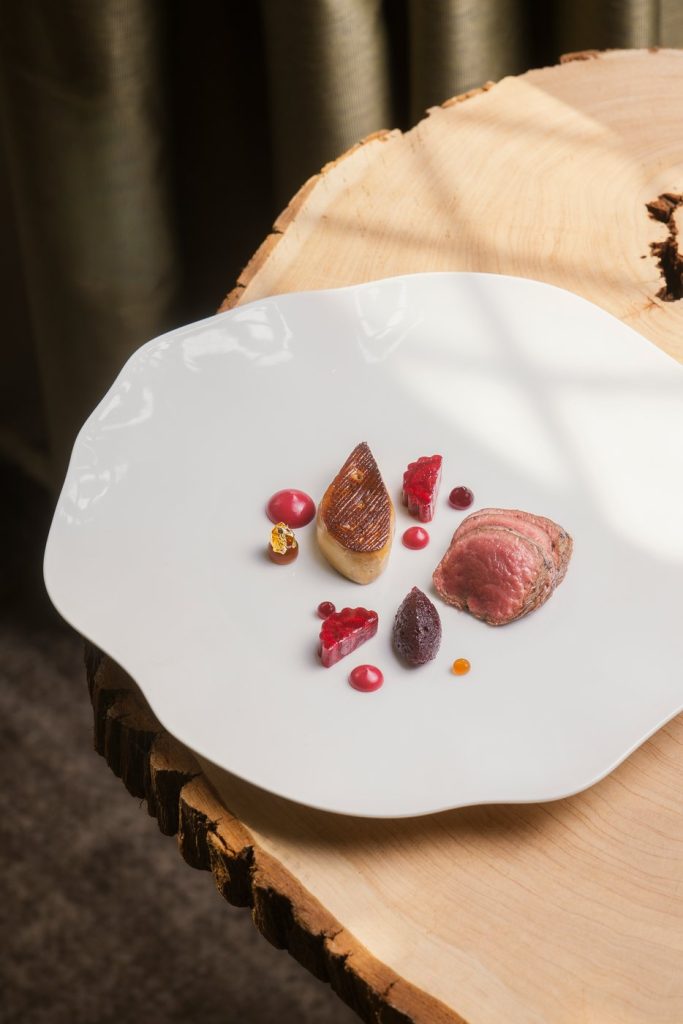
Nearby, Scott Paton at Àclèaf, Boringdon Hall, brings a different sensibility to Devon produce. Black tea alongside fallow deer suggests an interest in tannin and aromatic depth; green anise with pear offers another way of approaching orchard fruit. The deer also leads back to supplier Curtis Pitts and the estates around Boringdon, and to Luke Fearon’s work in developing the dish. Authorship in a kitchen extends through the team and the people supplying it.
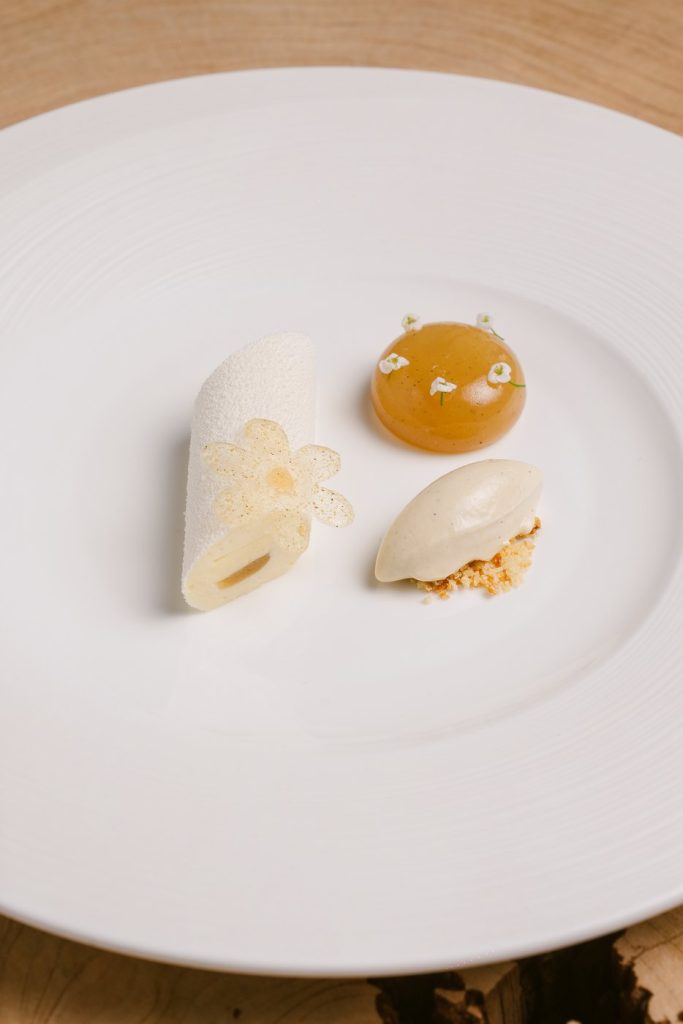
That wider understanding of a chef’s landscape connects several of the collection’s stories. At Restaurant Andrew Fairlie in Gleneagles, Stevie McLaughlin’s relationship with the Secret Garden and head grower Jo Campbell makes cultivation part of the kitchen’s creative life. At Hiša Franko, Ana Roš’s cooking is inseparable from the Soča Valley and its network of producers, foragers and other local specialists. Their knowledge helps determine what the kitchen can imagine.
In Vancouver, Andrea Carlson’s botanical approach at Burdock & Co makes radicchio a subject worthy of sustained attention. Bitterness, often softened or pushed aside, can become a defining quality around which a menu develops. Across the city, Gus Stieffenhofer-Brandson at Published on Main brings foraging, fermentation and preservation into the discussion. His work invites us to consider autumn over time: the harvest as something a kitchen can transform and carry forward.
Matt Orlando’s approach at ESSE in Copenhagen brings a further dimension. His idea of responsible deliciousness places pleasure at the centre of a more resourceful relationship with ingredients. Autumn’s abundance makes that approach especially pertinent: the creative work includes discovering a further use for an ingredient, and making that second possibility worth eating.
Tradition, translated by the chef
At Agli Amici in Godia, Emanuele Scarello places a familiar Italian pasta dish midway through each autumn tasting menu. It is an unusually revealing decision. A classic gives diners a point of recognition, and the kitchen a demanding test of cooking and balance. Around it, Scarello can explore new combinations with the confidence of a house whose history remains present. With Michela Scarello shaping hospitality and wine, that continuity reaches beyond the plate.
In Antwerp, Frédéric and Evangeline Chabbert’s De Aarde brings the conversation into the scale of a house and its welcome. Classical cooking and sauces, developed with the kitchen team led by Lukas Krabath, offer a lens through which to explore the season. At Cuchara in Lommel, Jan Tournier’s French foundations and Japanese influences suggest another reading: how precision and a selective use of ingredients can give a dish its expressive force.
Japan brings its own exchanges between place and culinary inheritance. At respiración in Kanazawa, Tatsuro Ume, Keisuke Yagi and Yusuke Kitagawa connect their Spanish culinary formation with Ishikawa’s producers and crafts. At est in Tokyo, Guillaume Bracaval works through French technique and Japanese produce, with pastry chef Michele Abbatemarco bringing a distinct authorship to the final part of the meal. These are stories about how a kitchen develops a language of its own through the meeting of cultures.
The conversations also reach into Poland’s mountain cuisine at Giewont, where Podhale produce meets French technique, and into the English countryside at The Royal Oak in Whatcote. Richard and Solanche Craven’s combination of micro-seasonal cooking, wine and village hospitality brings us back to a close relationship between a restaurant and the people around it.
Taken together, these perspectives make autumn feel specific again. A garden, a fig leaf, a well-known pasta dish or a producer’s knowledge can change the direction of a menu. The value of following the collection is in discovering the thought behind those decisions, and the different forms they take from one kitchen to the next.
This is our first look at the conversations shaping the collection. The chapters ahead will take us closer to each chef’s work, giving their ideas the space and detail they deserve.
Follow the stories as they unfold
The individual chef and restaurant chapters will unfold on All4Chefs, revealing the inspiration, dishes and people behind each kitchen’s autumn. These stories will then come together in the Chefs MAG Autumn Flavours Collection 2026, a dedicated digital edition planned for November.