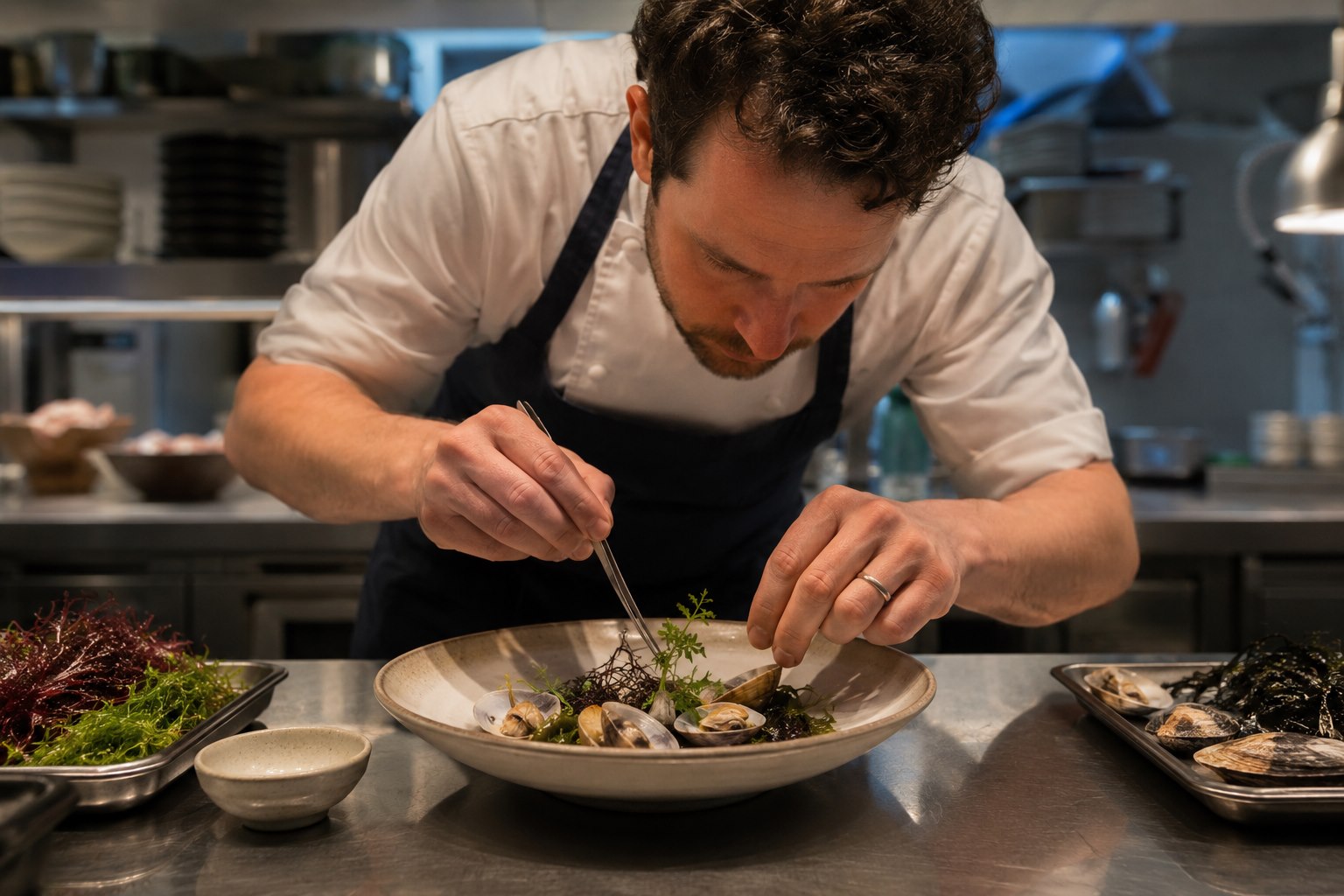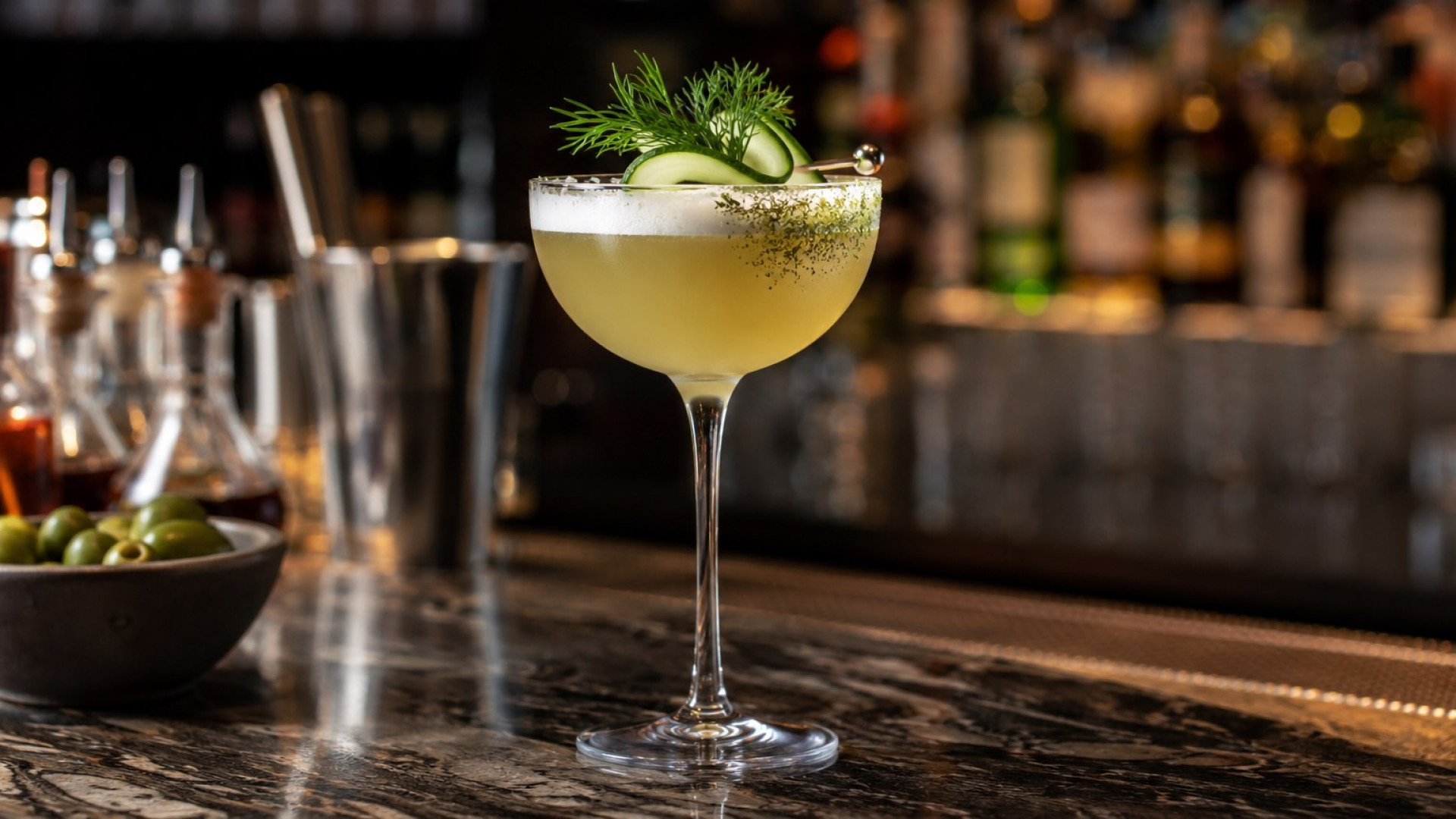
Tiffany & Co.’s Blue Box Café has opened inside the House’s new Lee Gardens store in Hong Kong, with culinary direction by Chef Agustin Balbi of one-MICHELIN-starred Andō. This Chefs MAG feature reframes the press announcement as a restaurant-opening analysis: how a luxury house converts brand codes into hospitality, how Balbi adapts a more relaxed culinary register for breakfast, afternoon tea and all-day dining, and why the project matters for chefs, operators and brand-led dining.
Highlights
- The Tiffany Blue Box Café Hong Kong is located on the first floor of Tiffany & Co.’s Lee Gardens store in Causeway Bay.
- Chef Agustin Balbi of one-MICHELIN-starred Andō leads the culinary direction, with Head Chef Omar Agostini named in the café’s official materials.
- The menu is built around three dayparts: Breakfast at Tiffany’s, Tiffany afternoon tea and an all-day à la carte menu.
- All imagery should use PR-supplied or licensed real photography only; AI images are not appropriate for this real venue story.
Tiffany Blue, Served
The new Tiffany Blue Box Café in Hong Kong is not simply another branded dining room. It is a staged meeting point between luxury retail, restaurant craft and the question of how houses of design translate their codes into hospitality.
Opened inside Tiffany & Co.’s new Lee Gardens store in Causeway Bay, the café sits on the first floor of a retail environment designed to make jewellery, art, watches, home objects and dining feel like parts of the same world. The official café page lists the Hong Kong Blue Box Café at Shop No. 101–109, 1/F, Lee Gardens Three, 1 Sunning Road, with daily opening hours from 11:00 to 21:00. [Tiffany-02]
For Chefs MAG, the interest is not only that Tiffany & Co. has opened another café. It is that the Hong Kong project places a serious chef at the centre of a luxury house extension. Chef Agustin Balbi, chef-founder of one-MICHELIN-starred Andō, has developed the culinary direction, while Head Chef Omar Agostini is named in the café’s official background materials. [Tiffany-01] That matters: in Hong Kong, the room has to do more than look beautiful. It has to eat properly.
A Dining Room Built from Brand Codes
The room itself is part of the message. Press imagery shows a bright, unmistakably Tiffany interior: blue-toned banquettes, polished table settings, a marble-like counter surface, soft curves and a ceiling installation that turns the House colour into an architectural gesture. The surrounding store opened at Lee Gardens with a broader design programme, including jewellery, watches, Home & Accessories and a curated art presence on the first floor. [Tiffany-04]
This is where the project becomes more than a café opening. The Blue Box Café belongs to a larger retail strategy in which hospitality becomes a form of brand memory. A guest may enter for breakfast, afternoon tea or lunch, but the room performs the same work as a display window: it converts visual recognition into a physical experience.
Hong Kong’s Blue Box Café appears to aim for the middle register: familiar café formats, polished by luxury cues and shaped by Balbi’s more ingredient-led language.
Balbi’s Softer Register
Balbi is best known in Hong Kong through Andō, where the MICHELIN Guide describes his cooking as a fusion of ancestral roots and Japanese influences, with his signature caldoso rice, “Sin Lola”, presented as a homage to his grandmother. [Tiffany-03] That background is useful when reading the Blue Box Café menu. This is not Andō transferred into a jewellery store. It is Balbi working in a more relaxed register.
In the opening materials, Balbi frames the project as a chance to share a “more relaxed, personal style” of cooking with Hong Kong guests. [Tiffany-01] A Blue Box Café cannot behave like a tasting-menu restaurant. Its grammar is breakfast, tea, recognisable dishes, polished service, a little indulgence and a room that encourages lingering. The chef’s role is not to complicate those forms beyond recognition; it is to sharpen them.
That sharpening is visible in the structure of the day. The café is built around three moments: Breakfast at Tiffany’s, Tiffany afternoon tea and an all-day à la carte menu. [Tiffany-01] The formats are familiar. The details are where the kitchen asserts itself.
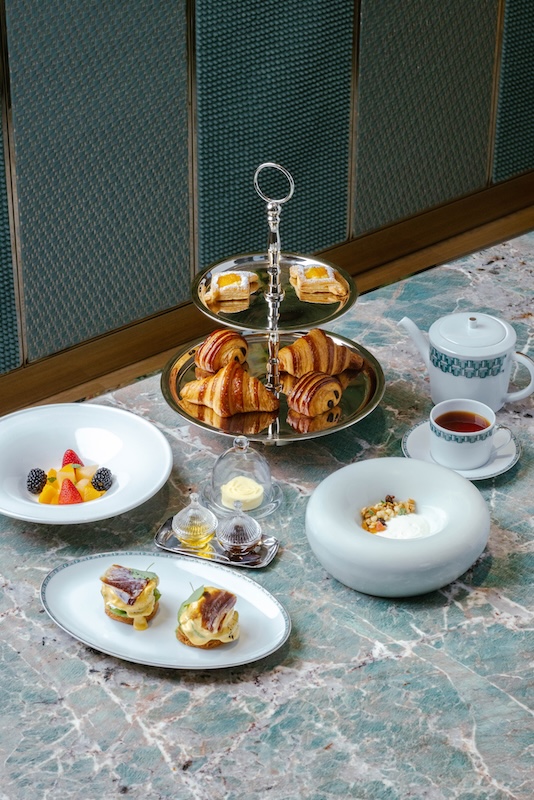
Breakfast at Tiffany’s, served all day at the Blue Box Café Hong Kong. Photo courtesy of Tiffany & Co..
Breakfast as Theatre, but Gently
Breakfast at Tiffany’s is the most immediately loaded phrase in the project. In Hong Kong, the café turns it into a formalised set at HK$328 plus 10 per cent per guest, served with coffee or tea and available throughout the day. [Tiffany-01] The menu begins with seasonal fruit, croissants, pain au chocolat, peach tart and Greek yoghurt with house-made granola, before moving to a choice of savoury dish. [Tiffany-01]
The savoury choices are calibrated rather than radical: avocado toast with Japanese egg, brown butter emulsion and Spanish ibérico ham, or poached Japanese egg with smoked salmon, toast and paprika foam. Baerii caviar may be added to either dish. [Tiffany-01] It is a clever piece of menu engineering. Nothing frightens the café guest; nothing feels under-considered.
This is the kind of luxury breakfast that understands the emotional weight of the brand without turning the plate into a gimmick. The Tiffany name supplies the fantasy. The kitchen has to supply the reason to finish the dish.
Afternoon Tea and the New Retail Ritual
Afternoon tea may be the café’s most natural territory. Tiffany afternoon tea is priced at HK$358 plus 10 per cent per guest and combines savoury bites with signature sweets. [Tiffany-01] The savoury section includes egg waffle puff with caviar and crème fraîche, tuna tartare on toasted bread, Japanese egg sandwich and a mini lobster bun with smoked paprika and white cucumber. [Tiffany-01]
That list says a great deal about Hong Kong as a setting. The egg waffle reference anchors the experience locally, while caviar, lobster and tartare keep the service inside an international luxury vocabulary. The sweets return more directly to brand theatre: Tiffany & Co. macarons, fruit tart, red velvet cake, opera cake, egg tart and a Tiffany & Co. cake, alongside raisin and chocolate scones with clotted cream and preserves. [Tiffany-01]
Afternoon tea has long been one of hospitality’s most useful rituals because it sits between dining and occasion. It is neither merely a meal nor quite an event. For Tiffany, that ambiguity is commercially powerful. A guest can book it as a celebration, a shopping pause, a social photograph, or a quiet moment inside a luxury address. The food must hold all of those uses without losing coherence.
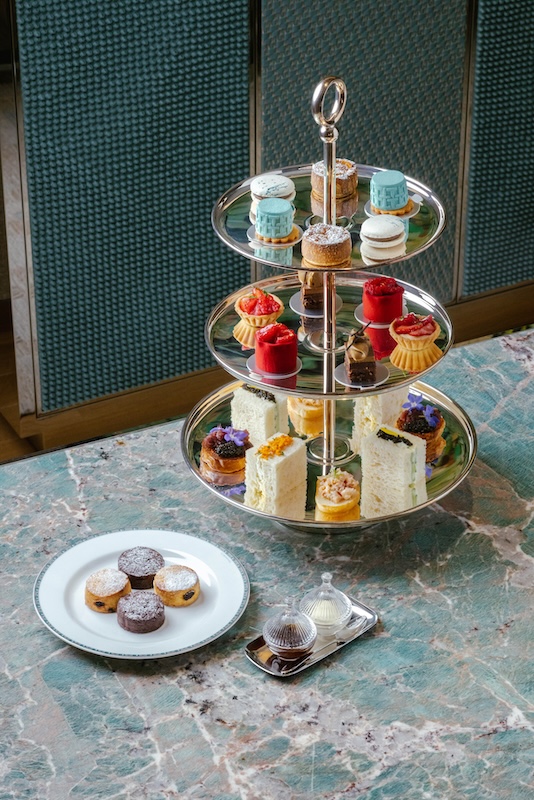
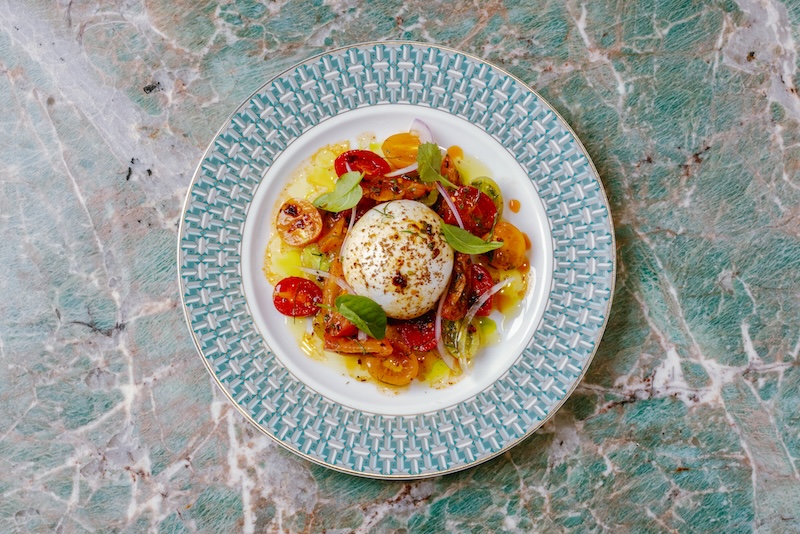
From afternoon-tea theatre to all-day signatures: the Tiffany tea tower and the seasonal tomato & burrata salad. Tiffany & Co.
The All-Day Menu: Café Classics, Reframed
The all-day à la carte menu broadens the café beyond the expected signature moments. Starters include Hokkaido scallop carpaccio with pineapple salsa, lemon dressing and crispy kombu; tuna tartare with smoked soy, oscietra caviar and tapioca chips; seasonal tomato burrata salad; and king prawn salad with XO thousand island dressing. [Tiffany-01]
There is a practical intelligence in that range. Seafood and acidity give the menu lightness. XO and kombu place Asian pantry references into dishes that remain readable to an international guest. The kitchen is not trying to produce a manifesto; it is trying to create a café menu that feels specific to Hong Kong without becoming narrow.
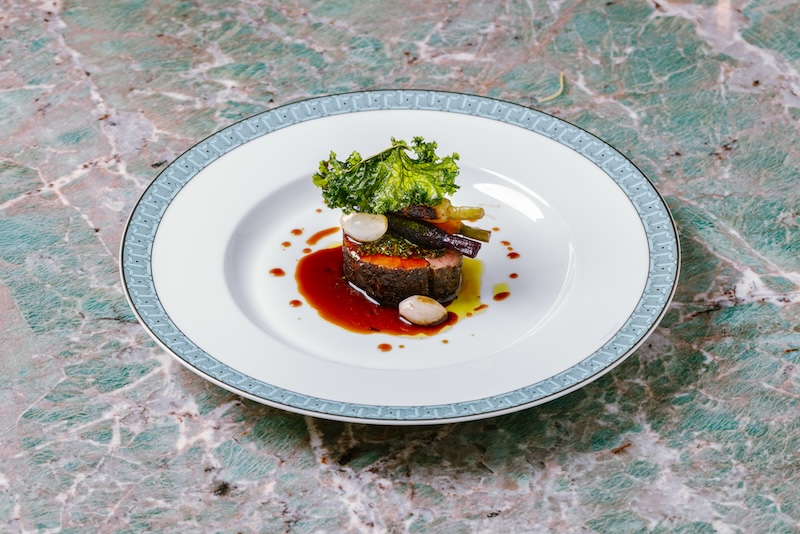
The main courses continue that logic: homemade egg tagliolini with mixed Yunnan mushrooms and cream sauce, slow-cooked Label Rouge chicken breast finished with lemon thyme brown butter, grilled prime Argentinian Angus beef tenderloin with salsa verde and chive oil, and a Tiffany & Co. burger with fries. [Tiffany-01] The presence of a burger is not a surrender. In this context, it is almost obligatory. The question is whether the execution can make a familiar café object feel worthy of the room.
For sharing, the Spanish red prawn rice for two offers a more Mediterranean centrepiece at HK$388. [Tiffany-01] Desserts include mascarpone with cacao and coffee ice cream, and a strawberry and Tiffany Blue cake with hazelnut and salted caramel. [Tiffany-01] The latter will be photographed, but it still has to work as dessert first and brand symbol second.
Why This Opening Matters
Jewellery houses, fashion brands and design-led retailers increasingly understand dining as a way to extend time with the client. The Blue Box Café Hong Kong is a precise example of that shift. It gives Tiffany & Co. a hospitality language inside one of Hong Kong’s busiest retail districts, while giving diners a version of the brand they can taste.
The opening materials speak of craft, quality ingredients and modern design, but the actual menu remains grounded in the structures guests understand: breakfast, tea, starters, mains, desserts and a private dining room for more intimate occasions. [Tiffany-01]
For chefs and operators, the lesson is not that every luxury brand should open a café. Branded hospitality works only when the dining format has discipline. The colour can bring the guest to the table. The story can make the reservation feel desirable. But after that, the work becomes familiar: timing, sourcing, service, texture, pricing, warmth and repeatability.
At Lee Gardens, Tiffany & Co. has created a room designed to be recognised before the guest even sits down. Balbi’s task is subtler: to make sure the recognition does not stop at the colour blue.
The colour can bring the guest to the table. The story can make the reservation feel desirable. But after that, the work becomes familiar: timing, sourcing, service, texture, warmth and repeatability.
Why It Matters
This opening is useful for Chefs MAG readers because it shows how luxury retail is using food as a serious hospitality layer rather than as simple brand decoration. For operators, the lesson is practical: branded dining requires more than recognition. It requires a menu structure that can carry different guest occasions, from breakfast and afternoon tea to all-day dining and private events.
What To Watch Next
Watch how the café balances destination dining with store-led traffic, whether Balbi’s menu becomes a repeat reason to visit beyond the Tiffany Blue visual signature, and how other luxury houses develop chef-led dining rooms in major Asian retail districts.
Sources & Further Reading
- [Tiffany-01] Internal source: Tiffany Blue Box Café opens at Tiffany & Co.’s new Hong Kong store at Lee Gardens, press release supplied to Chefs MAG, dated 25 June 2026
- [Tiffany-02] Tiffany & Co. official Blue Box Café Hong Kong page
- [Tiffany-03] MICHELIN Guide: Andō, Hong Kong
- [Tiffany-04] The Forks & Spoons: Tiffany & Co. unveils new store at Lee Gardens in Hong Kong featuring new Blue Box Café this June
- [Tiffany-05] The Standard: A touch of Tiffany blue arrives at Lee Gardens this June