Seafood sustainability is moving from compliance language to menu language. Chefs are not only replacing species or adding certification notes; they are rethinking what premium seafood value can mean. Shellfish, kelp, sea vegetables, lesser-used species, farmed products and clearer sourcing stories are gaining relevance because they allow a dish to carry flavour, place and responsibility at the same time. The opportunity is strongest when sustainability becomes specific rather than moral. Diners do not need another vague claim. They need to understand why the ingredient belongs on the plate, where it came from, and how the chef has made that sourcing decision delicious. In 2026, the best seafood programmes will be more transparent, more local and more interesting.
Highlights
- Seafood sourcing is becoming a menu differentiator, not only a compliance issue.
- Shellfish, kelp and sea vegetables can feel premium when handled with precision.
- Traceability works only when the team can explain it clearly.
- Certification, local farm narratives and producer relationships need to support flavour.
- The strongest seafood stories are specific, seasonal and place-led.
From Compliance to Menu Language
Sustainable seafood used to appear on menus as a reassurance. A small note, a certification logo, perhaps a supplier mention. Useful, but often detached from the actual pleasure of eating. The next phase is more interesting because chefs are starting to treat responsible seafood not only as a compliance question, but as a source of flavour, texture, narrative and value.
That distinction matters. Diners may care about responsibility, but they still book a table for a dish. A sustainability claim has to arrive through taste, not sit beside it like a moral instruction. The chef’s task is to make sourcing visible enough to build trust and quiet enough not to dominate the plate.
The wider source landscape supports the shift. FAO’s fisheries and aquaculture work and NOAA’s sustainable seafood guidance both place responsibly managed fish and aquaculture at the centre of future seafood supply [Pass-13] [Pass-14]. Certification and recognition bodies such as MSC and ASC continue to frame seafood around traceability, responsible production and better information [Pass-15] [Pass-16]. Recent research on seaweed aquaculture also underlines the ingredient’s sustainability and nutritional potential [Pass-17]. OpenTable’s 2026 trends add a consumer-language signal: “seaweed” rose 66% in trending diner-review keywords year on year [Pass-18].
For Chefs MAG readers, the conclusion is practical. The premium seafood story is moving from rarity to responsibility, from species to source.
Why Seafood Sourcing Has Become a Menu Differentiator
Seafood has always carried a certain drama. The best fish is time-sensitive, weather-sensitive and place-sensitive. Guests may not know the supply chain in detail, but they understand freshness, scarcity and the feeling of something arriving from a coast, a boat, a farm or a tide at the correct moment.
What has changed is the expectation of proof. A chef can no longer rely on the romance of the sea alone. The guest wants to know why this fish, why this shellfish, why this farm, why this season and why this method. That does not mean every menu needs a lecture. It means the restaurant needs a clear answer if asked.
This is where traceability becomes culinary, not bureaucratic. If a dish uses mussels, kelp, oysters or a lesser-used species, the sourcing should do more than defend the choice. It should strengthen the dish. The salinity, texture, mineral depth and seasonality should make the responsible decision taste inevitable.
Restaurants that handle this well do not sound worthy. They sound precise. They know the producer, the water, the harvest window, the farming method and the role of the ingredient. That knowledge gives the team confidence and gives the guest permission to trust.
Image source: CHEFS MAG archive — original credit not recorded.
The Rise of Shellfish, Kelp and Sea Vegetables
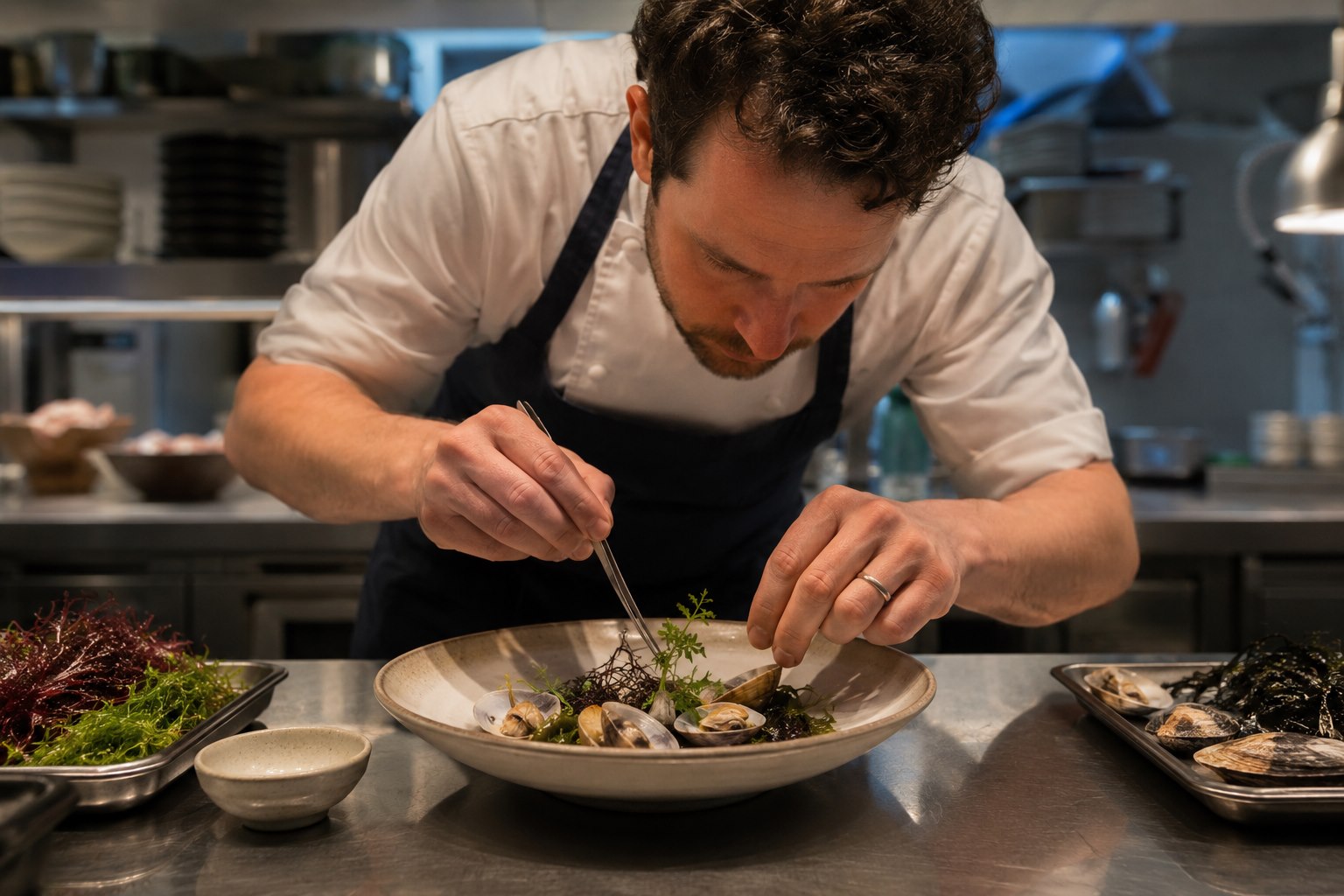
Shellfish has an advantage in this new landscape because it can carry luxury without always depending on the old idea of rarity. Oysters, mussels, clams and scallops can express place with unusual clarity. They also give chefs texture, salinity and an immediate connection to water quality, farming and coastal identity.
Kelp and sea vegetables offer a different opportunity. They can bring iodine, savouriness, freshness and structure without behaving like a garnish. Used lazily, seaweed becomes trend decoration. Used well, it can season a broth, sharpen a sauce, create crunch, support a seafood course or make a vegetable dish feel coastal without needing a central fish protein.
The danger is obvious. Once an ingredient becomes fashionable, it can be scattered without thought. Chefs should resist treating seaweed as a visual signal. It needs a job. Is it providing seasoning, acidity, umami, texture, aroma, colour or origin? If the answer is not clear, the menu is borrowing language rather than building a dish.
The same applies to farmed seafood. Aquaculture can be part of a responsible restaurant story, but only if the restaurant can explain why the product is good, how it is produced and what makes it suitable for the dish. Generic “sustainable” language is weaker than a specific farm narrative.
Traceability, Labels and What Diners Understand
Labels can help, but they cannot carry the whole plate. MSC and ASC exist because the market needs recognisable signals around responsible fishing and aquaculture [Pass-15] [Pass-16]. For restaurants, these signals are most useful when they support a broader service story rather than replacing it.
A server should not have to recite a certification system tableside. They should be able to explain the ingredient in one clean sentence: where it came from, why the chef chose it and what the guest should notice. That sentence is often the difference between credibility and noise.
Diners are also learning the language of seafood faster than many menus acknowledge. They may not know every certification structure, but they understand overfishing as a concern, they recognise the difference between vague and specific sourcing, and they increasingly respond to ingredients that feel tied to a place. The rise of seaweed as a review keyword suggests that guests are noticing new seafood-adjacent flavours when they appear with enough clarity [Pass-18].
For chefs, this means the old premium vocabulary needs revision. “Rare”, “wild” and “luxury” are not always enough. “Traceable”, “farmed well”, “seasonal”, “restorative”, “local” and “lesser-used” can be equally powerful if the dish earns them.
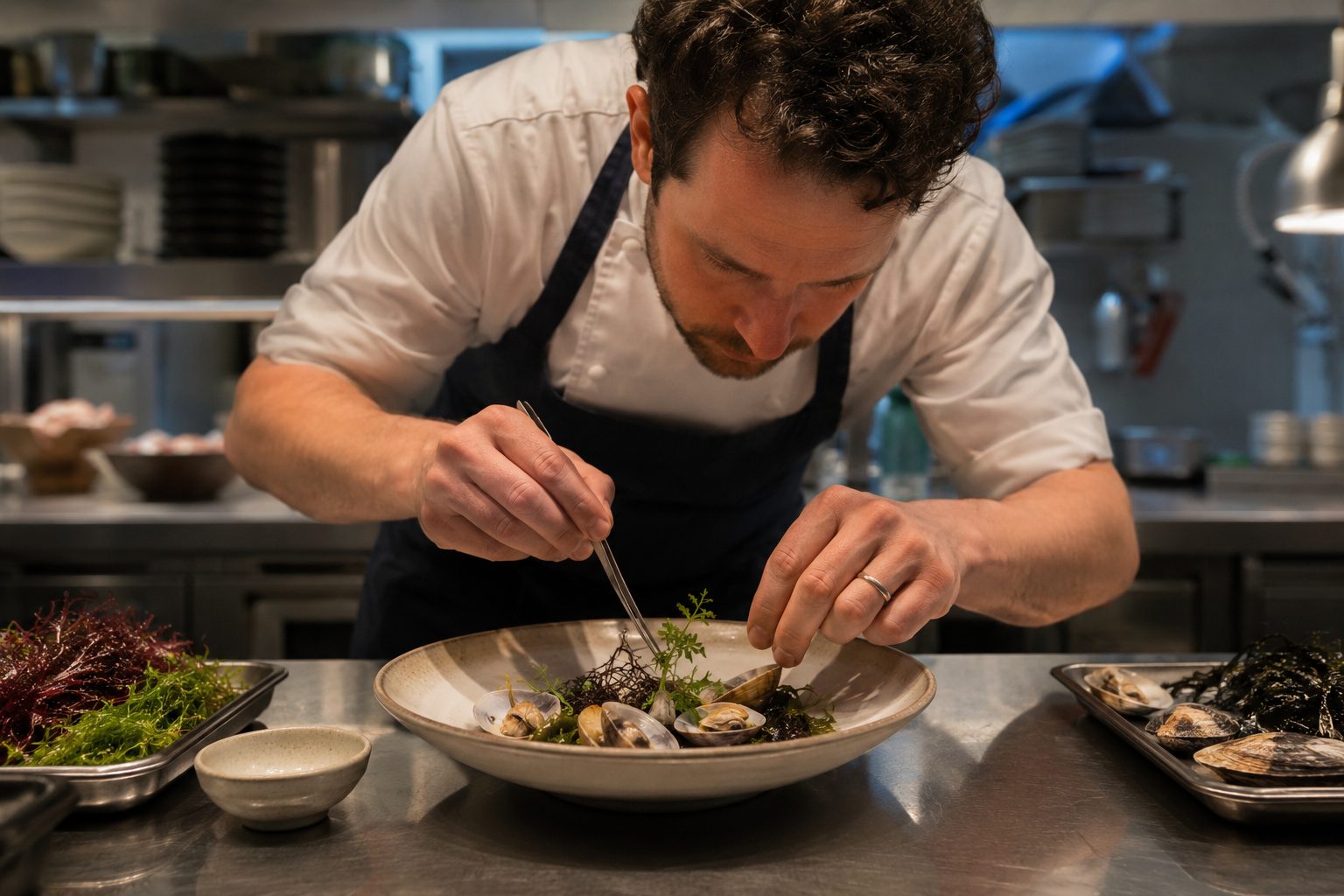
Image source: CHEFS MAG archive — original credit not recorded.
MSC, ASC and Local Farm Narratives
The strongest seafood programmes will combine recognised frameworks with local intimacy. Certification can provide assurance. Local farm or supplier narratives can provide memory. The restaurant should not treat these as competing languages.
A London restaurant might use certification to reassure guests around imported seafood while building emotional weight around British shellfish. Copenhagen may lean into the Nordic language of cold water, sea plants and restraint. Sydney can connect seafood to coastal identity and aquaculture innovation. Athens and coastal Greece have a different advantage: seafood is already woven into cultural memory, but that also means sourcing claims need to be especially credible.
The key is not to overstate. Chefs should avoid making heroic sustainability claims from a single ingredient decision. Better to say less and prove more. A dish of mussels, kelp and herb oil can be a stronger sustainability statement than a paragraph of vague virtue if the sourcing, technique and flavour all point in the same direction.
How Chefs Can Tell a Stronger Seafood Story
A stronger seafood story begins before the menu copy. It begins with buying discipline. Which species are essential? Which can change with season and supply? Which farm relationships are stable? Which lesser-used products can the kitchen handle beautifully? Which claims can the restaurant prove?
From there, the chef can build a dish that makes responsibility taste specific. Shellfish can carry mineral depth. Kelp can season and structure. Sea vegetables can create freshness and tension. A lesser-used fish can become desirable if the technique is exact and the service team explains its role with confidence.
The guest does not need to feel corrected. They need to feel invited. Responsible sourcing should not arrive as a scolding. It should arrive as a better dish, a clearer origin and a more intelligent idea of luxury.
The best seafood menus in 2026 will therefore be less generic and more legible. They will not simply say that something is sustainable. They will make sustainability taste specific, seasonal and place-led.
There is also an operational benefit to broadening the idea of premium seafood. When a kitchen depends only on a few prestige species, it becomes exposed to price, availability and expectation. Shellfish, sea vegetables, farmed products and lesser-used species can give the chef more flexibility without lowering ambition. The work is to make those products feel chosen, not substituted.
That work begins in development. The kitchen needs preparations that respect fragility, storage and yield. Shellfish requires timing. Kelp requires balance. Lesser-used species need technique that gives guests confidence rather than asking them to accept an unfamiliar name on trust. Beverage can help too: saline cocktails, mineral whites, sake, sparkling tea or coastal non-alcoholic pairings can extend the story without requiring the plate to explain everything.
For suppliers, this is a moment of opportunity. The restaurants most likely to change behaviour are not looking only for product. They are looking for traceability, training, menu language and reliability. A seafood supplier who can help a chef tell the story cleanly becomes more than a vendor. They become part of the restaurant’s editorial voice.
One practical way forward is to build seafood menus with degrees of commitment. A tasting menu may carry one fully traceable centrepiece, one shellfish course with a local farm story and one supporting sea-vegetable element. A brasserie may start with oysters, mussels, conservas or a coastal snack rather than rewriting the whole card. A hotel restaurant may connect the seafood programme to terrace dining, aperitif culture and a beverage list that feels coastal. The point is to create repetition without monotony. When guests see the same sourcing logic across snacks, starters, mains and pairings, the story begins to feel like identity rather than a one-off claim.
The premium seafood story is moving from rarity to responsibility, from species to source.
Why It Matters
This matters because seafood is one of the clearest places where sourcing, sustainability and luxury meet. Chefs can use shellfish, sea vegetables and traceable products to build dishes that are both operationally credible and sensorially strong. The opportunity is not vague virtue; it is better seafood storytelling through flavour, source and restraint.
What To Watch Next
Watch whether restaurants move beyond generic sustainable seafood claims and towards specific producer relationships, farmed shellfish, sea vegetables and lesser-used species. Also watch how much of the story service teams can explain without sounding rehearsed.
Sources & Further Reading
- [Pass-13] FAO State of World Fisheries and Aquaculture
- [Pass-14] NOAA Sustainable Seafood
- [Pass-15] Marine Stewardship Council
- [Pass-16] ASC Sustainable Seafood Awards 2026
- [Pass-17] Seaweed aquaculture research overview
- [Pass-18] OpenTable seaweed trend reference