
Restaurant technology budgets are being protected because the best systems now sit close to margin, labour, guest conversion and operational control. This article argues that operators are not buying technology for novelty; they are buying it because missed calls, weak forecasting, manual reporting, disconnected guest data and poor scheduling have become expensive. Drawing on Deloitte, OpenTable and Toast sources, Adrian Cole offers a buying hierarchy for 2026: start with leakage, assign ownership, require behaviour change and review the stack like any other cost. The strongest operators will not be the most tech-heavy. They will be the most selective.
Highlights
- Technology budgets are being protected when systems improve control, not novelty.
- Guest capture, voice AI, forecasting, scheduling and integration are the strongest categories.
- Owners need payback logic: pain point, cost, owner, behaviour change and result.
- Disconnected tools can create overhead rather than resilience.
- The best operators will be selective, not simply tech-heavy.
The capex conversation has changed
Restaurant technology used to be sold as modernisation. In 2026, the more serious argument is control. Operators are not protecting technology budgets because they love software. They are protecting the systems that reduce friction, improve conversion, tighten labour planning, strengthen forecasting and give management a clearer view of the business.
Deloitte’s restaurant research says high input costs remain a top concern for leaders and places technology inside the broader need to improve performance and resilience [Brief-04] [Brief-05]. OpenTable’s restaurant technology guide says nearly three-quarters of restaurant operators plan to adopt AI soon and that almost all see it as necessary to remain competitive [Brief-19]. Those numbers should not be read as permission to buy everything. They should be read as evidence that legacy processes are becoming too expensive.
The real question is not whether a restaurant has technology. It is whether its systems talk to the work. A reservation platform that improves conversion matters. A voice AI tool that recovers missed calls matters. Forecasting that reduces prep waste matters. Labour scheduling that reflects demand matters. A dashboard that no one reads does not.
Which categories are winning budget protection
The first protected category is guest capture. Missed calls, unanswered questions, unclear availability and slow responses are no longer harmless operational noise. They are lost revenue. OpenTable’s AI material and case-study work make a direct business case for voice AI and routine automation, including examples where restaurants saved staff time and increased bookings [Brief-20]. The key is not the glamour of AI. It is the recovery of demand that was already there.
The second category is reservations and guest data. Operators need to understand not only how many people booked, but why they booked, who returns, which offers convert, which dayparts are weak and how communication changes behaviour. This is where technology moves from admin to commercial intelligence.
The third category is forecasting. Demand forecasting, prep planning and labour scheduling are no longer back-office extras. They are margin tools. If a restaurant can better predict covers, product needs and staffing levels, it can reduce waste, improve pacing and avoid paying for labour at the wrong time. Deloitte’s resilience work and wider industry commentary both point towards predictive analytics as part of the modern operating stack [Brief-05].
The fourth category is integration. The best technology investments are rarely isolated. POS, reservations, inventory, scheduling, marketing and reporting need to share enough information to improve decisions. Disconnected tools may feel advanced and still leave managers rebuilding the truth manually every week.
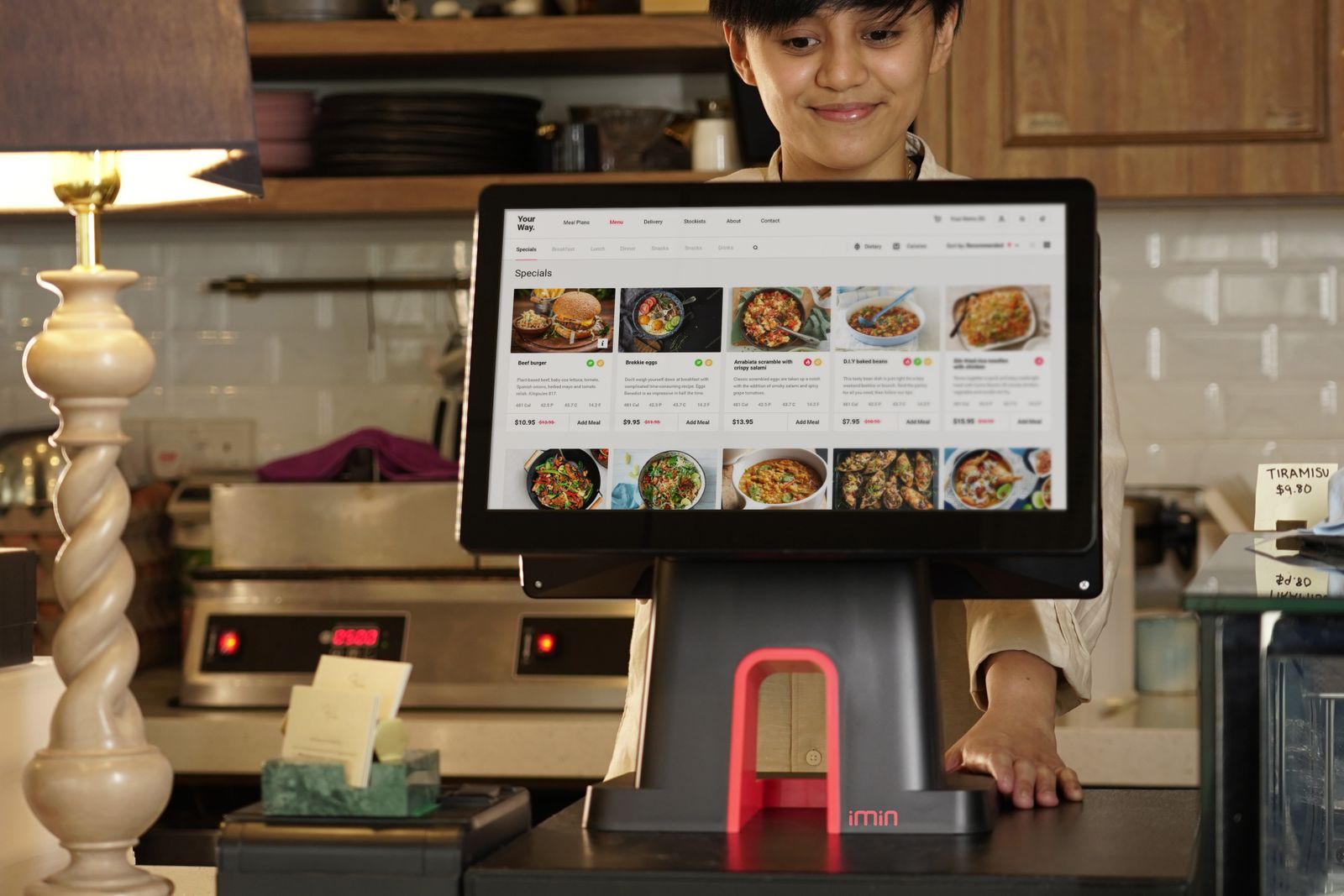
Photo: iMin Technology.
What owners want to see in return
Boards and owners do not need software enthusiasm. They need payback logic. A technology budget should be able to answer five questions. Which pain point does this solve? What does the pain point currently cost? Who will own the system? What behaviour will change? How will we know if it worked?
Without those answers, technology becomes a comfort purchase. It reassures the business that it is doing something modern without proving that anything material has improved. That is especially dangerous in hospitality, where managers already carry heavy cognitive load. A new system that demands attention without simplifying decisions is not innovation. It is overhead.
The return may not always be immediate revenue. It may be staff hours saved, fewer missed calls, stronger conversion, better prep accuracy, lower waste, faster reporting, more consistent guest notes or better targeting of offers. The metric depends on the job. But there must be a job.
Toast’s 2026 market reports in Ireland and Canada suggest operators are increasingly ready to adopt new technologies [Brief-21] [Brief-22]. Readiness is useful only if it becomes selectivity. A restaurant that buys carefully can improve resilience. A restaurant that buys reactively can create a fragmented stack that no one trusts.
The danger of disconnected technology
The hospitality technology market is crowded, and every tool claims to save time. Some do. Many save time in one place and move work somewhere else. A booking tool may create more guest notes but require more staff review. An inventory tool may measure waste but fail to change purchasing. A marketing platform may send more messages but weaken brand tone. A loyalty tool may collect data without producing better loyalty.
This is why integration should be a buying criterion, not an afterthought. Operators should ask what data enters the system, what data leaves it, who can see it, how it connects to existing workflows and what happens if it fails. They should also ask whether the tool supports hospitality language or forces the team into generic automation.
There is a brand risk here. AI and automation can remove busywork, but they can also create drift. If a restaurant’s voice becomes robotic, inaccurate or pushy, the efficiency gain may come at the cost of trust. The same applies internally. If staff see technology as surveillance rather than support, adoption will be weak.
Photo: Merve.
A practical buying hierarchy for 2026
The most disciplined buying hierarchy starts with leakage. Where is the business losing money, time or demand? Missed calls. No-shows. Poor forecasting. Overstaffed quiet shifts. Understaffed peaks. Prep waste. Manual reporting. Weak guest follow-up. Unused customer data. Each leak can be measured before a tool is chosen.
The second step is ownership. Every system needs an internal owner who understands both the tool and the operation. If no one owns it, no one improves it. The third step is behaviour. What must the team do differently? A dashboard is useful only if it changes ordering, staffing, pricing, communication or service.
The fourth step is review. Technology should be reviewed like a menu item. Does it still perform? Does it integrate? Does the team trust it? Has the cost increased? Would we buy it again now? Operators are often more willing to delist a dish than delist a tool, even when the tool has become dead weight.
The best restaurants in 2026 will not be the most tech-heavy. They will be the most selective. They will protect budgets for systems that cut friction, save labour, recover revenue and improve the quality of decisions. Technology has moved from nice-to-have to strategic spend because the old way of operating now carries too much hidden cost.
What should not count as success
The easiest technology metric is adoption. It is also one of the least useful on its own. A restaurant can adopt a tool and still make no better decisions. It can collect more data and still understand less. It can automate a guest interaction and still weaken the tone of hospitality. For 2026, operators should be careful about calling a system successful simply because it is in use.
Success should be tied to a specific improvement. Did the voice system recover calls that previously went unanswered? Did it convert those calls into accurate bookings? Did the forecasting tool change ordering and prep? Did the scheduling platform reduce labour variance without damaging service? Did the CRM improve repeat visits or simply send more messages? Did the reporting stack make weekly management clearer? If the answer is vague, the result is not yet proven.
This is particularly important with AI. OpenTable’s case material gives practical examples of staff-time savings and booking growth through voice AI [Brief-20]. That kind of claim is useful because it ties the tool to time and revenue. Operators should ask vendors for the same specificity. Accuracy, escalation, integration, data privacy, staff training and failure mode all belong in the buying conversation before contracts are signed.
There is also a human adoption test. If the team quietly works around the system, the system has failed, even if the invoice is still paid. If managers do not trust the data, they will rebuild their own spreadsheets. If servers feel guest notes are intrusive or inaccurate, they will stop using them. If the tone of automated communication feels generic, the guest may not complain, but the brand still becomes weaker.
Strategic spend therefore requires an exit discipline. Before buying a tool, decide when it will be reviewed and what would justify cancelling it. This is not pessimism. It is governance. A restaurant that can remove bad technology will buy better technology. A restaurant that keeps every system forever will eventually build a digital junk drawer and call it transformation. The owner-level question is therefore not “what are we buying?” but “what will we stop doing manually, badly or too late?” A good tool should remove delay, reduce uncertainty or improve a decision that matters. If it cannot be tied to one of those outcomes, it may still be interesting, but it is not yet strategic spend. This is why the strongest technology conversations will involve the chef, general manager, finance lead and floor team, not only the owner and vendor. The people who live with the system will know where the real friction sits. If they cannot explain the use case, the purchase is probably not ready. That is the difference between buying software and building operating infrastructure. One adds tools. The other improves how the restaurant thinks.
The best operators are not the most tech-heavy. They are the most selective.
Why It Matters
For operators and investors, this article clarifies how to judge technology spend: not by trend value, but by whether it removes leakage, improves decisions and protects hospitality.
What To Watch Next
Watch for restaurants consolidating tech stacks, linking reservations to guest data, using AI to recover missed demand, and auditing old systems that no longer justify their cost.
Sources & Further Reading
- [Brief-04] Deloitte future of restaurants study
- [Brief-05] Deloitte building restaurant resilience
- [Brief-19] OpenTable restaurant technology guide
- [Brief-20] OpenTable AI webinar case study
- [Brief-21] Toast Ireland predictions 2026
- [Brief-22] Toast Canada predictions 2026