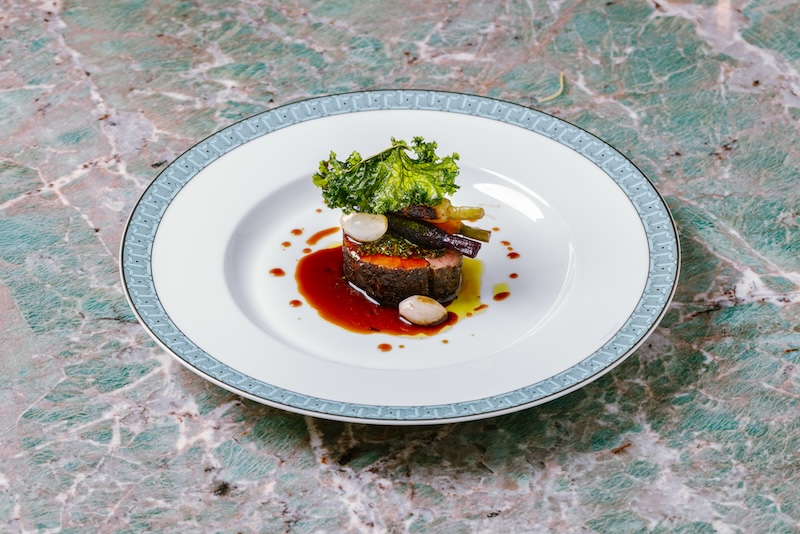
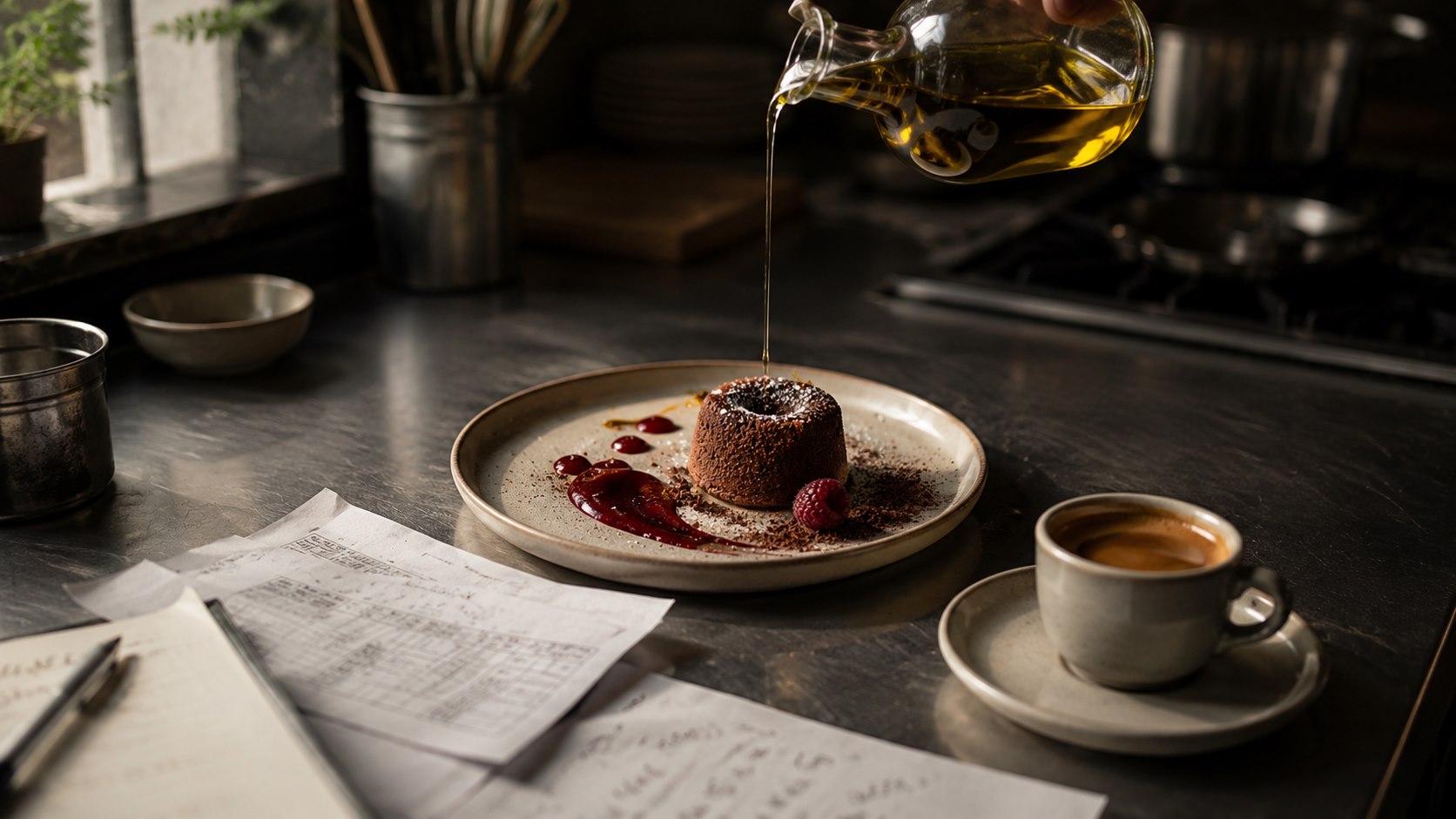
Commodity volatility has moved from the purchasing office to the plate. Cocoa, coffee and olive oil are not anonymous pantry inputs in refined restaurants; they are signals of luxury, memory and value. When they become expensive or unstable, chefs cannot simply remove them without changing the emotional architecture of a menu. The best response is not panic or obvious downsizing. It is design discipline: tighter portions, sharper provenance, alternative origins, smarter dish architecture and menu language that explains value without apologising for it. For London, Athens and Dubai, the question is no longer whether high-cost ingredients matter. It is how chefs use them with enough precision that the guest feels the menu has become clearer, not poorer.
Highlights
- Commodity pressure is becoming a menu-writing issue, not only a purchasing issue.
- Cocoa, coffee and olive oil carry emotional and luxury value beyond their cost.
- Chefs can protect margin through architecture, portion, provenance and format change.
- The guest should feel sharper intention, not defensive cost control.
- Autumn buying will reward operators who watch both price and menu role.
The Pantry Has Become Visible
The menu pressure points of 2026 are not abstract. They sit in the pantry, in the pastry section, on the coffee programme and in the bottle of olive oil that appears at the table before the first course has properly begun. Cocoa, coffee and olive oil are not interchangeable commodities for many restaurants. They are emotional ingredients. They carry memory, luxury, ritual and place.
That is why ingredient volatility becomes more complicated at the level of the pass. A chef can change a garnish quickly. It is harder to change a guest’s expectation that dessert should have depth, that coffee should close the meal with confidence, or that olive oil should taste like care rather than habit. The question is not simply what these ingredients cost. It is what role they play in the guest’s reading of value.
The source picture is not one simple story of shortage. The International Coffee Organization’s current material points to strong export movement into coffee year 2025/26 [Pass-07] [Pass-08]. The International Cocoa Organization revised the 2024/25 cocoa balance to a 75,000-tonne surplus after a period of exceptional market stress [Pass-09]. The International Olive Council says global olive oil consumption could reach 3.248 million tonnes in 2025/26, with imports in selected major markets up 13.8% early in the crop year [Pass-10] [Pass-11]. The European Commission has also identified cocoa and coffee price increases as a driver of agri-food export growth [Pass-12].
For chefs, the useful reading is not “prices are high”. It is that ingredients with strong symbolic value need sharper handling.
What Coffee, Cocoa and Olive Oil Data Now Shows
The most dangerous response to commodity pressure is to treat all ingredients as if they behave the same. They do not. Coffee is a service ritual as much as a product. Cocoa is structure, bitterness, nostalgia and comfort. Olive oil can be cooking medium, finishing fat, bread-service statement and regional marker. A price movement in any of these categories touches the menu differently.
Coffee affects the end of the meal, breakfast, petit fours, dessert, staff training and sometimes the reputation of the whole house. Cocoa affects pastry margin, petit four generosity, tasting-menu pacing and the emotional promise of indulgence. Olive oil touches savoury cooking, bread service, sauces, vegetable dishes and the way Mediterranean identity is performed on the table.
This is why the smartest restaurants will not respond with blunt reduction. They will identify which role each ingredient plays. If the olive oil is there to express origin, use less but better and explain it clearly. If cocoa is there to provide depth, build the dessert around contrast rather than volume. If coffee is there to close the experience, consider whether the ritual, cup, roast and service language are doing enough work to justify the spend.
A menu becomes vulnerable when expensive ingredients are used automatically. It becomes stronger when their use is deliberate enough to be felt.
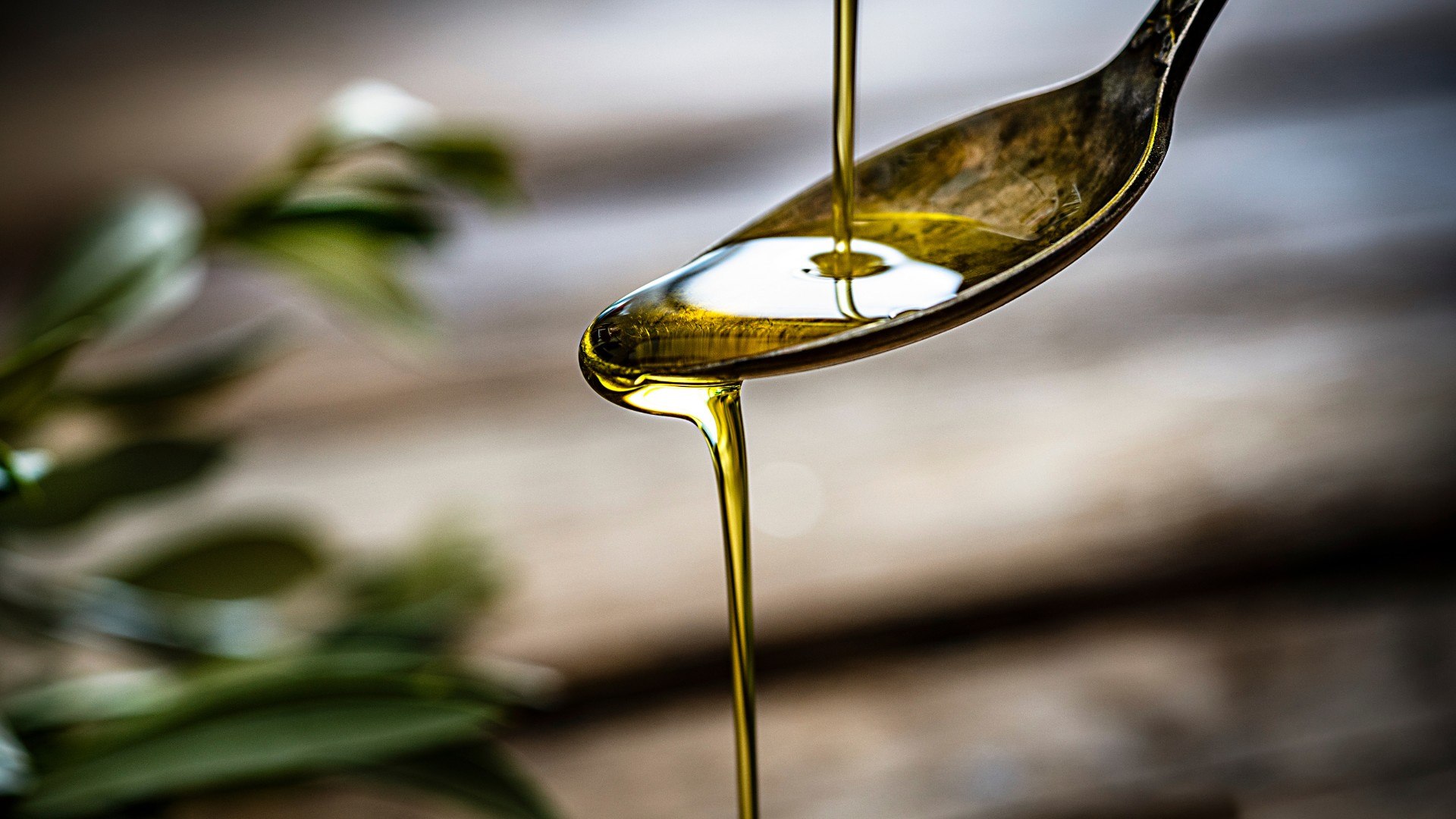
Image source: CHEFS MAG archive — original credit not recorded.
How Chefs Redesign Dishes When Anchor Ingredients Get Expensive
The first tool is recipe architecture. A chocolate dessert does not need to become larger to feel generous. It needs a clear centre, a controlled bitter note, a texture that carries the idea and enough contrast to keep the guest attentive. Cocoa can appear as a precise layer, a sauce, a crumb, a glaze or a bitter counterpoint rather than a heavy declaration.
The same is true of coffee. Chefs can move away from coffee as a broad flavour and use it as seasoning, aroma or structural bitterness. Coffee can sharpen dairy, support citrus, sit behind caramel, deepen roasted grains or act as a bridge to spirits and non-alcoholic pairings. The point is not to hide the ingredient. It is to ask what job it performs.
Olive oil invites a different redesign. In markets such as Athens, where olive oil carries cultural and emotional weight, the answer cannot simply be substitution. The better move is hierarchy: everyday cooking fats where appropriate, a clearly chosen finishing oil where it matters, and dishes that give the guest a reason to notice. In London or Dubai, the same logic may appear through curated origin stories, tableside bread service or vegetable courses where the oil becomes a named part of the dish.
Recipe Redesign, Portions, Origins and Language
Portion is the bluntest tool and therefore the most dangerous. Guests can sense shrinkage when it is not matched by intention. Format change is more elegant. A larger dessert can become a smaller, more concentrated final course with a stronger petit four. A coffee-heavy finish can become a composed after-dinner sequence. An olive-oil-led dish can move from quantity to aroma, temperature and contrast.
Alternative origins also matter, but they need care. Replacing one origin with another is not automatically a compromise. It can become a discovery if the menu language is honest. “Alternative origin” should not sound like procurement failure. It should sound like the chef has found another expression of the same idea.
Language is part of the craft. A menu should not burden the guest with the invoice. It should not say, in effect, “this ingredient is expensive, please appreciate it.” It should explain enough to create confidence. Provenance is useful when it changes the dish; it is dead weight when it only decorates the line beneath it.
The strongest menus turn cost discipline into desire. The weakest allow the guest to feel the restaurant defending itself.
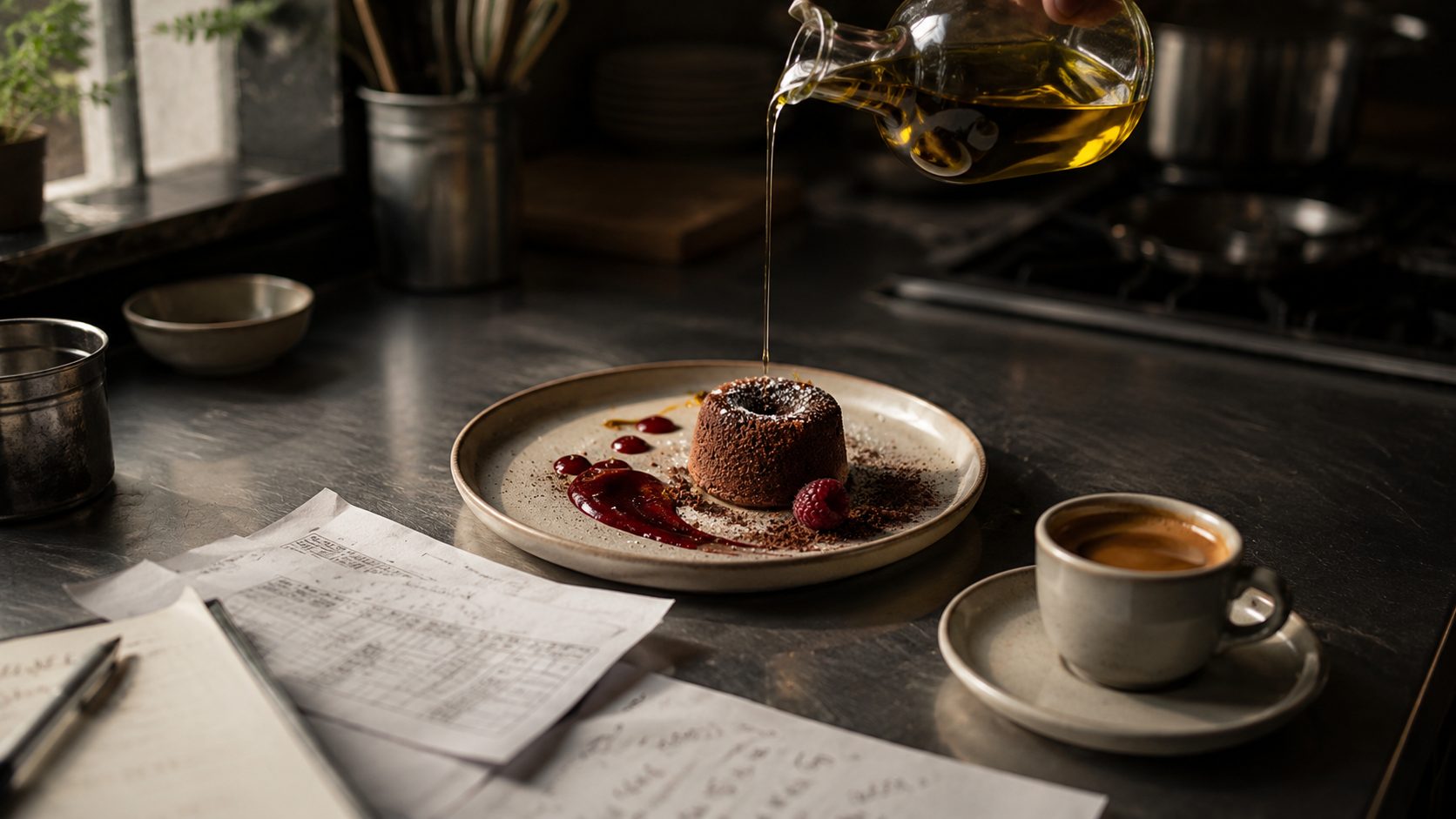
Image source: CHEFS MAG archive — original credit not recorded.
Keeping Perceived Luxury High While Controlling Spend
Luxury in 2026 is not always abundance. Often, it is precision. A smaller amount of an ingredient can feel more luxurious if it is used at the right moment, at the right temperature, with the right supporting architecture. This is especially true in tasting menus, where rhythm matters more than individual portion size.
A chef can protect perceived luxury by moving attention from volume to sequence. One strong olive oil moment early in the meal may be more memorable than invisible oil across six preparations. A cocoa element that appears with bitterness, salt and acidity may feel more adult than a larger chocolate course. A coffee service with strong aroma, clean temperature, good cupware and a clear roast story may justify itself better than a more expensive bean served without confidence.
There is also a pairing opportunity. Beverage teams can support ingredient pressure by building non-alcoholic, wine or cocktail pairings that extend the flavour without requiring more of the expensive anchor. A cocoa dessert can be lengthened by a roasted barley or dark tea pairing. Olive oil can be supported by saline, citrus or herbaceous drinks. Coffee can become a bridge into digestif, alcohol-free bitter or fortified-wine logic.
Geo Watch: London, Athens and Dubai
London operators will often translate commodity pressure into menu engineering and price architecture. The city has enough menu literacy for guests to accept concentration, shorter formats and stronger provenance if the room delivers confidence. The risk is overexplaining. London diners may read defensive language quickly.
Athens has a different challenge. Olive oil is not only an ingredient; it is identity. The chef has less freedom to make it disappear. The opportunity is to make quality visible where it matters most and use seasonality, vegetables, pulses and seafood to carry value without leaning on imported luxury signals.
Dubai adds theatre and hotel context. Here, high-cost ingredients can still operate as luxury markers, but the best kitchens will use them more intelligently. The question is not whether the ingredient can be afforded. It is whether it creates enough memory to justify its place in a market already full of polished signals.
What to Monitor Before Autumn Buying
Before autumn buying, operators should monitor not only price but menu role. Which dishes depend emotionally on cocoa? Where does coffee create margin, loyalty or disappointment? Which olive oil moments are visible enough to protect? Which supplier relationships are fragile, and which are worth deepening?
The restaurants that handle commodity shocks best will not make the guest feel poorer. They will make the menu feel more deliberate. Cost control is no longer hidden back-office work. It is part of the craft of modern menu writing.
There is a training consequence here as well. A chef may redesign a dish beautifully, but if the front-of-house team cannot explain why the new version is better, the guest may read the change as reduction. Briefing should therefore include not only allergens and ingredients, but the commercial and culinary reason for the construction. Why is the chocolate darker and more restrained? Why is the olive oil named in one place and invisible in another? Why does the coffee appear as aroma rather than a heavy cream?
This is not about turning servers into procurement analysts. It is about giving them enough language to protect the chef’s decision. In a period of volatility, confidence at the table matters. A restaurant that sounds apologetic makes cost pressure visible. A restaurant that explains choice with calm precision turns the same pressure into authorship.
Cost pressure becomes visible only when the menu has failed to turn discipline into desire.
Why It Matters
This matters because chefs cannot treat ingredient volatility as a purchasing problem alone. Cocoa, coffee and olive oil sit close to guest memory, dessert architecture, bread service and regional identity. Operators who redesign around role, format and provenance can protect margin without making the experience feel reduced.
What To Watch Next
Watch autumn buying, supplier concentration, origin shifts and whether menu language becomes more precise. The strongest restaurants will not apologise for disciplined use of expensive ingredients. They will make each use more legible, more memorable and more necessary.
Sources & Further Reading
- [Pass-07] International Coffee Organization home / latest exports
- [Pass-08] ICO Coffee Market Report statistics section
- [Pass-09] ICCO February 2026 Quarterly Bulletin of Cocoa Statistics
- [Pass-10] IOC olive sector statistics January/February 2026
- [Pass-11] IOC olive sector statistics February/March 2026
- [Pass-12] European Commission agri-food trade note on cocoa and coffee prices