Audio Editorial · English · 2 Minutes
Stop Paying People to Eat
Listen to the highlights — what the research says about influencer marketing, and where restaurant budgets work harder.
Restaurants have spent years being sold a simple formula: find an influencer, comp the meal, let them film the table, wait for bookings. Social media is essential to restaurant discovery — but influencer marketing and social media marketing are not the same thing, and the data shows influencers are a smaller part of that discovery story than most marketing budgets assume. For most restaurants, influencer marketing should be a selective tactic, not the foundation of the marketing strategy.
Key Findings
- Only one in ten US consumers use influencers for restaurant recommendations, even though 69% of Gen Z rely on social media to discover where to eat [1].
- 22% of US consumers now use AI when discovering restaurants [2].
- 60% said the menu influences where they book on reservation platforms; 87% said an appealing menu photo or video influenced what they ordered on delivery platforms [2].
- 31% of consumers will only use a business rated 4.5 stars or higher, up from 17% a year earlier; 47% will not use one with fewer than 20 reviews [8].
- Use of AI tools such as ChatGPT for local recommendations rose from 6% to 45% in a single year [8].
Does influencer marketing work for restaurants?
Followers are not food knowledge. Views are not reservations. And a free dinner is not an independent restaurant review.
For years, restaurants have been sold a very simple marketing formula: find an influencer with a large following, invite them for dinner, comp the bill, perhaps pay an additional fee, let them film the table — and wait for the bookings to arrive. That formula is not wrong because social media is unimportant. It is essential. But social media marketing and influencer marketing are not the same thing, and too many restaurants still treat them as if they were.
There are excellent food creators who understand ingredients, technique, service and the economics of hospitality, and some have built highly credible communities. The issue is not influence — it is the much larger and increasingly expensive habit of paying for reach without asking whether the person providing it has relevant expertise, a commercially useful audience, transparent incentives or any measurable impact on revenue. Having 200,000 followers does not teach somebody what proper sauce work looks like. Being fashionable does not create hospitality expertise. And receiving a complimentary dinner does not suddenly make a promotional post an independent review.
A creator can produce a spectacular-looking video, hundreds of thousands of views and a huge spike in engagement — that does not automatically mean the restaurant has acquired profitable customers. The restaurant needs reservations, average spend, repeat visits, private-dining enquiries, direct orders and lifetime customer value. Social platforms reward watch time, reactions, shares and controversy; a creator is usually rewarded for producing content that performs on the platform, while the restaurant is rewarded only if that attention becomes business. That is why the first question should never be “how many followers do they have?” It should be “what exactly are we buying, and how will we know if it worked?”
Restaurant discovery is undeniably social — SevenRooms’ 2025 survey of 1,000 US consumers found that 69% of Gen Z rely on social media to discover restaurants — yet only one in ten consumers use influencers for recommendations [1]. Diners can discover restaurants through a restaurant’s own account, a chef’s content, customer posts, Google, Maps, publishers, local communities, reservation platforms, editorial coverage, short-form video and recommendations from friends. A restaurant does not have to rent somebody else’s audience every time it wants visibility.
The discovery landscape is also changing quickly. SevenRooms and DoorDash’s 2026 research, based on 3,000 US consumers, reported that 22% use AI when discovering restaurants [2]. That means a growing number of people are asking conversational search tools questions such as “where should I eat near Covent Garden tonight?” or “find a modern Greek restaurant in Athens with excellent seafood and outdoor seating.” In that environment, a restaurant needs more than a viral post. It needs accurate information, strong reviews, accessible menus, high-quality imagery, credible press, structured website data and a digital footprint that search engines and AI systems can understand.
The economics back up the scepticism about follower counts. HypeAuditor’s analysis of 76 million Instagram accounts found that nano-creators — the smallest accounts — achieve the highest engagement rate of any tier [9]. A bigger audience does not buy proportionally more attention. Follower counts can also be bought, which is why any creator collaboration should begin with an audit of who the audience actually is — where they live, whether they are real and whether they could ever become guests — rather than with the follower number.
Photo: Steve Daniel.
The menu may sell your restaurant better than the influencer
One of the strongest signals in the same 2026 US research has very little to do with influencers: 60% of diners said the menu influences where they book when using reservation platforms, while 87% said an appealing photo or video of a menu item had influenced what they selected on a delivery platform [2].
Yet restaurants will still spend thousands on one evening of influencer hospitality while their own website has weak photography, an outdated PDF menu, missing prices, incorrect opening hours, no clear chef story and a frustrating reservation journey. That is marketing backwards. Before paying someone else to tell people that your restaurant is exciting, make sure everything they encounter after discovering you gives them a reason to book.
Are free meals considered sponsored reviews?
There is another issue restaurants should stop avoiding: disclosure. When somebody receives money, complimentary food, travel, products or another benefit in exchange for exposure, the audience deserves to understand that relationship.
In the UK, consumer-protection rules prohibit concealed incentivised reviews, and official guidance requires commercial relationships and incentives to be clearly disclosed [3] [4]. In the United States, the Federal Trade Commission similarly requires influencers to disclose material connections to brands, including payments, discounts and free products or services [5].
None of this means restaurants should not work with creators. It means we should call advertising advertising. A paid or hosted collaboration can be useful, creative and commercially effective — but it is not the same thing as independent restaurant criticism. The distinction protects everyone: the restaurant, the creator, the publication and, most importantly, the customer.
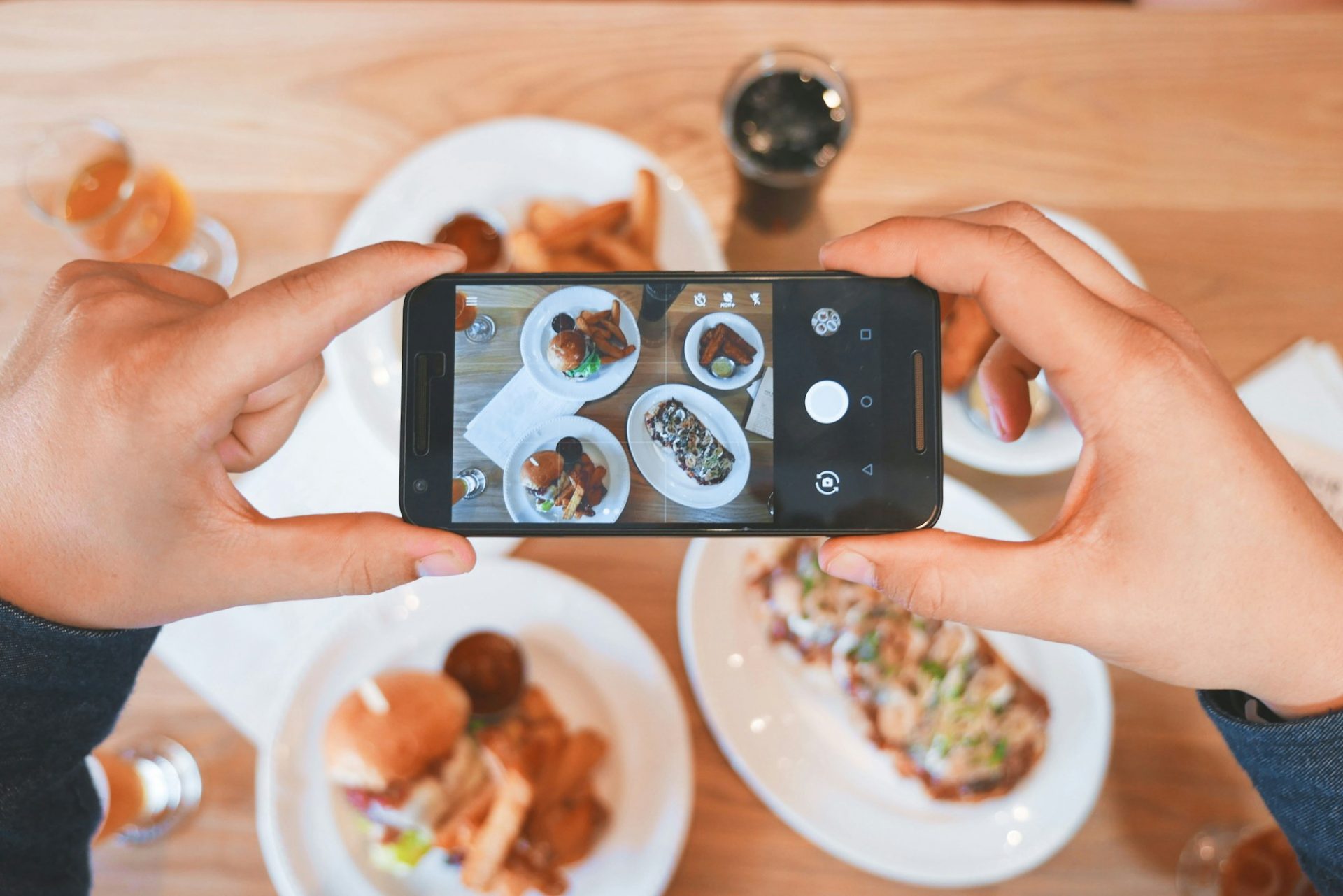
Photo: Eaters Collective.
Where should restaurants spend marketing budget in 2026?
A smarter restaurant marketing strategy starts with assets and channels that build cumulative value. Influencers can still play a role, but they should be one tactic inside a measurable system — not the system itself.
1. Own Google before trying to own Instagram. For most restaurants, Google Search and Google Maps remain critical high-intent discovery channels. Google states that local results are mainly driven by relevance, distance and prominence, and that complete business information, links, reviews and positive ratings can contribute to local visibility [6]. Someone searching “best steak restaurant near me tonight” is not casually consuming content — they are expressing intent. That deserves budget. That dependence is already shifting, though: Google’s share as the platform consumers turn to for local reviews slipped from 83% to 71% in a single year, while use of AI tools such as ChatGPT for local recommendations jumped from 6% to 45% [8] — one more reason a restaurant’s digital footprint has to be readable by machines, not just by people.
2. Build an audience you actually own. A restaurant can spend years acquiring customers without building a usable relationship with them. Restaurants should systematically build permission-based first-party customer data through reservations, direct ordering, loyalty, events, Wi-Fi, newsletters and post-visit communication, then segment it by behaviour: regulars, lapsed guests, wine buyers, private-dining customers, brunch guests, high spenders, tourists or locals. Email remains one of the most efficient channels for doing this: Litmus’ 2025 State of Email research, a survey of close to 500 marketers, found that 35% of companies earn between $10 and $36 for every $1 spent on email [7].
3. Turn real guests into advocates. Restaurants already have potential advocates: the people who chose to spend their own money there. BrightLocal’s 2026 survey of 1,002 US consumers found that 94% are open to writing reviews [8]. A well-designed post-visit review request, QR code, booking follow-up or personal ask from the team can create a growing base of authentic social proof. One sponsored Reel disappears from the feed. A strong review profile compounds over time. The bar is also rising fast: 31% of consumers will now only use a business rated 4.5 stars or higher, up from 17% a year earlier, and 47% will not use a business with fewer than 20 reviews [8]. A review profile that looked “good enough” eighteen months ago can now be quietly costing a restaurant covers.
4. Invest in exceptional visual content — and own the assets. Restaurants absolutely need strong Instagram, TikTok, YouTube Shorts and visual storytelling, but that does not mean someone else has to own the narrative. Spend on photographers, videographers, creative direction and repeatable content formats: prep, produce, technique, fire, seasonality, plating, suppliers, the dining room, the pastry section, the sommelier, the process behind the finished dish.
5. Make the chef part of the brand. Restaurants possess something a lifestyle account cannot manufacture: expertise. A chef explaining why a fish is aged, why a sauce takes three days, why a particular farmer matters or why a menu changes with the season creates authority. In a digital environment increasingly full of generic and AI-generated content, credible human expertise becomes more valuable, not less.
6. Invest in credible editorial and PR. Earned editorial is different from purchased visibility. A respected journalist, specialist food publication, chef platform, guide or industry title can give a restaurant context, authority and a searchable digital footprint that remains indexed for years, generates links and citations, and helps both conventional search engines and AI systems understand why the restaurant matters.
7. Use paid media where attribution is possible. Google Search, Maps, Meta campaigns, retargeting, YouTube, local advertising and CRM remarketing may sound less glamorous than an influencer dinner, but they offer something valuable: measurement. Restaurants should know how much they spent, how many people clicked, how many booked, what those guests spent, whether they returned and what it cost to acquire them. “The Reel got 417,000 views” is a media metric. “We generated 126 bookings at a profitable acquisition cost” is a business metric.
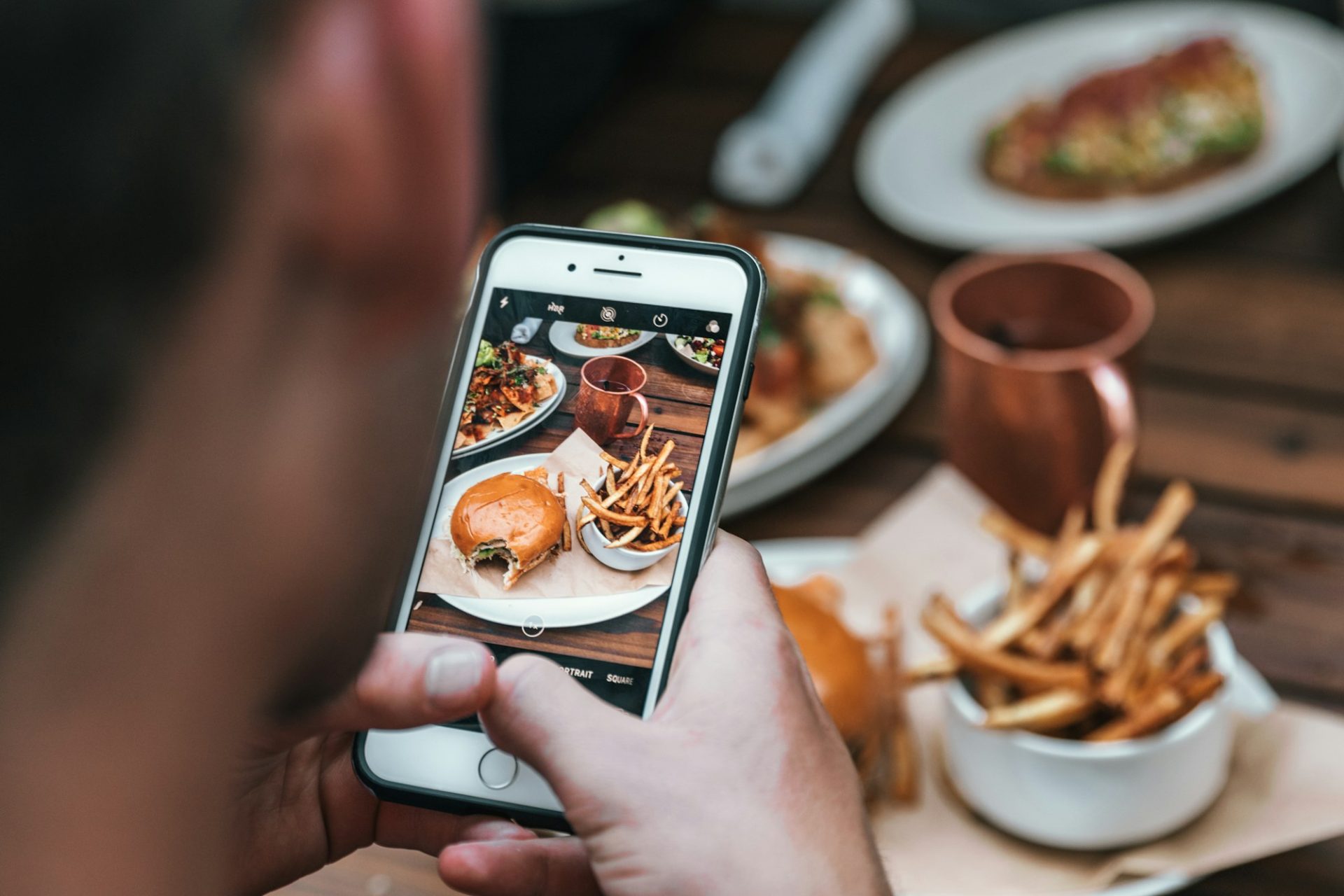
Photo: Spencer Davis.
What works better than influencers, and when creators still make sense
We would still back creator collaborations — but only when the commercial logic is clear. We would want most of the following to be true: the creator genuinely understands food, hospitality or the relevant audience; their audience matches the restaurant geographically, economically and culturally; engagement appears authentic and recent, not merely large; the collaboration has one defined objective — awareness, launch, bookings, private dining, content creation or another measurable outcome; commercial relationships are disclosed clearly; booking links, campaign URLs, promo codes or another attribution method are used where practical; the restaurant receives appropriate content usage rights if content production is part of the value; and the fee is compared with alternative customer-acquisition channels, not justified by follower count alone.
Restaurants do not need more influence. They need more customers. Before signing the next creator cheque, restaurant owners should ask one question: what exactly are we buying? If it is advertising, call it advertising. If it is content production, judge the content. If it is reach, measure the reach. If it is reservations, measure the reservations. If somebody is presented as an independent reviewer while receiving hospitality or payment, the commercial relationship should be transparent.
Hospitality is already one of the toughest businesses in the world. Margins are pressured, labour is expensive, ingredients are expensive and competition is relentless. Marketing budgets should therefore work much harder: invest in assets you own, customers you can identify, reputations you can accumulate and channels you can measure. Use social media. Use creators where they make commercial sense. But stop assuming a large follower count equals authority, or that filming a free dinner is automatically a marketing strategy. Your restaurant deserves better than that.
Restaurants do not need more influence. They need more customers.
Want your restaurant marketing to work harder?
Chefs MAG is part of All4Chefs. Our team helps restaurants, chefs and hotels with websites, video, PR and campaigns that build assets you own.
Why It Matters
For owners, chefs and marketing directors, this piece reframes the influencer conversation as a budget-allocation problem, not a taste problem. The practical value is a clearer test for every marketing pound or dollar: can it be measured, and does it build an asset the restaurant still owns after the campaign ends.
What To Watch Next
Watch for growing use of AI-powered discovery tools, tighter disclosure enforcement around hosted content, and restaurants shifting budget toward owned channels — Google Business Profile, first-party data and reviews — as measurable alternatives to one-off creator campaigns.
Sources & Further Reading
- [1] SevenRooms — 2025 US Restaurant Trends data (1,000 US consumers, Censuswide, April 2025)
- [2] SevenRooms / DoorDash — 2026 US Restaurant Industry Trends (3,000 US consumers)
- [3] UK Competition and Markets Authority — Unfair commercial practices guidance
- [4] UK Competition and Markets Authority — Social media endorsements
- [5] US Federal Trade Commission — Disclosures 101 for Social Media Influencers
- [6] Google Business Profile Help — Improve your local ranking on Google
- [7] Litmus — The ROI of Email Marketing (2025 State of Email)
- [8] BrightLocal — Local Consumer Review Survey 2026 (1,002 US consumers)
- [9] HypeAuditor — The State of Influencer Marketing 2025 (76M Instagram accounts analysed)
Featured image: Rendy Novantino.