The least visible AI tools may become the most important. Forecasting, scheduling, prep planning and menu engineering sit directly where cost pressure meets guest experience. CAVA has reported work around generative AI for demand forecasting and prep optimisation, while Toast and Deloitte frame forecasting, staffing, customer data and predictive analytics as practical operating uses. The point is not to replace judgement. It is to improve when judgement is applied. Good back-of-house intelligence should reduce waste, pace labour, sharpen ordering and help a restaurant feel calmer to guests because the team is less surprised by demand.
Highlights
- Forecasting is becoming a frontline margin tool, not a back-office report.
- AI can support prep, labour planning, menu mix analysis and overproduction control.
- Systems need integration; disconnected dashboards create more work.
- Human judgement still matters most at exceptions, quality decisions and hospitality moments.
- The best technology is often invisible because the room simply feels calmer.
The most important AI may be invisible
The most important AI story in restaurants may not be the one guests notice. It may not speak at the door, carry plates or appear in a social video. It may sit quietly behind the roster, prep sheet, ordering plan and menu mix. That does not make it less important. It may make it more important.
Back-of-house intelligence sits exactly where restaurant pressure is most acute: labour, food cost, waste, service pacing and guest expectation. A weak forecast creates too much prep or too little. Too much labour damages margin. Too little damages service. Poor menu-mix understanding leads kitchens to protect dishes that feel important but perform badly. Overproduction turns into waste. Underproduction turns into stress.
This is why AI restaurant forecasting should be read as infrastructure rather than novelty. CAVA has reported work around generative AI tools for demand forecasting and prep optimisation [Lab-18]. Toast’s AI guidance treats historical-sales forecasting, shift planning and seasonal demand modelling as practical restaurant uses rather than distant speculation [Lab-30]. Deloitte frames predictive analytics, staffing, kitchen management systems and richer customer data as part of restaurant resilience [Lab-25] [Lab-26]. The pattern is clear: the “boring” systems are becoming strategic.
Forecasting is now a margin tool
Forecasting used to be treated as a management habit. Good operators looked at last year, last week, the weather, bookings, local events and instinct. That still matters. What is changing is the volume of signals and the cost of being wrong.
A wrong forecast is not only an inconvenience. It becomes waste, overtime, slow service, poor morale, guest dissatisfaction or lost sales. If a kitchen preps too much for a quiet night, margin leaks into the bin. If it preps too little for a strong night, the room feels strained and the guest pays for the restaurant’s surprise. If labour is scheduled against hope rather than demand, either the P&L or the service suffers.
AI-supported forecasting can help by finding patterns humans may miss or cannot process quickly enough. Historical sales, weather, holidays, bookings, menu popularity, lead times, events and cancellation behaviour can all shape the forecast. The technology does not need to replace the manager. It needs to give the manager a better starting point.
The best use of forecasting is not to produce a perfect number. It is to reduce the range of surprise.
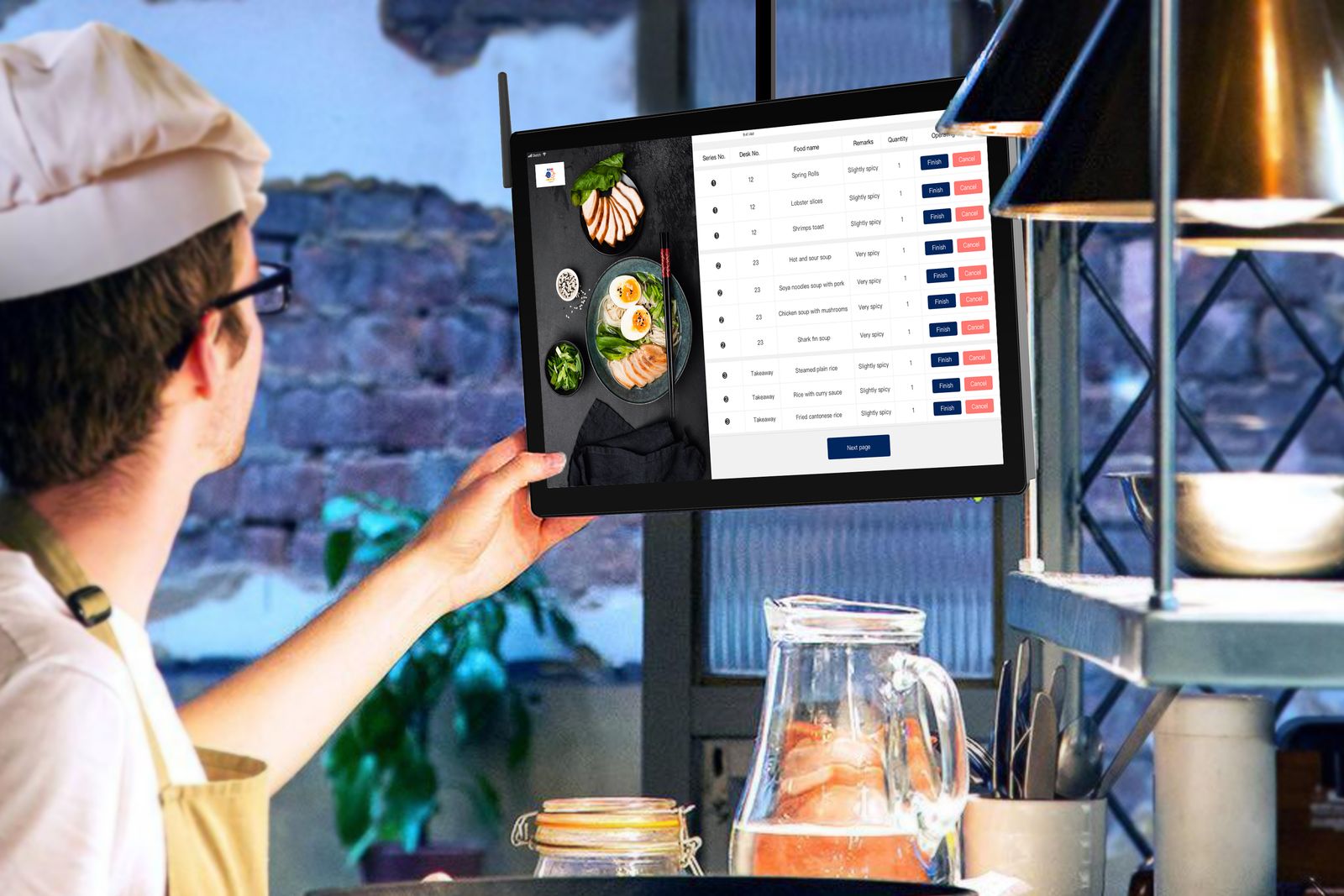
Photo: iMin Technology.
Prep, labour and inventory are connected decisions
Restaurants often manage prep, labour and inventory as separate workflows. In practice they are one system. A booking forecast shapes labour. Labour capacity shapes what prep can be executed well. Prep shapes ordering. Ordering shapes waste. Menu mix shapes all of it.
Back-of-house intelligence becomes valuable when those decisions begin to speak to one another. A system that predicts demand but does not inform prep is limited. A scheduling tool that does not understand likely service volume is incomplete. An inventory system that does not connect to actual sales mix can become an expensive storage report.
The National Restaurant Association’s 2026 materials frame technology as part of efficiency and guest connection amid persistent cost pressure [Lab-27] [Lab-28]. That connection is important. BOH technology is not just internal housekeeping. When it works, the guest experiences the effect indirectly: fewer unavailable dishes, better pacing, less rushed service, calmer staff and more reliable execution.
The guest does not need to know a forecast improved. The guest notices that the room is less chaotic.
Menu engineering becomes more dynamic
Menu engineering has traditionally looked backwards: what sold, what made margin, what should move on the menu. Back-of-house intelligence makes the process more dynamic. A restaurant can look not only at what sold, but at when it sold, what it did to prep, how it affected labour, whether it caused waste and whether it contributed to guest satisfaction.
That matters because a dish can be popular and still create operational drag. It may require too much last-minute labour, depend on volatile supply, slow the pass or generate waste through awkward prep. Another dish may sell less but carry better margin, faster execution and stronger pairing potential. Without connected information, those differences are often hidden inside service memory.
AI is useful here when it helps teams identify relationships rather than simply rank items. Which dishes are profitable but hard to execute? Which are low-margin but brand-defining? Which supplements improve contribution without slowing the room? Which set-menu options create the most prep strain? These are not questions a chef should outsource entirely. They are questions a chef should answer with better evidence.
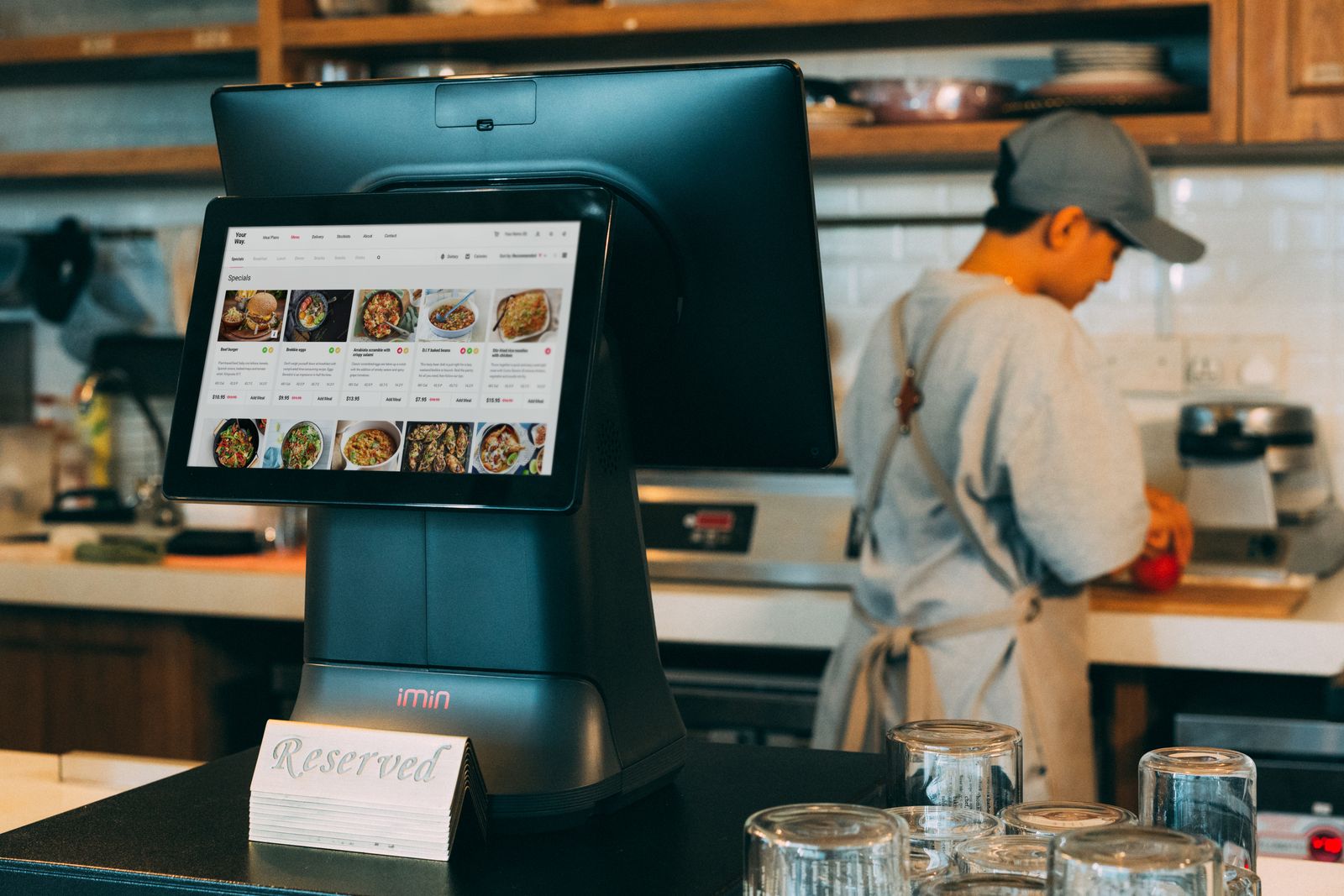
Photo: iMin Technology.
Human judgement is still the control point
The risk in forecasting technology is false confidence. A model can be wrong. A dashboard can look authoritative while missing a local context: a last-minute event, road closure, weather shift, staff illness, private booking, social-media spike or supplier problem. Hospitality remains too human and too local for blind automation.
The role of the manager, chef and service leader therefore becomes more important, not less. Their job is to interpret the forecast, adjust it, challenge it and understand when the model is seeing a pattern that the team has ignored. The system should bring useful questions to the surface. The human team should decide what those questions mean.
This is also why staff adoption matters. A forecast that the team does not trust will be bypassed. A prep tool that is too slow will be ignored. A scheduling system that fails to account for real service complexity will create resentment. Technology has to fit the kitchen’s rhythm, not only the owner’s dashboard.
Systems need to talk to each other
Back-of-house intelligence fails when every tool lives alone. The POS knows sales. The reservation platform knows future demand. The scheduling system knows labour. The inventory tool knows purchasing. The waste tool knows leakage. The CRM may know guest behaviour. If these systems do not communicate, the operator is left joining the dots manually.
OpenTable’s restaurant technology guidance and AI operations material point to the broader movement toward tools that reduce repetitive work and improve operational control [Lab-23] [Lab-29]. Toast’s AI operations work sits in the same practical category, focusing on how restaurants can use data and AI across real workflows [Lab-30]. The opportunity is not another dashboard. It is fewer disconnected decisions.
For groups, integration becomes even more important. Multi-site operators need comparable data without pretending every site is the same. A city-centre flagship, hotel venue, suburban restaurant and delivery-heavy unit may require different forecasts and different labour logic. Good systems should reveal those differences clearly.
A practical priority list
Operators should begin with the problem, not the software. If waste is the largest leak, start with waste and forecasting. If the team is constantly overstaffed or understaffed, start with labour and reservation signals. If popular dishes damage margin, start with menu engineering. If managers spend hours rebuilding reports, start with integration.
A useful first stack might include clean POS data, reservation forecasting, scheduling linked to demand, inventory tied to sales mix and simple waste tracking. More advanced AI should come after the basics are reliable. Otherwise the restaurant risks automating bad data and calling it intelligence.
Back-of-house intelligence is not glamorous, but it is becoming core infrastructure. It does not replace instinct. It improves the timing and quality of decisions. The best hospitality technology is often invisible; the guest notices it only because the room feels calmer. Forecasting is becoming the quiet infrastructure behind calm service.
The first integration is managerial
Before a restaurant integrates software, it has to integrate its management habits. Forecasting fails when the chef, general manager, purchaser and scheduler all work from different assumptions. The chef expects one level of demand, the scheduler another, the purchaser another, and the reservation book tells a fourth story. Technology can expose that misalignment, but it cannot fix it unless the team agrees how decisions will be made.
A practical rhythm is more valuable than an ambitious dashboard. The team might review next week’s bookings, expected weather, local events, menu mix, labour availability, supplier risks and waste notes in one short meeting. The forecast then becomes a shared operating plan, not a report produced for one manager. That meeting is also where human judgement improves the model: a chef remembers a supplier issue; the GM knows a regular guest has booked a large table; the scheduler knows a key section leader is absent.
Once the management rhythm exists, software has somewhere useful to land. The POS, reservation tool, scheduler, inventory system and waste tracker can then support a shared decision rather than competing for attention. Back-of-house intelligence is not only about better prediction. It is about making sure the right people act on the prediction before service reveals the mistake.
The same discipline should apply to menu decisions. Forecasting can tell the team when demand is likely to rise, but menu intelligence tells the team what kind of demand that is. A fully booked night with low-margin choices is not the same as a fully booked night built around supplements, pairings and efficient production. The forecast needs to understand quality of demand, not only volume.
Forecasting is becoming the quiet infrastructure behind calm service.
Why It Matters
Forecasting, scheduling, prep and inventory determine whether service feels controlled before the first guest arrives. This article gives operators a practical framework for treating AI and analytics as infrastructure rather than gadgetry.
What To Watch Next
Watch integration between POS, reservations, scheduling, inventory and waste tools. The key development will not be more dashboards; it will be whether systems reduce surprise, improve labour planning and help chefs make better menu decisions.
Sources & Further Reading
- [Lab-18] CAVA Impact Report
- [Lab-23] OpenTable AI and operations article
- [Lab-25] Deloitte building restaurant resilience
- [Lab-26] Deloitte future of restaurants study
- [Lab-27] National Restaurant Association 2026 state report
- [Lab-28] National Restaurant Association 2026 press release
- [Lab-29] OpenTable restaurant technology guide
- [Lab-30] Toast AI for restaurant operations