
Asador Etxebarri’s 2026 OAD moment gives Chefs MAG a way to discuss a wider question: whether fine dining is moving through another cycle of restraint. Restaurant Ranking reported that Asador Etxebarri led OAD’s modern cuisine category in Europe’s Top Restaurants 2026, replacing Alchemist, which no longer featured in the year’s ranking after holding the top position since 2021. The safest reading is not that theatre is finished. It is that elemental cooking, product confidence and controlled simplicity remain powerful forms of luxury when executed at the highest level.
Highlights
- Restaurant Ranking reported Asador Etxebarri at No.1 in OAD Europe’s modern cuisine category for 2026 [Pass2-06].
- The same report placed Bagá second and Vyn third, noting Vyn’s rise from 38th in 2025 [Pass2-06].
- 50 Best describes Asador Etxebarri as led by Victor Arguinzoniz and connected to more than 30 years of fire cooking [Pass2-08].
- The article treats “purism” as an editorial reading, not as an official OAD judgement.
Fire is not a retro gesture
There is a particular danger in writing about restaurants built around simplicity. The language quickly becomes too clean. Product, fire, restraint, purity: the words sound as if they explain the cooking, when often they only polish it from a distance. A restaurant such as Asador Etxebarri resists that easy treatment because the simplicity is not casual. It is engineered.
Restaurant Ranking reported that Asador Etxebarri in Axpe took first place in the modern cuisine category of OAD’s European Top Restaurants 2026 [Pass2-06]. The same report said it took over from Alchemist in Copenhagen, which no longer featured in the year’s ranking after holding the top spot since 2021 [Pass2-06]. That ranking shift is useful not because lists settle taste, but because they reveal what serious diners and survey communities are currently willing to reward.
The temptation is to turn the result into a blunt verdict: fire beats theatre. That would be too easy. Alchemist remains one of the most influential conceptual restaurants of the past decade. What the OAD moment suggests instead is that spectacle is not the only language of ambition. Elemental cooking can still stand on the highest platform when the control behind it is severe enough.
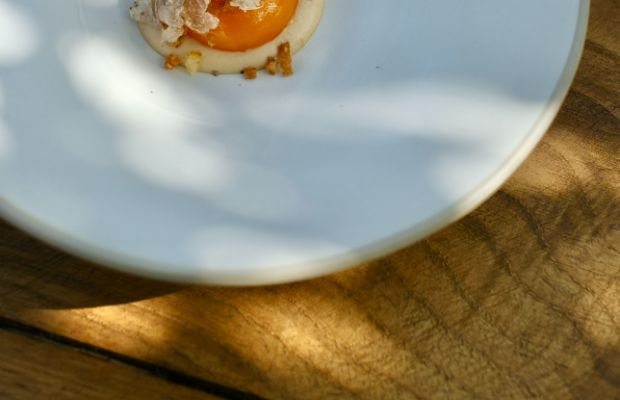
Asador Etxebarri, Axpe — the signature dish. Photo: Joao Wengorovius.
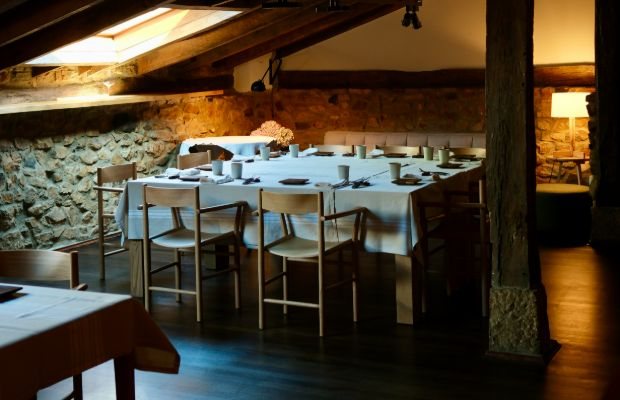
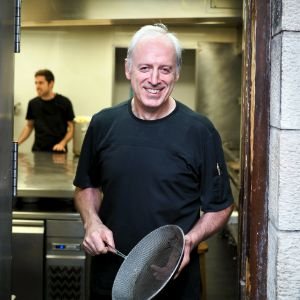
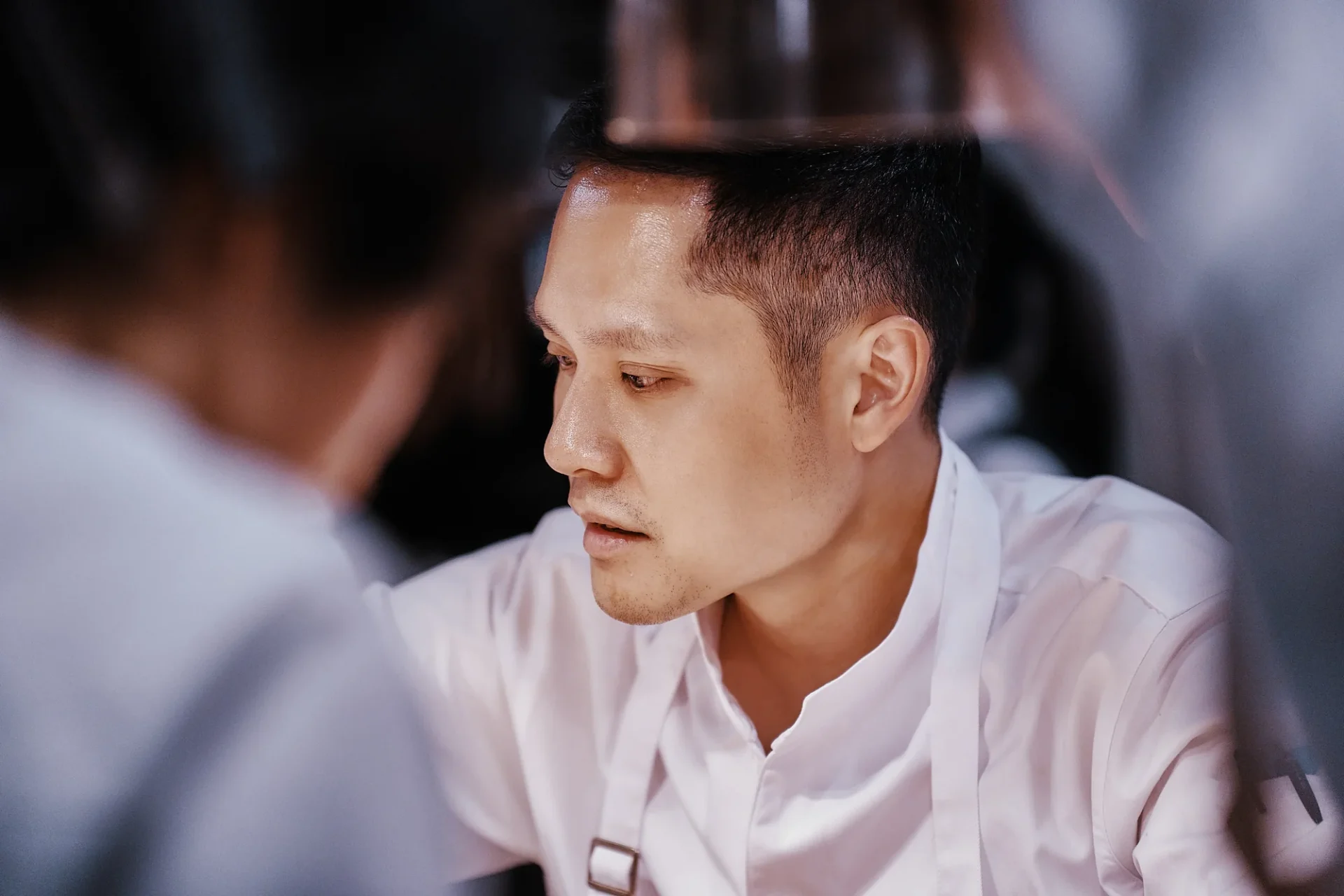
The dining room and the kitchen team at Asador Etxebarri.
What Etxebarri makes visible by removing noise
The 50 Best profile of Asador Etxebarri describes chef Victor Arguinzoniz as passionate about cooking on fire for more than 30 years and notes that the restaurant held the title of The Best Restaurant in Europe 2025 [Pass2-08]. It also frames him as a hometown figure who grew up near the restaurant’s current location, in a house where cooking took place on the hearth [Pass2-08]. Those details matter because they keep the story from becoming fashion.
At Etxebarri, fire is not a stage prop. It is method, memory and discipline. The luxury is not in visual complication. It is in the insistence that an ingredient can be made more articulate through smoke, heat, timing and restraint. That form of cooking leaves little room for distraction. If the product is weak, the technique has nowhere to hide. If the fire is mishandled, the dish loses its argument.
This is why purism is often misread. It is not minimalism as absence. It is minimalism as exposure. A kitchen that removes sauces, garnishes and narrative devices must replace them with precision. The product has to carry more of the evening. The service has to protect the rhythm. The room has to make silence feel intentional rather than empty.
For chefs, the lesson is not to copy the grill. It is to notice how much pressure a simple idea can place on execution. Purist cooking is unforgiving because the guest can see the distance between concept and result immediately.
OAD’s top three tells a more nuanced story
The Restaurant Ranking report does not only mention Asador Etxebarri. It places Bagá in Jaén second and Vyn in Simrishamn third, adding that Vyn had climbed from 38th in 2025 [Pass2-06]. That matters because the top of the ranking is not one single stylistic manifesto. It is a field of different approaches that still share a resistance to generic luxury.
Etxebarri represents fire and product. Bagá, led by Pedro Sánchez, sits inside a more intimate Spanish contemporary frame. Vyn, associated with Christian Puglisi, brings a Nordic and agricultural reading of restaurant identity. The useful pattern is not sameness. It is authorship.
That word is important because the fine-dining market often confuses originality with complication. A restaurant can look original because it uses unusual vessels, screens, projections, long explanations or unfamiliar service choreography. But authorship is not decoration. It is a coherent decision system. It tells the guest why the restaurant behaves as it does.
The strongest contemporary restaurants, whether elemental or conceptual, make their decisions feel inevitable. Every plate, object, rhythm and refusal appears to belong to the same mind. That is why Etxebarri’s rise does not need to be read as anti-theatre. It can be read as anti-noise.
The danger of borrowing the surface
There will always be restaurants that see a ranking and borrow the visible part. If fire is rewarded, more grills appear. If rurality is rewarded, more menus begin to mention landscape. If restraint is rewarded, dishes get quieter. None of this is wrong in itself. But without the underlying discipline, it becomes costume.
Etxebarri’s appeal depends on a long relationship with technique and place, not the sudden discovery of embers as aesthetic. The same is true of any product-led restaurant. The chef has to know what the product can survive. The purchasing has to be exact. The team has to understand how to hold back without becoming timid. The guest has to feel that the quietness is earned.
For operators, this creates a useful audit. Is the restaurant removing elements because they are unnecessary, or because restraint is fashionable? Is the sourcing strong enough to carry a simpler plate? Does the service team have language for quiet cooking, or does the room become mute? Is the wine programme tuned to product, smoke, fat and salt, or is it running beside the food rather than with it?
A restaurant that answers those questions well can become more confident by doing less. A restaurant that cannot answer them should not confuse reduction with refinement.
What this means for the next cycle of fine dining
The OAD result arrives at a moment when many diners are tired of being overwhelmed but still want to be moved. The interesting future is not a war between spectacle and purism. It is a sorting of spectacle that has purpose from spectacle that only seeks attention, and of simplicity that has depth from simplicity that is merely underwritten.
For chefs, this is encouraging. The market still has room for restaurants that do not shout. It still rewards mastery that looks almost modest from the outside. But modesty at this level is expensive in another currency: time, repetition, product knowledge, craft memory and the discipline to refuse easy decoration.
For Chefs MAG readers, the practical lesson is to examine what their own restaurant can strip away without weakening the experience. That may be a garnish, a course, a paragraph of menu copy, a service ritual or a dish that exists only to prove technical range. The point is not to become Etxebarri. The point is to make the restaurant’s real argument clearer.
Purism on the plinth is not the end of theatrical dining. It is a reminder that theatre has competition. A grill, a product, a hand that knows when to stop: these can still command the room.
The pressure also falls on the dining room. Product-led cooking can be ruined by service that over-narrates it. If the staff explain every decision as if the guest has never seen a grill, the quietness collapses. If they say too little, the labour disappears. The balance is delicate: enough language to reveal intention, enough silence to let the product remain central.
This is where beverage and pacing become part of the same discipline. Smoke, salt, fat and char change the way acidity, tannin, oxidative notes and texture behave at the table. A restaurant that strips food back must often make the surrounding programme more intelligent, not less. The guest should feel that every pour, plate and pause has been chosen to keep the central idea clear.
For young chefs, the deeper lesson may be patience. Product-led prestige is rarely built through one viral dish. It depends on years of choosing suppliers, controlling heat, understanding seasonality and accepting that not every idea needs to be visible to be powerful.
The commercial implication is quieter but real. Restaurants that pursue this kind of restraint cannot rely on spectacle to hide weak procurement, inconsistent seasoning or service that overexplains the obvious. They need suppliers who understand timing, cooks who can repeat small acts with accuracy, and a dining room that knows when to leave space around a dish. A grilled ingredient served almost naked asks more of the whole operation, not less.
That is why the return to purism should not be mistaken for nostalgia. It is not a desire to go backwards into rustic theatre. It is a way of testing whether a restaurant can remove enough noise for the guest to recognise the product, the heat and the hand behind it. The best version is modern because it is edited. The weak version is merely underbuilt.
For chefs watching the next ranking cycle, the question is therefore not whether fire, minimalism or product-first cooking is now fashionable. The question is whether the restaurant has the patience to make those words credible. Purism only survives close inspection when every invisible decision has already been made: the wood, the cut, the rest, the salt, the pour, the plate temperature, the timing of the server’s explanation and the confidence to stop.
Purist cooking is unforgiving because the guest can see the distance between concept and result immediately.
Why It Matters
This matters because chefs and operators often chase the visible signs of prestige rather than the discipline beneath them. The article frames restraint and product-led cooking as operational questions, not aesthetic trends.
What To Watch Next
Watch whether more restaurants borrow the surface of elemental cooking, and whether the stronger ones can support restraint with better sourcing, sharper technique and clearer service language.