Experience-led hospitality is no longer only a marketing phrase. OpenTable’s 2026 dining trends and wider experience-economy signals show that diners are more likely to book when a restaurant offers something specific: a collaboration, chef’s table, pop-up, ticketed menu or limited event. Adrian Cole treats that as a commercial question rather than a social-media trend. The article explains how operators can make experiences repeatable without exhausting the team, alienating regulars or weakening the standard room. The practical lesson is direct: events work when they have a purpose, a price, an operating model and a reason for the guest to book now.
Highlights
- Experiential dining should be treated as a revenue format, not a social post.
- The strongest events have both a guest reason and a commercial reason.
- Ticketing can protect commitment but must not make hospitality feel rigid.
- Operations, labour and prep decide whether experience becomes profit.
- Each event should produce usable knowledge for the next menu or campaign.
Demand has moved from meal to occasion
Experience-led dining is easy to dismiss because the language around it is often weak. Pop-ups, collaborations, chef’s tables and ticketed menus can sound like social-media decorations when they are poorly planned. The current demand signal is more serious. OpenTable reports a 46% year-on-year rise in experiential dining and says 48% of Americans are more likely to book a restaurant when it hosts a pop-up, collaboration or special experience [Brief-07]. That is not a small marketing note. It is a change in why people reserve.
The guest is not only buying dinner. They are buying a reason to choose this night, this room and this price. At a time when discretionary spending remains selective, that matters. Operators cannot assume that ordinary covers will carry the same emotional weight they once did. The restaurant has to create sharper moments of commitment without exhausting the team or confusing the brand.
Mastercard’s Europe experience work points in the same direction, with experience spending and food-related activity remaining important parts of how Europeans plan leisure time [Brief-09]. Euromonitor’s travel work adds the broader context: travellers are increasingly drawn to passion-led, identity-linked trips [Brief-12]. Restaurants sit directly inside that behaviour. A chef’s counter, a producer dinner or a visiting-chef weekend can become a small destination in itself.
The useful formats are commercial systems, not stunts
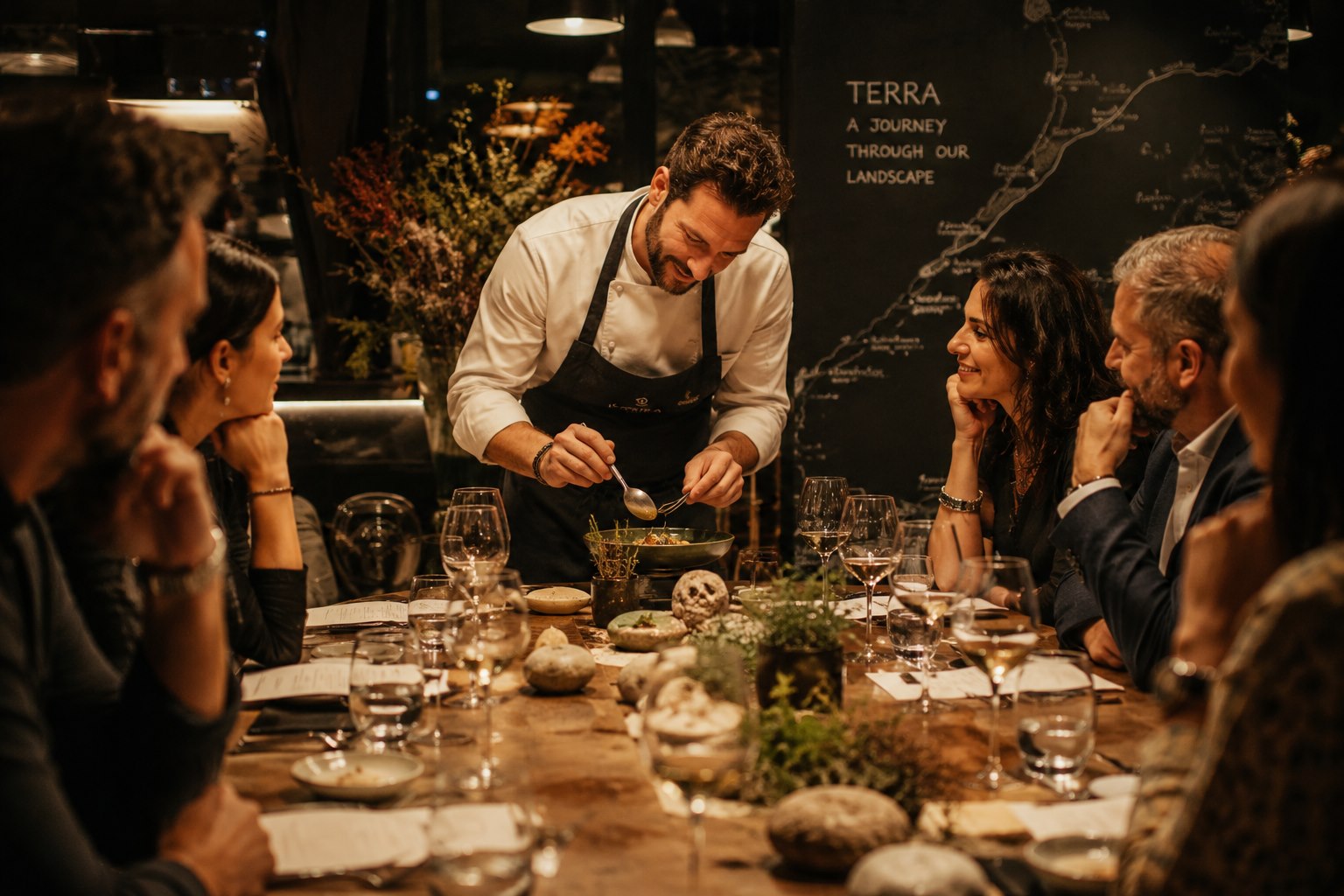
The formats that work are not complicated to name. Chef’s tables, visiting chef dinners, short residencies, producer-led evenings, ticketed tasting menus, themed menus, bar takeovers and private dining collaborations all have commercial potential. The difference between a stunt and a system is whether the format has repeatable economics.
A good event format begins with a defined purpose. Is it meant to increase spend on a quiet night? Build reputation? Introduce a supplier? Sell a premium pairing? Convert a private dining lead? Test a future menu? Reward regulars? Attract press? The answer changes pricing, staffing, menu structure and marketing. Without a purpose, the event becomes theatre without a margin consequence.
The strongest operators also understand frequency. If everything is a special event, nothing is. A monthly chef’s counter series may feel valuable. A weekly collaboration may quickly become noise. A seasonal producer dinner can support a sourcing story. Too many producer dinners can turn the dining room into a calendar of interruptions. Scarcity needs discipline to remain believable.
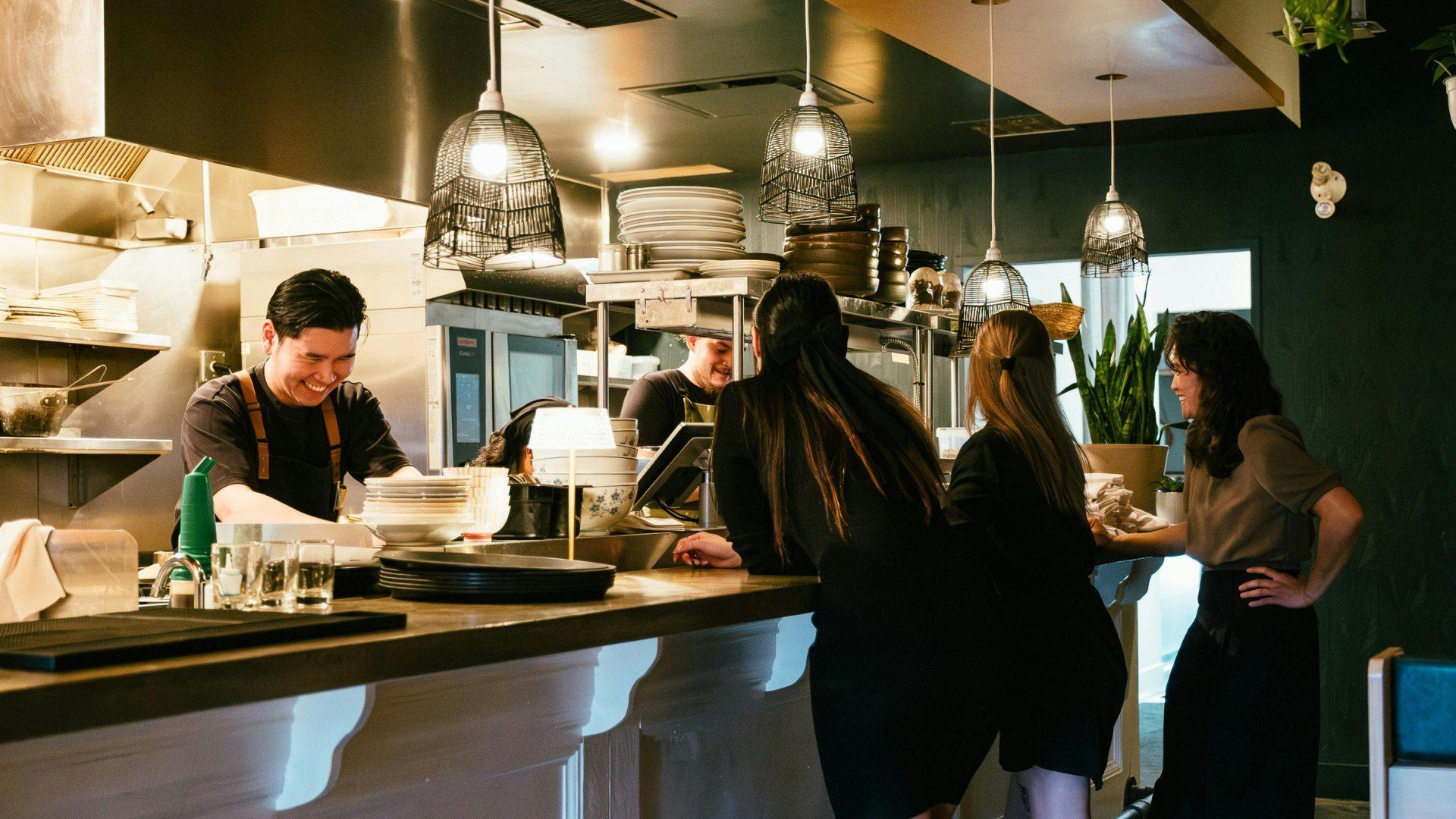
Image source: CHEFS MAG archive — original credit not recorded.
Pricing must respect the regular guest
The central pricing risk is alienating the core diner. A restaurant that suddenly prices every event as if it were a gala may create short-term revenue and long-term distrust. The better approach is tiered clarity. Keep the standard offer coherent. Build event formats with clear inclusions. Show why the price is different: guest chef, rare product, extra courses, pairing, access, limited seating, or a service structure the normal room cannot provide.
Ticketing can help because it gives commitment and reduces no-show risk. It can also damage hospitality if it feels rigid or transactional. The best ticketed experiences are explicit about what is included, humane about necessary changes and confident in the value they promise. A ticket should reduce uncertainty for both sides, not turn the restaurant into a theatre box office.
There is also a margin lesson. Experience-led formats often allow restaurants to price the whole occasion rather than defend each dish individually. That can protect contribution, especially where premium beverage, private dining, supplements or partner support are handled well. The risk is operational leakage. Extra prep, overtime, rentals, photography, flowers, transport and special printing can destroy margin if they are treated as atmosphere rather than cost.
Operations decide whether experience becomes profit
The experience business is won or lost before the guests arrive. A collaboration menu can look exciting on Instagram and collapse in prep. A chef’s table can command a premium and still weaken the night if it draws senior staff away from the main room. A producer dinner can create trust or become a speech with courses attached. The operator’s job is to remove romance from the planning while preserving it for the guest.
That means costing the menu, timing the pass, assigning ownership, deciding how many covers the kitchen can serve without reducing quality, and knowing what the standard room will feel while the special event is happening. It also means briefing the front of house properly. Experience-led dining fails when the story is trapped in the chef’s head and the server has no language for it.
Technology can support this if used narrowly. Reservation systems can segment regulars, manage ticketing, identify likely guests, reduce no-shows and help communicate the format clearly. OpenTable’s state-of-industry material and booking infrastructure are part of the broader shift towards restaurants treating demand as something to shape, not only receive [Brief-08]. But the technology is not the event. The event is the promise the restaurant can actually deliver.
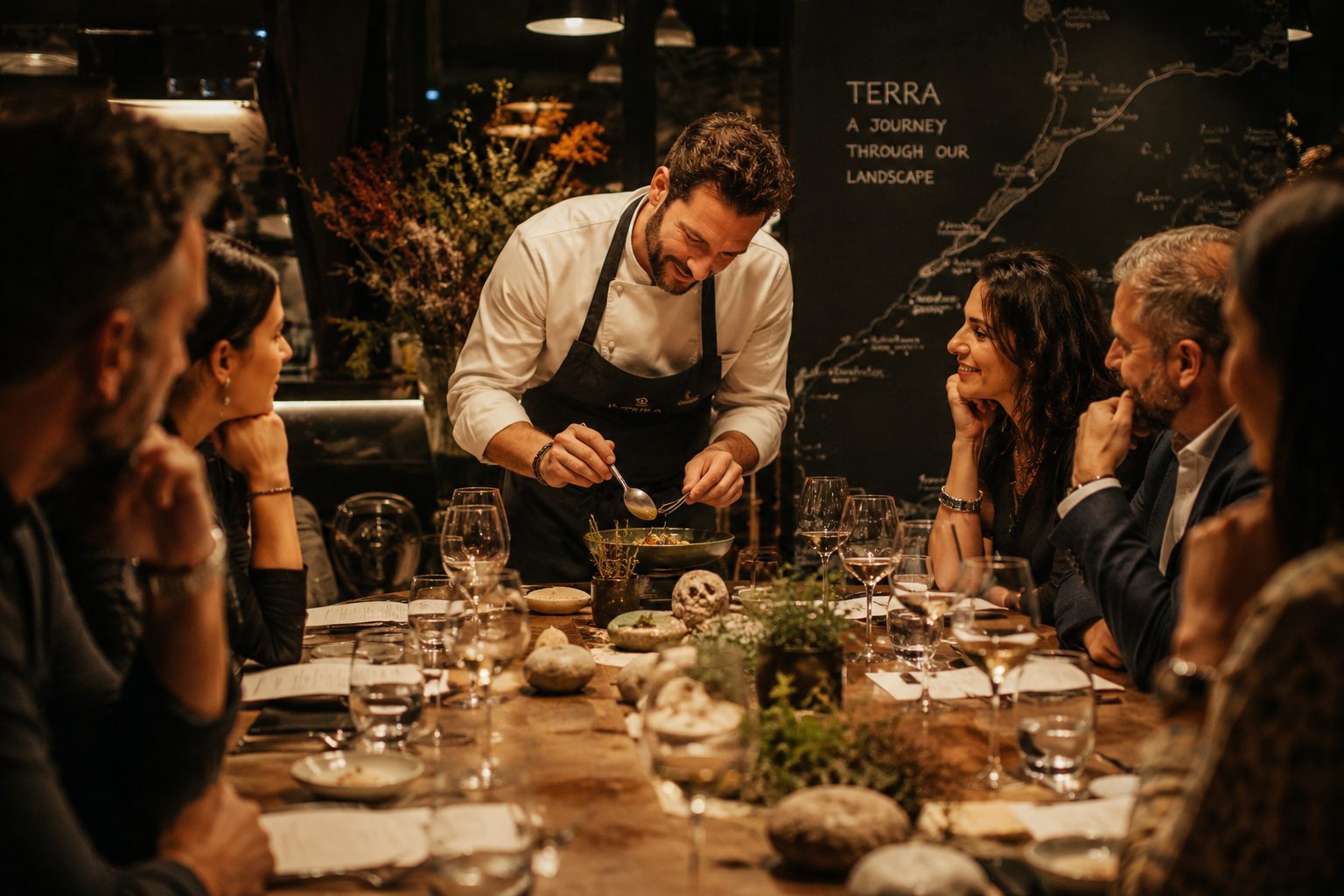
Image source: CHEFS MAG archive — original credit not recorded.
What makes an experience worth repeating
A repeatable experience format has five traits. First, it has a clear guest reason: access, learning, rarity, celebration, identity or intimacy. Second, it has a clear commercial reason: margin, loyalty, premium perception, lead generation or demand smoothing. Third, it fits the restaurant’s voice. Fourth, it does not require heroic staff effort every time. Fifth, it produces knowledge the restaurant can use again.
This is where many operators miss the real value. A successful event is not only a profitable night. It is research. Which guests booked quickly? Which price point worked? Which pairing sold? Which dishes created conversation? Which time slot performed? Which partner brought trust? Which story did the team explain easily? The answers should inform the next menu, the next private dining package and the next marketing message.
Hospitality groups understand this particularly well. Hilton’s luxury and lifestyle expansion shows how hotels increasingly use food and beverage as part of wider property identity and guest programming [Brief-10]. Waldorf Astoria London’s chef-led restaurant strategy is a higher-profile version of the same logic: dining gives a property cultural gravity before the guest even arrives [Brief-11]. Independent restaurants can borrow the discipline without copying the scale.
A decision framework for operators
Before launching an experience-led format, operators should ask five questions. What problem does this solve? Which guest will pay for it? What will it cost in labour and attention? How will it be marketed without cheapening the normal restaurant? What will we learn from it?
If those answers are weak, the idea is not ready. If they are strong, experience can become one of the most useful revenue tools in a selective market. It creates urgency without discounting, gives regulars a reason to return, lets chefs express ideas that may not fit the ordinary menu and gives the restaurant a story that is specific rather than generic.
The point is not to turn every restaurant into a stage. The point is to understand that guests increasingly reserve for occasions that feel chosen, limited and properly held. Experiences work when they are programmed as revenue architecture, not presented as social content. The operator who understands that will build fewer events, price them better and learn more from each one.
The ordinary Tuesday still matters
The event calendar should not become an excuse for neglecting the ordinary restaurant. A business that can sell a chef’s table on Friday but cannot make Tuesday feel confident has not built resilience. It has built a peak. Experience-led formats are strongest when they improve the whole operation: sharper pre-service briefing, better guest data, clearer menu language, stronger supplier stories and a team that understands why a dish, pairing or format exists.
This is also where loyalty becomes more interesting than discounting. A restaurant can invite its best regulars to a first sitting of a new menu, a preview with a visiting chef or a producer dinner that does not need public hype. That creates access rather than price reduction. It also tells the operator something useful about who trusts the restaurant enough to follow it into less familiar territory.
The caution is labour. Event-led hospitality often depends on the same senior people who are already carrying the business. If every special format requires the chef, head sommelier, general manager and marketing lead to overextend themselves, the model is not repeatable. The most commercially intelligent experience is one the team can deliver brilliantly without treating exhaustion as part of the concept.
For that reason, the best event calendars will be edited. They will choose a few ideas that fit the restaurant’s identity and repeat them with slight seasonal variation. The guest sees freshness. The team benefits from learning. The operator gets a format that improves each time rather than a string of expensive one-offs. There is a useful side benefit. A well-run event programme forces the restaurant to articulate itself. It makes the team decide which producers matter, which stories are worth telling, which formats deserve a price and which guests are most engaged. That clarity often improves the standard service as well. The event is then not a distraction from the restaurant. It becomes a controlled way of learning what the restaurant can become.
Experiences work when they are programmed as revenue architecture, not presented as social content.
Why It Matters
For operators, this article turns experience-led dining into a practical planning model. It helps teams decide which formats are worth building, how to price them, and how to protect the ordinary dining room while creating urgency.
What To Watch Next
Watch for restaurants moving from occasional pop-ups to structured calendars: monthly counters, producer-led dinners, private dining packages, collaborative tasting menus and event formats designed to smooth demand across weaker dayparts.
Sources & Further Reading
- [Brief-07] OpenTable 2026 Dining Trends Report
- [Brief-08] OpenTable State of the Restaurant Industry dashboard
- [Brief-09] Mastercard Experience Economy Europe 2026
- [Brief-10] Hilton Luxury & Lifestyle Hot List 2026 expansion
- [Brief-11] Waldorf Astoria London chef partnership
- [Brief-12] Euromonitor travel trends into 2026