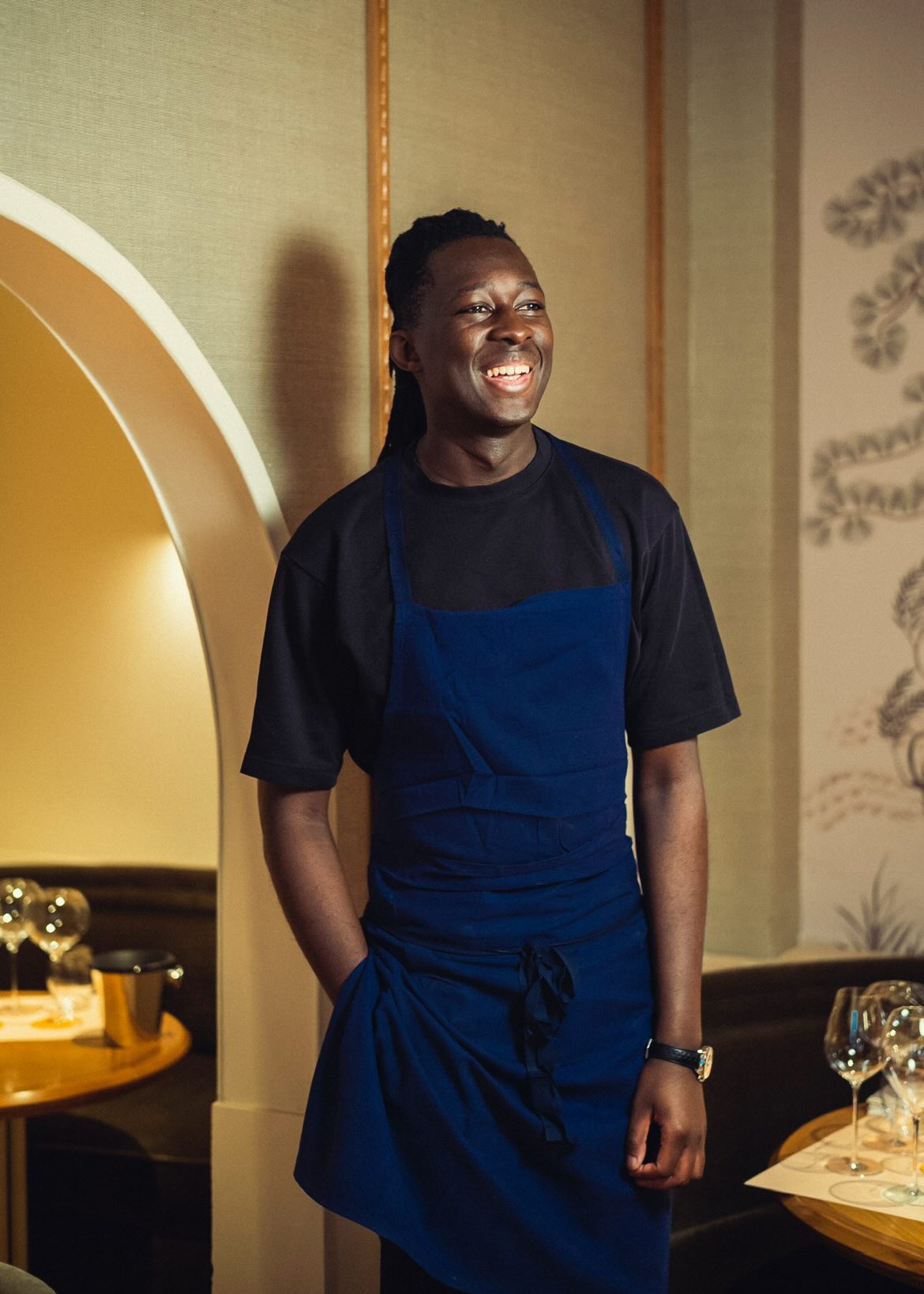
A restaurant is not merely a venue for caloric consumption; it is a mirror held up to the society in which it operates. For Mory Sacko, the 33-year-old chef behind the Michelin-starred MoSuke in Paris’s 14th arrondissement, that reflection is one of uncompromising cultural synthesis — a fluid dialogue between West African heritage, Japanese precision, and French terroir that has systematically dismantled the rigid borders of classical haute cuisine. What makes Sacko’s rise a business story as much as a culinary one is the discipline behind it: a flagship restaurant, a fast-casual concept, and a high-capacity lifestyle venue, each built to scale a single point of view without diluting it.
Highlights
- Mory Sacko became the first chef to win a Michelin star for a menu rooted in West and Central African tradition.
- His training under Thierry Marx at the Mandarin Oriental instilled a Japanese kaiseki discipline that now shapes MoSuke’s minimalist plating and portion restraint.
- Ingredients such as attiéké and yuzukoshō sit alongside classical French proteins — presented as geographic inevitability, not fusion as marketing.
- Sacko has diversified beyond fine dining with Mosugo, an elevated fried-chicken concept, and Lafayette’s, a high-capacity venue with the Moma Group.
- His partner Émilie manages branding, front-of-house and financial strategy — a division of labour Sacko credits directly for his ability to stay focused on the kitchen.
A menu as a mirror of modern France
The tension in Sacko’s work lies in his total refusal to be categorised by legacy culinary definitions. He is the vanguard of a generation that treats geographical culinary borders not as barriers to respect, but as raw ingredients to be layered onto a single plate.
“Food is the reflection of a society,” Sacko said after securing France’s first Michelin star for a menu rooted in West and Central African traditions. “French society is evolving. There are lots of young people like me who are French but who have different origins and are proud of it.”[1]
That philosophy was forged in the crucibles of elite Parisian kitchens, shaped heavily during his tenure as a sous-chef for Thierry Marx at the Mandarin Oriental. It was there that the discipline of Japanese kaiseki — the traditional multi-course Japanese dinner — became ingrained in his operational method, evident today in his minimalist plating, his restraint, and his respect for product integrity. The soul of the cuisine, though, remains deeply personal: it draws continuously on the Malian kitchens of his childhood, growing up as one of nine children in Seine-et-Marne.[1]
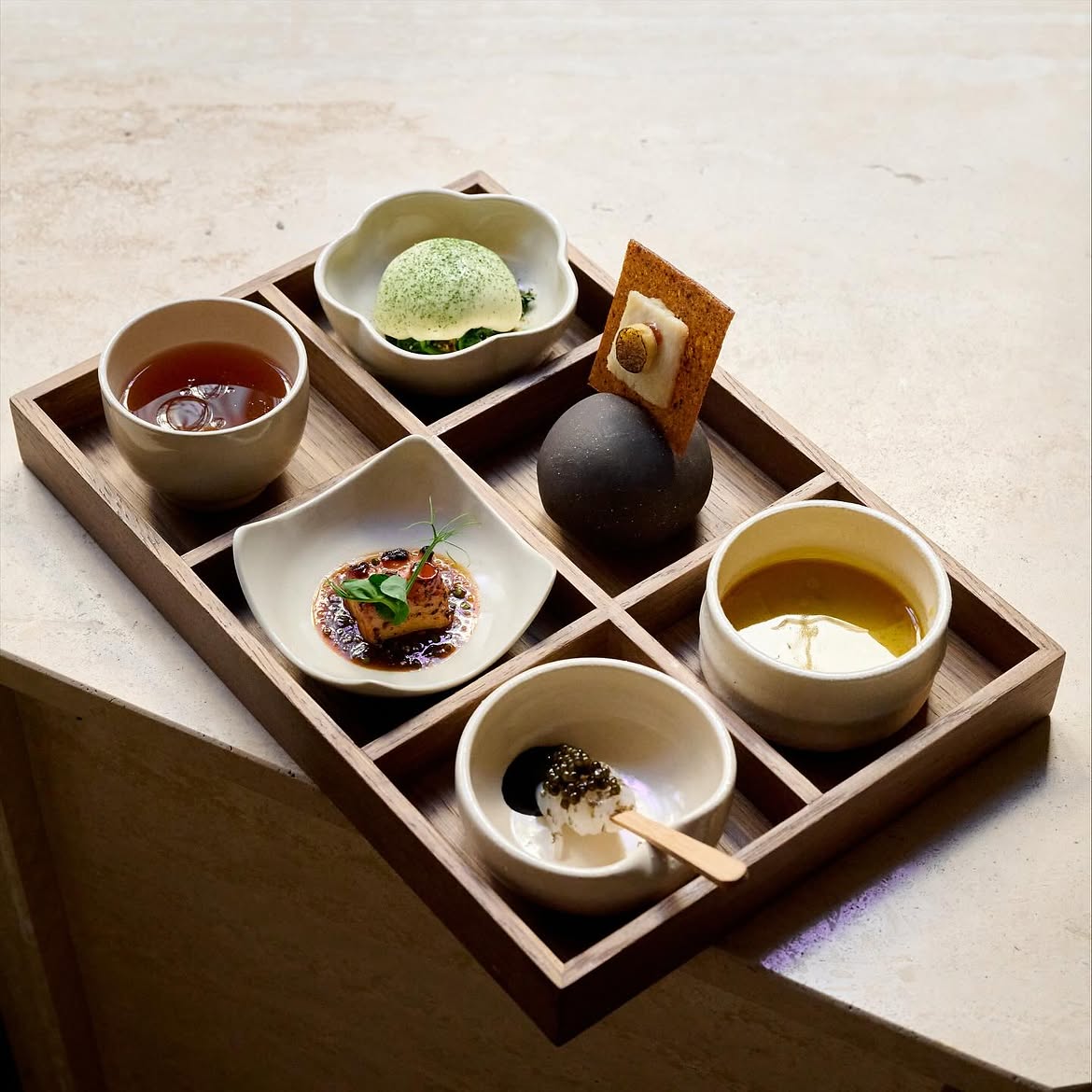
Photo: @mosuke.restaurant
Flavour as intellectual architecture
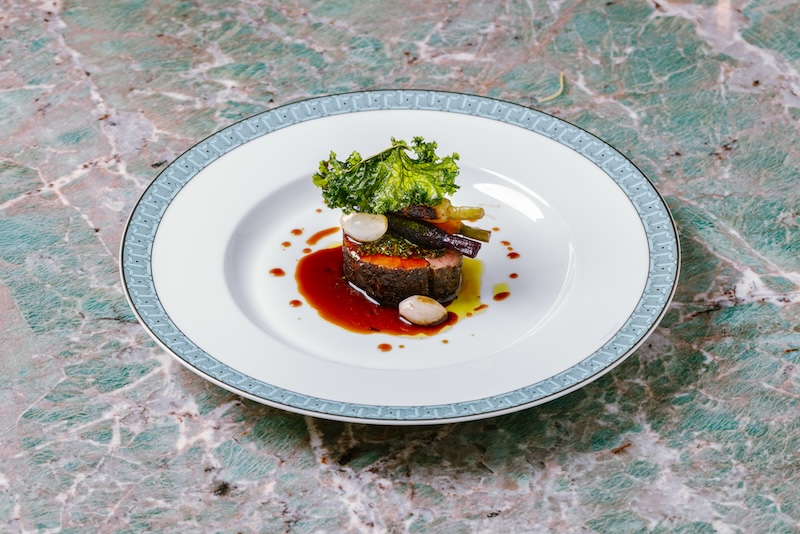
At MoSuke, the menu does not present fusion as a marketing gimmick; it presents it as a logical, geographic inevitability. The pairing of ingredients like attiéké (fermented cassava semolina) and yuzukoshō alongside classical French proteins demonstrates a highly intellectual approach to flavour architecture.[2] When Sacko applies Thierry Marx’s teaching that a dish should be no more than three or four bites, he brings that exact restraint to African flavours traditionally known for their generosity and volume.[2] The result argues that the modern fine-dining guest is not looking for a sterile replication of the past, but an authentic, emotionally resonant narrative of the present.
Scaling an ethos without diluting it
The true test of a chef’s operational acumen is not the creation of a single brilliant menu, but the ability to scale an ethos without watering it down. Here, Sacko has executed a masterclass in portfolio diversification. Recognising that fine dining carries inherent limits on scale and accessibility, he launched Mosugo — a comfort-food concept built around elevated fried chicken that democratises his flavour profile for a younger, broader audience, and proves the philosophy translates well beyond the white tablecloth.[3]
His partnership with the Moma Group on Lafayette’s marks an equally strategic move into high-volume, heritage-driven hospitality.[3] Operating a flagship luxury room, a scalable fast-casual concept, and a high-capacity lifestyle venue at once gives Sacko total market penetration and the kind of revenue stability that is increasingly scarce in an industry facing tightening margins.
The partnership behind the plates
Sacko is direct about the ecosystem that makes the ambition possible. By partnering closely with his life and business partner, Émilie, who manages branding, front-of-house operations and financial strategy, he protects his own capacity to remain the creative architect of the kitchen.[2] A restaurant’s success is a dual engine of culinary brilliance and operational execution — and at MoSuke, both are built to run at peak efficiency at once.
He did not achieve rapid success by mimicking the established codes of Parisian gastronomy; he achieved it by forcing the establishment to recognise the validity, complexity and luxury of his own cultural vocabulary.
Why It Matters
Sacko’s trajectory is a live case study in what luxury hospitality increasingly rewards: a singular point of view, executed with classical rigour, and deliberately scaled across formats rather than diluted by them. For operators and investors watching the space, MoSuke, Mosugo and Lafayette’s function as three data points on the same thesis — that authenticity, not imitation, is what now travels furthest in fine dining.
What To Watch Next
Watch how far the Mosugo fried-chicken format travels beyond Paris, whether Lafayette’s establishes a repeatable template for chef-led, high-capacity venues backed by hospitality groups, and whether other Michelin-starred chefs with multicultural backgrounds follow Sacko’s multi-tier playbook rather than staying confined to a single flagship room.