Restaurant Pearl Morissette offers a precise case study in terrain-led luxury. Official 50 Best sources list it at No.3 in North America’s 50 Best Restaurants 2026 and note its Art of Hospitality Award 2026 recognition. The same sources describe a restaurant set above Pearl Morissette Estate Winery, with views over a regenerative farm, peach orchard and gardens, and cooking by chef-owners Daniel Hadida and Eric Robertson. This article examines how trust, land, hospitality and menu authorship work together when the restaurant asks the guest to surrender control and accept the landscape as part of the meal.
Highlights
- Restaurant Pearl Morissette is listed No.3 in North America’s 50 Best Restaurants 2026 [Pass2-02].
- It received the Art of Hospitality Award 2026 [Pass2-04].
- 50 Best describes the restaurant as set above Pearl Morissette Estate Winery with produce grown on the property and sourced from trusted regional purveyors [Pass2-04].
- The Discovery profile describes a 42-acre property with views of a regenerative farm, herb garden and peach orchard [Pass2-05].
The landscape is part of the service
There is a kind of luxury that begins by giving the guest more choice: more bottles, more courses, more add-ons, more control. Restaurant Pearl Morissette suggests another path. It places the guest inside a landscape and asks for trust. The restaurant is not only selling what appears on the plate. It is selling confidence in a place, a kitchen and a system of decisions that begins outside the dining room.
Official 50 Best sources list Restaurant Pearl Morissette at No.3 in North America’s 50 Best Restaurants 2026 and note that it received the Art of Hospitality Award 2026 [Pass2-02], [Pass2-04]. The same award page describes it as a destination restaurant in southern Ontario wine country, serving French-inspired cuisine above Pearl Morissette Estate Winery, with chef-owners Daniel Hadida and Eric Robertson cooking with ingredients sourced from trusted regional purveyors or grown on the property’s regenerative farm, peach orchard and gardens [Pass2-04].
That is not background colour. It is the restaurant’s operating logic. The terrain is not scenery outside the window. It is part of the service proposition.
Regenerative luxury is not rusticity
The word regenerative is easy to overuse. It can become a soft-focus signal for virtue rather than a concrete description of how a restaurant works. In Pearl Morissette’s case, the official 50 Best Discovery profile gives the idea physical shape: a contemporary black barn on a 42-acre property, with the restaurant on the top floor overlooking the regenerative farm, herb garden and peach orchard below [Pass2-05].
For a guest, that changes the emotional contract. The restaurant is not asking them to admire sustainability as a claim. It is placing them in relation to the source of the meal. The farm is not hidden in a paragraph of menu copy. It is part of what the guest sees, understands and trusts.
That distinction matters for chefs. Regenerative luxury is not about making the restaurant look rural. It is about allowing land, product and service to shape the meal without reducing the experience to moral instruction. The dining room still has to feel precise. The glassware, pacing, temperature, lighting, wine and welcome still matter. The difference is that luxury is measured less by distance from labour and more by the quality of the relationship between labour, land and table.
At its best, this produces a calmer form of confidence. The guest does not need to be told at length why every ingredient matters. The room, view and menu make the explanation partly visible.
Hospitality as surrender
The Art of Hospitality Award is useful here because Pearl Morissette’s story is not only agricultural. It is about trust. The 50 Best award page says the restaurant is celebrated for garden-to-table, French-inspired cuisine above the winery, with Hadida and Robertson cooking from regional and property-grown ingredients [Pass2-04]. That framing suggests hospitality as a managed relationship between source, kitchen and guest.
In a restaurant like this, the guest’s surrender is not passive. It is a choice to believe that the kitchen understands the terrain better than the guest does. That is an important shift in contemporary fine dining. The old luxury model often reassured the guest through abundance and recognisable status. The new model can reassure through competence: the sense that the team has already made the right decisions.
That places pressure on service. If the guest is asked to trust the restaurant, the room must return that trust with clarity. Staff language has to be exact without becoming doctrinal. Wine pairings must feel connected to the meal rather than attached. The pace must allow the landscape to register without turning dinner into a tour.
The best hospitality in this context is not theatrical warmth. It is intelligence applied to the guest’s comfort. The team becomes a translator between soil, cellar, kitchen and table.
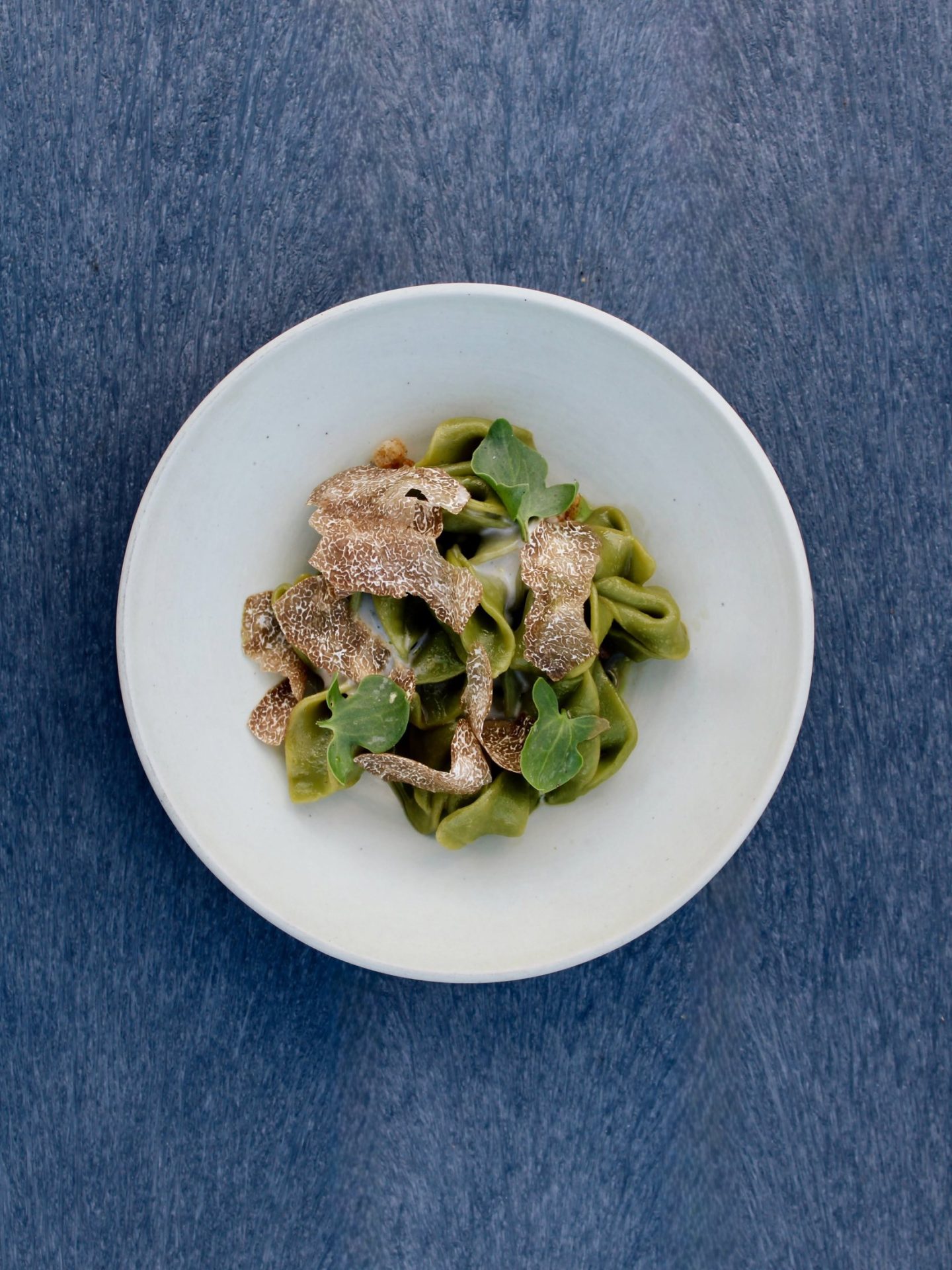
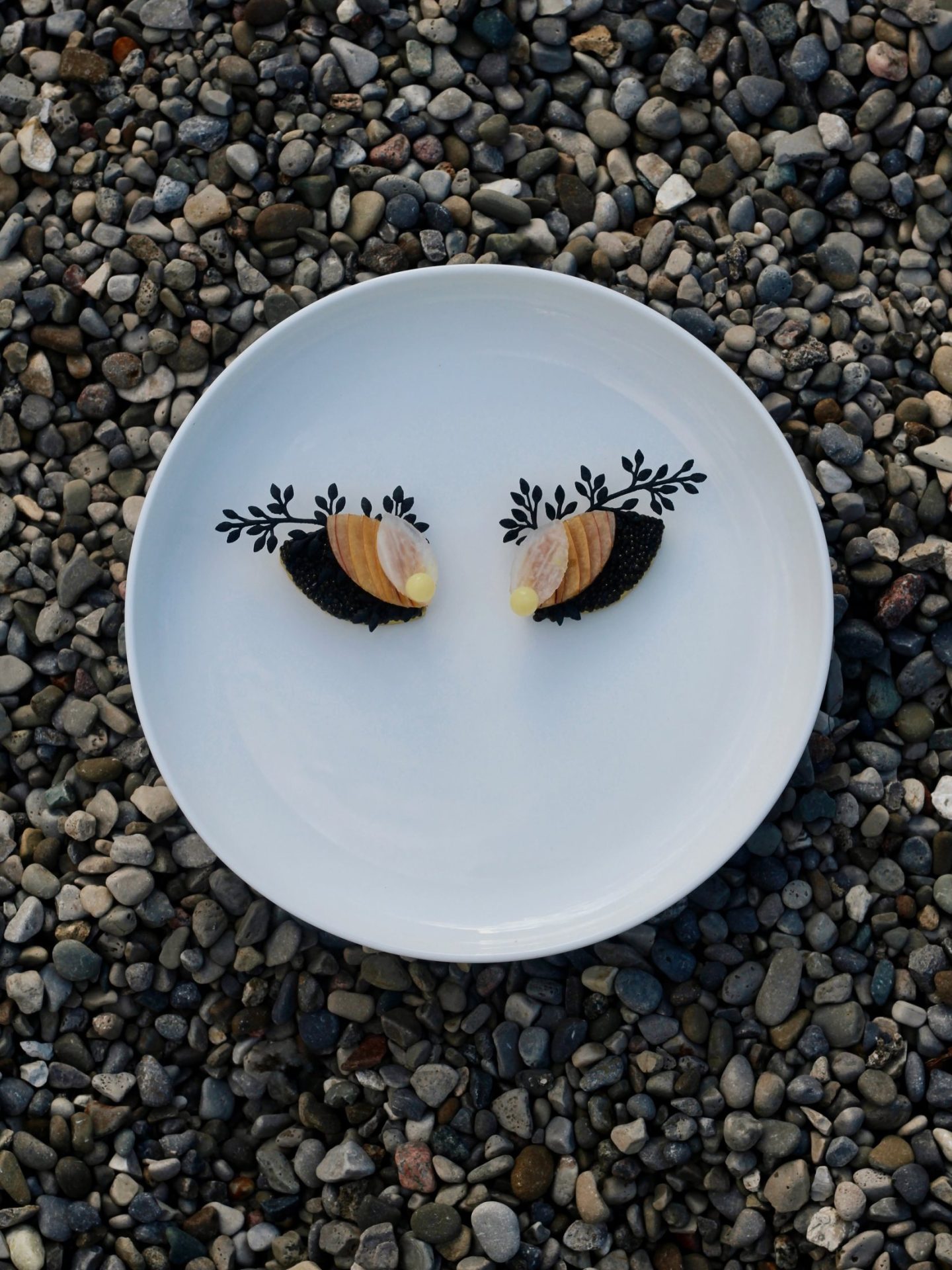
Restaurant Pearl Morissette — tortellini with black truffle, and caviar apple canape.
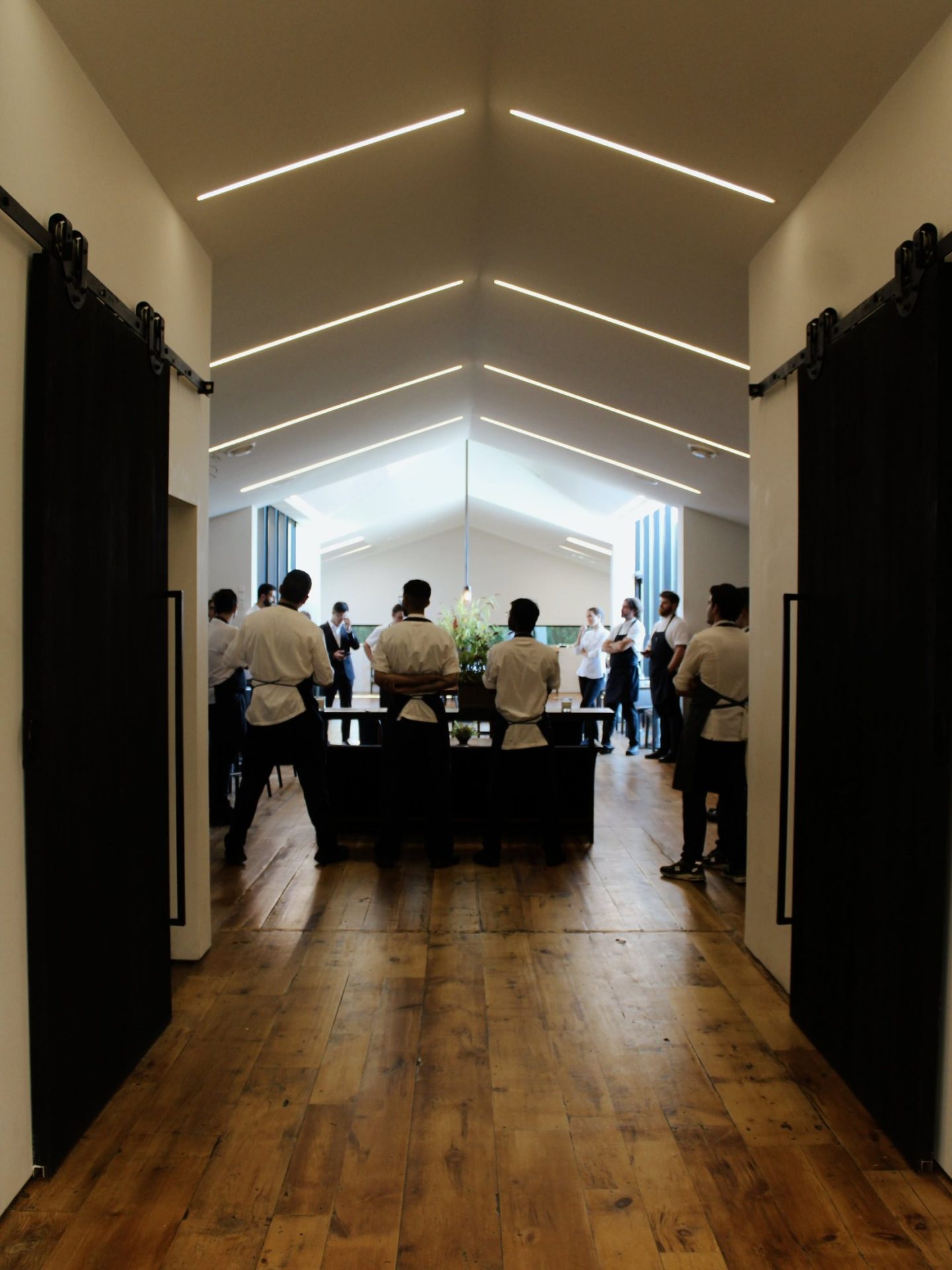
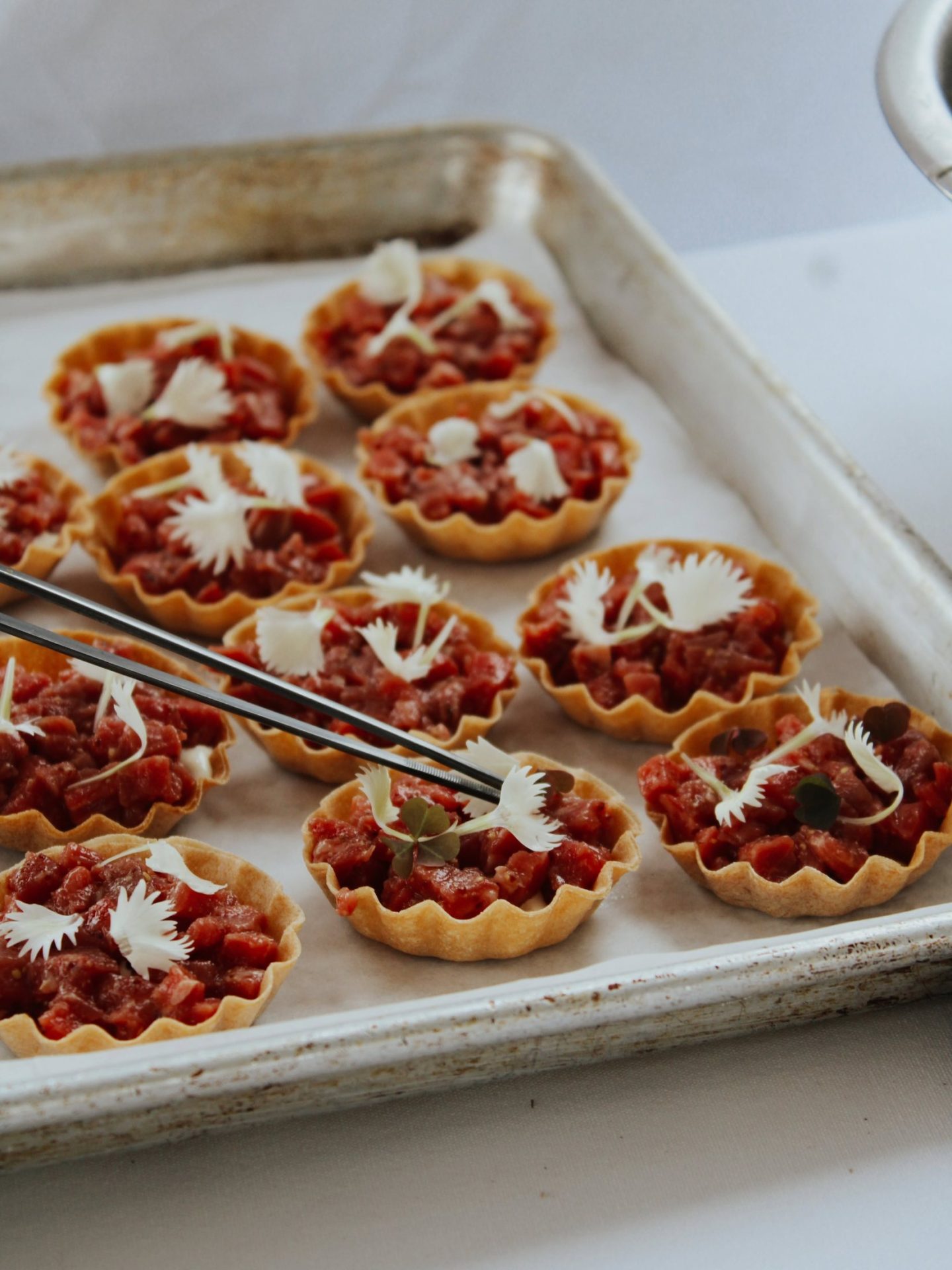
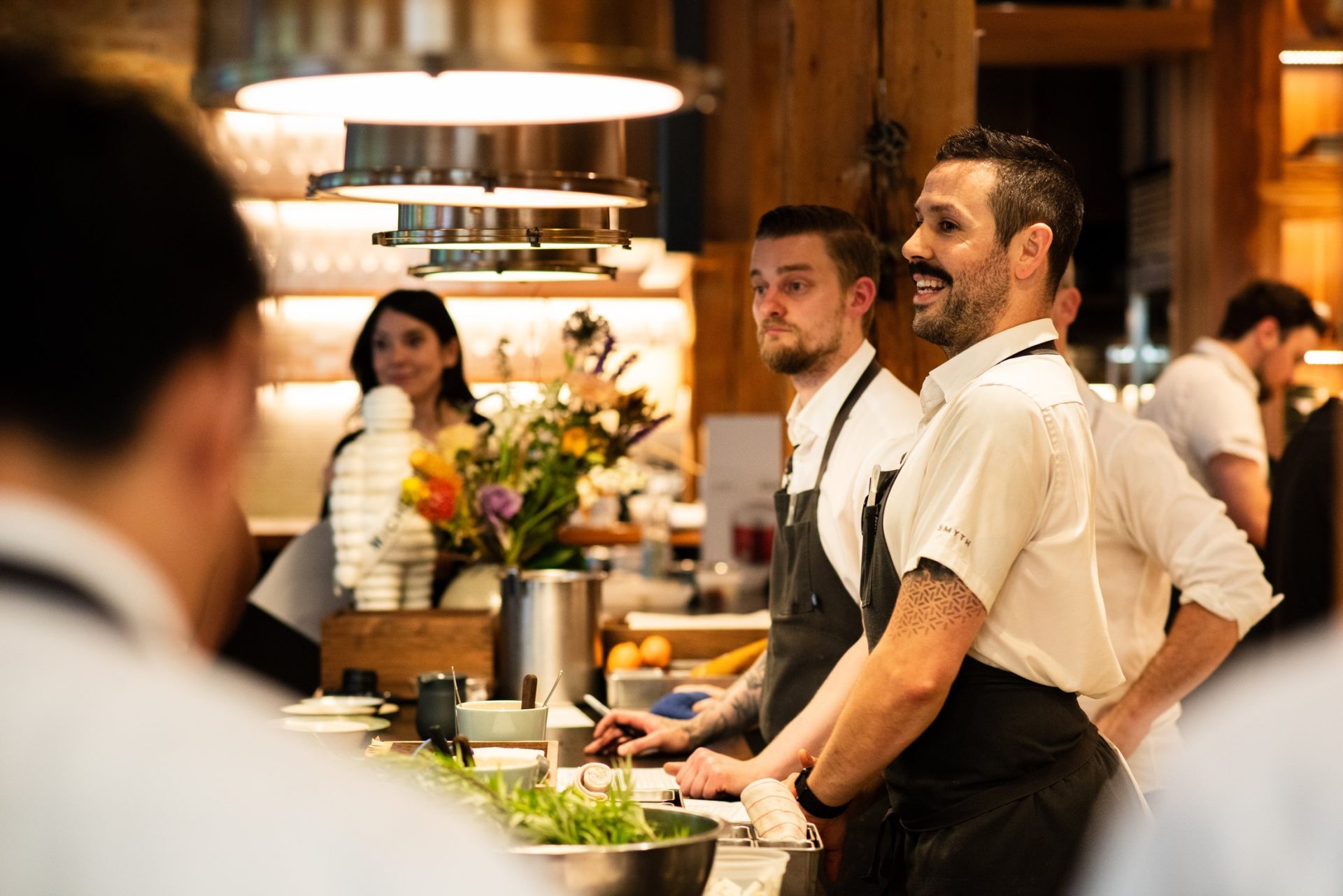
The kitchen team at service, and beef tartare tartlets.
Why the farm changes the menu’s authority
A farm-connected restaurant has an advantage that is also a constraint. It can make seasonality credible because the guest can sense the nearness of production. The Discovery profile says the pre-fixe menu changes often, focusing on ingredients grown on-site as well as those from surrounding farms and regional purveyors [Pass2-05]. That makes change part of the restaurant’s authority rather than a disruption.
For chefs, this is the important operational lesson. A terrain-led restaurant does not need to chase novelty in the same way as a city restaurant that relies on imported luxury cues. Its change can come from weather, harvest, maturity, scarcity and the kitchen’s response. That gives the menu a natural rhythm, but also demands flexibility from the team.
The commercial challenge is to make that flexibility feel premium. Guests paying for a destination experience do not want excuses. They want evidence that limitation has sharpened the meal. If a product is not available, the replacement must feel like a decision, not a compromise. If the menu changes, the service team must speak about change as part of the restaurant’s intelligence.
This is where many sustainability stories fail. They present responsibility as reduction. The better version presents responsibility as attention. Pearl Morissette’s model is compelling because the setting allows the restaurant to make attention visible.
What other restaurants can learn without copying the farm
Most restaurants cannot sit above a winery and a regenerative farm. They do not need to. The transferable lesson is not land ownership. It is coherence. Pearl Morissette’s strength is that place, sourcing, room, wine and hospitality appear to belong to the same idea [Pass2-04], [Pass2-05].
A city restaurant can build similar coherence through fewer, stronger producer relationships. A hotel restaurant can make its garden, terrace, bakery, cellar or local market access part of a more honest narrative. A seafood restaurant can make traceability visible. A wine bar can turn a regional list into a form of travel. A tasting room can use menu change to show attention rather than indecision.
The point is not to perform sustainability. It is to make the guest understand why the restaurant’s choices are better because of the system behind them. That requires proof, not slogans. It also requires restraint. If the restaurant explains too much, the guest feels managed. If it explains too little, the work disappears.
Trust in the terrain is therefore a discipline. It asks the restaurant to align what it grows, buys, cooks, pours, says and refuses. When that alignment is strong, the luxury feels different. It is quieter, but more durable. It does not ask the guest to be impressed by excess. It asks the guest to believe that the meal could not be more itself anywhere else.
There is also a wine lesson inside the model. Because the restaurant sits above Pearl Morissette Estate Winery, the beverage programme can be understood as part of place rather than an imported list attached to the menu [Pass2-04]. That does not mean every pairing must be local, but it does change the guest’s expectation. Wine, food and landscape appear to speak the same language.
For operators, this is valuable because it turns trust into a sequence. The guest trusts the farm, then the kitchen, then the service team, then the cellar. If one element contradicts the others, the spell breaks. A restaurant that speaks about regenerative practice but cannot explain the menu clearly weakens the claim. A room that looks rooted but buys carelessly weakens it further.
The discipline is to make every part of the experience prove the same idea without saying it too often. In that sense, the most important luxury at Pearl Morissette is not abundance. It is alignment.
There is a commercial lesson here too. Terrain-led restaurants often look romantic from the outside, but the model is operationally demanding. The menu has to absorb variability. The service team has to explain change without making the guest feel uncertain. The kitchen has to maintain generosity even when the land produces less of one thing and more of another. The promise is not abundance on command; it is attention.
That may be why the blind menu feels so connected to this kind of restaurant. It changes the relationship between guest and operator. The guest is not buying control over every choice. They are buying the confidence that the restaurant knows its place well enough to decide on their behalf. That is a fragile form of luxury because it cannot be faked for long. It depends on continuity: of growers, cooks, servers, cellar, weather and memory.
For other restaurants, the point is not to copy the vineyard or the blind format. It is to ask where trust actually comes from in their own room. Sometimes it comes from the farm. Sometimes from the butcher, the fisherman, the pastry section, the cellar or the way the team remembers a returning guest. The terrain may be literal, but it can also be human.
Regenerative luxury is not about making the restaurant look rural; it is about allowing land, product and service to shape the meal.
Why It Matters
This matters because sustainability-led dining can easily become vague branding. Pearl Morissette offers a clearer professional lesson: land, sourcing, wine, room and hospitality must align before a restaurant can ask the guest to trust the terrain.
What To Watch Next
Watch whether more destination restaurants move beyond sustainability language toward visible systems: gardens, farms, producer networks, changing menus and hospitality teams able to explain those systems without preaching.